
Stainless steel pipe clamp bolts cannot simply be tightened to the same torque values used for carbon steel bolts of the same size. Stainless fasteners have lower yield strength than common carbon steel grades, a different and more variable friction coefficient, and a strong tendency to gall (cold-weld) during tightening if not lubricated. Using a carbon-steel torque table on stainless bolts can over-stress and yield the bolt, or cause galling that seizes the threads before full preload is reached. This guide provides practical torque values for A2-70 and A4-80 stainless bolts in the sizes used for DIN 3015 pipe clamps, explains the friction and lubrication factors that make stainless torque so sensitive, and gives the anti-galling practices needed for reliable stainless assembly. Torque figures here are starting-point references — always confirm against the bolt manufacturer data and the clamp manufacturer specification for critical joints.
Related product photos
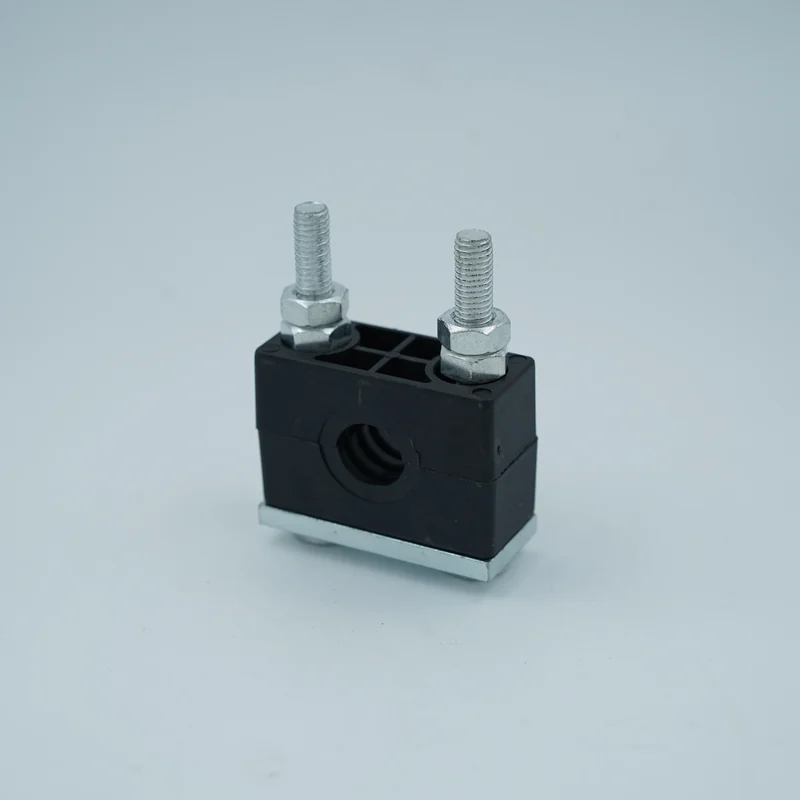
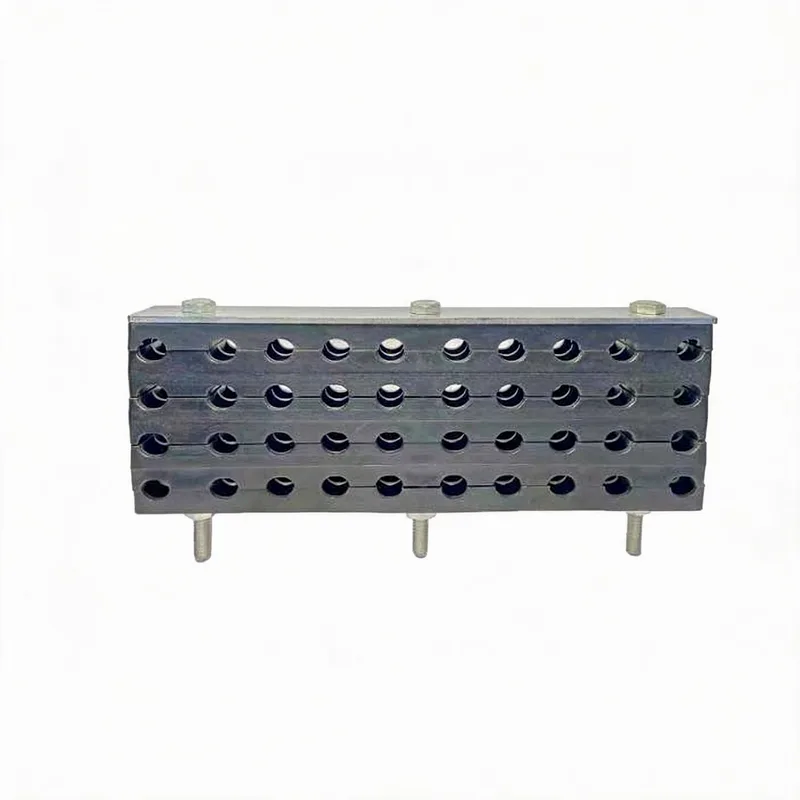
Key points
- A2-70 and A4-80 stainless bolts have lower yield strength than class 8.8 carbon steel, so they require lower tightening torque for the same size
- Torque depends heavily on the friction coefficient — a lubricated stainless bolt may need 30–40% less torque than a dry one for the same preload
- Stainless-on-stainless threads gall easily — always use an anti-seize lubricant and tighten slowly to avoid friction heat
- Never apply carbon-steel torque values to stainless bolts — it can yield the bolt or trigger galling before full preload
| Bolt Size | A2-70 Lubricated (µ≈0.12) | A4-80 Lubricated (µ≈0.12) | Carbon 8.8 (for comparison) |
|---|---|---|---|
| M6 | ~7 Nm | ~9 Nm | ~10 Nm |
| M8 | ~17 Nm | ~22 Nm | ~25 Nm |
| M10 | ~33 Nm | ~44 Nm | ~49 Nm |
| M12 | ~57 Nm | ~76 Nm | ~86 Nm |
| M16 | ~140 Nm | ~187 Nm | ~210 Nm |
Values are indicative for lubricated threads at friction coefficient µ≈0.12, targeting roughly 70% of bolt yield. Dry/unlubricated stainless threads need higher torque for the same preload but carry a high galling risk — lubrication is strongly recommended. Always confirm against the bolt manufacturer data and clamp manufacturer specification; for polymer-bodied clamps the clamp body, not the bolt, often limits the allowable torque.
Why stainless needs different torque than carbon steel
Tightening torque is chosen to develop a target preload (clamping tension) in the bolt, typically around 70% of the bolt yield strength so there is margin against yielding while still providing firm clamping. Because the torque required to reach a given preload is proportional to the bolt yield strength, a bolt with lower yield needs proportionally lower torque. Standard A2-70 stainless has a minimum tensile strength of 700 MPa and a proof/yield around 450 MPa; A4-80 has 800 MPa tensile and around 600 MPa yield. By comparison, class 8.8 carbon steel has 800 MPa tensile and 640 MPa yield, and class 10.9 has 1000 MPa tensile. So A2-70 is substantially weaker than 8.8 and needs noticeably lower torque, while A4-80 is closer to 8.8 but still slightly lower. Applying an 8.8 torque value to an A2-70 bolt drives it well past 70% of yield and can take it into the plastic region, permanently stretching the bolt and losing the controlled elastic preload. This is the first reason stainless needs its own torque table: the strength is simply different, and the torque must be scaled to the actual bolt grade.
The friction coefficient: the biggest source of torque uncertainty
For a typical bolted joint, only about 10–15% of the applied torque actually becomes bolt preload — the rest is consumed by friction, roughly half under the bolt head or nut face and half in the threads. This means the relationship between torque and preload is dominated by the friction coefficient, not by the torque itself. A small change in friction produces a large change in the preload achieved at a given torque. Stainless steel makes this worse than carbon steel because its friction coefficient is both higher and more variable: unlubricated stainless-on-stainless can have a thread friction coefficient anywhere from 0.2 to 0.4 or more, and it changes as the surfaces start to gall. A dry stainless bolt tightened to a torque calculated for µ=0.12 will reach far less preload than intended, because most of the torque is lost to the high friction — the joint is under-clamped despite the wrench reading the correct number. Conversely, a well-lubricated stainless bolt at µ=0.10–0.12 reaches the target preload at much lower torque. This is why every stainless torque table must state the assumed friction coefficient or lubrication condition, and why the same bolt can have two very different correct torque values depending on whether it is dry or lubricated.
Thread galling: the stainless-specific failure mode
Galling — also called cold welding or seizing — is a failure mode that affects stainless steel fasteners far more than carbon steel. When two stainless surfaces slide against each other under pressure, the protective chromium-oxide passive layer can be rubbed off at the contact points. The freshly exposed metal is highly reactive, and under the local pressure and friction heat of tightening, the two surfaces can actually weld together at a microscopic level. As tightening continues, these micro-welds tear and re-form, rapidly building up friction and damaging the thread surfaces. In severe cases the bolt and nut seize completely before full preload is reached — the joint cannot be tightened further and cannot be loosened without destroying the fastener. Galling is made worse by: high tightening speed (friction heat builds faster than it dissipates), dry threads, fine surface finish, and any dirt or grit in the threads. The practical anti-galling measures are: always apply an anti-seize lubricant (nickel-based, copper-based, or PTFE/molybdenum compounds) to the threads before assembly; tighten slowly and steadily rather than with rapid impact; avoid stopping and restarting mid-tightening; and never reuse a stainless nut that has previously galled. For pipe clamp assembly, a dab of anti-seize on each bolt thread is cheap insurance against a seized joint that would otherwise require cutting the bolt off.
Lubricated vs dry: how much the torque changes
Because friction dominates the torque-preload relationship, the difference between a lubricated and a dry stainless bolt is large. For the same target preload, a bolt at a thread/head friction coefficient of around 0.10–0.12 (well lubricated with anti-seize) needs roughly 30–40% less torque than the same bolt dry at a friction coefficient of 0.20 or higher. Put the other way: if you apply a torque calculated for the lubricated condition to a dry bolt, you reach only about 60–70% of the intended preload — an under-clamped joint that is prone to loosening and fatigue. If you apply a torque calculated for the dry condition to a lubricated bolt, you overshoot the preload and may yield the bolt. This is why mixing up lubricated and dry torque values is a real and common error. The torque table in this article assumes lubricated threads at µ≈0.12, which is the recommended condition for stainless because lubrication is needed anyway to prevent galling. If your specification calls for dry assembly (rare for stainless, but sometimes required where lubricant contamination is unacceptable), use the bolt manufacturer dry-torque figures, not these values, and accept the higher galling risk. The key discipline is consistency: decide on lubricated or dry for the whole project, use the matching torque table, and document which condition was used.
Torque limits set by polymer clamp bodies
For DIN 3015 Part 1 clamps with PP or PA bodies, the torque limit is often set by the polymer clamp body, not by the bolt. A stainless M8 bolt can structurally take well over 20 Nm, but if it is clamping a PP body that crushes or creeps under that load, the governing limit is the body, not the bolt. Over-torquing a polymer clamp can crack the body immediately, or cause it to creep and crush over time so that the clamping force is lost and the pipe works loose. Manufacturers of polymer-bodied clamps therefore specify a maximum tightening torque for the clamp body that may be lower than the structural torque capacity of the bolt — and this clamp-body torque limit takes precedence. Always check the clamp manufacturer assembly instructions for the recommended torque; if both a bolt torque and a clamp-body torque are given, use the lower of the two. This is particularly important with stainless bolts because their smooth, hard heads can crush a polymer surface more readily than a coated carbon-steel head, and because installers sometimes over-torque stainless out of a mistaken belief that "stainless is strong so tighten it hard." For metal-bodied heavy series clamps, the bolt is usually the governing element and the torque table applies directly.
Practical tightening procedure for stainless clamp bolts
A reliable procedure for tightening stainless pipe clamp bolts: (1) Inspect the threads — they must be clean and undamaged. Any grit or burr increases galling risk. (2) Apply anti-seize lubricant to the bolt threads and under the nut bearing face. A thin, even film is enough; excess just makes a mess and can attract dirt. (3) Check the governing torque value — the lower of the bolt torque (from the table, for the lubricated condition) and the clamp-body maximum torque (from the clamp manufacturer). (4) Use a calibrated torque wrench, not an impact driver. Impact drivers generate friction heat and uncontrolled torque spikes that promote galling and over-stress. (5) Tighten in two stages: first to about 50% of target torque, then to 100%, with a smooth, continuous motion. Do not stop and restart at high load. (6) For multi-bolt assemblies, tighten in a cross/alternating pattern so the clamp seats evenly. (7) After tightening, apply a witness mark across the bolt head, nut and clamp body so any later loosening is visible at a glance. (8) For critical or vibration-prone joints, add a bolt-locking method (Nord-Lock washers work well with stainless; chemical threadlockers can be used but must be compatible with the anti-seize and applied to clean areas). Record the torque value and lubrication condition used. Following this routine prevents both the under-clamping that comes from dry-friction torque loss and the galling that ruins stainless fasteners.
Related WeiQue series


Recommended reading
References
These pages summarize public standard metadata and industry application information. They do not reproduce the paid DIN standard text.