
HFD phosphate ester fluids are fire-resistant synthetic hydraulic fluids used where mineral oil presents a fire risk. They are valuable in demanding hydraulic systems, but their material compatibility is different from common mineral hydraulic oil.
For pipe clamp selection, the practical rule is simple: do not copy a mineral-oil clamp BOM without review. NBR cushions and some polymer clamp bodies may be unsuitable unless the exact fluid grade, temperature and exposure mode are confirmed.
Related product photos
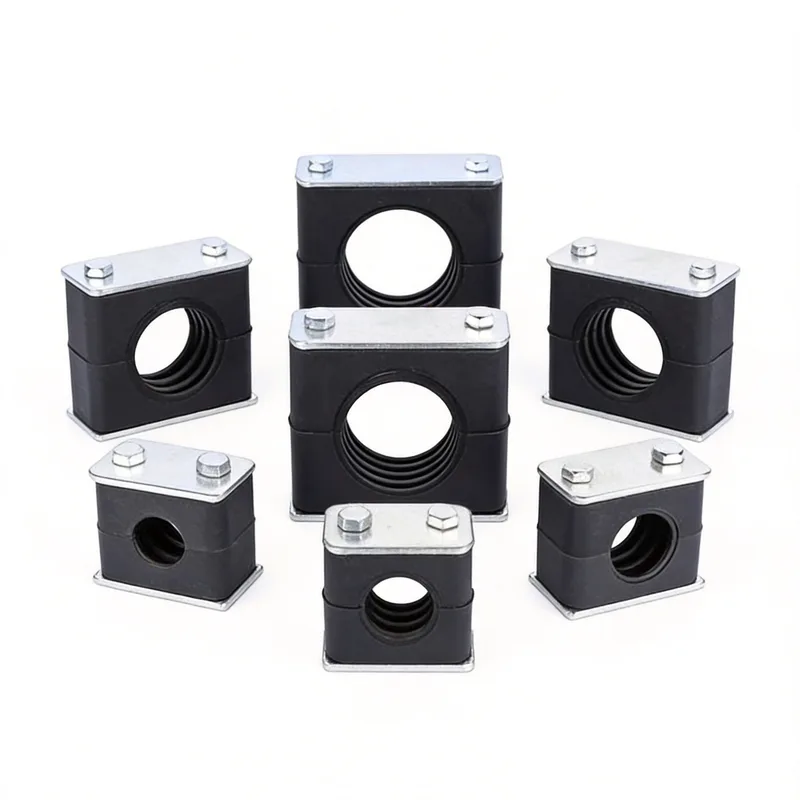
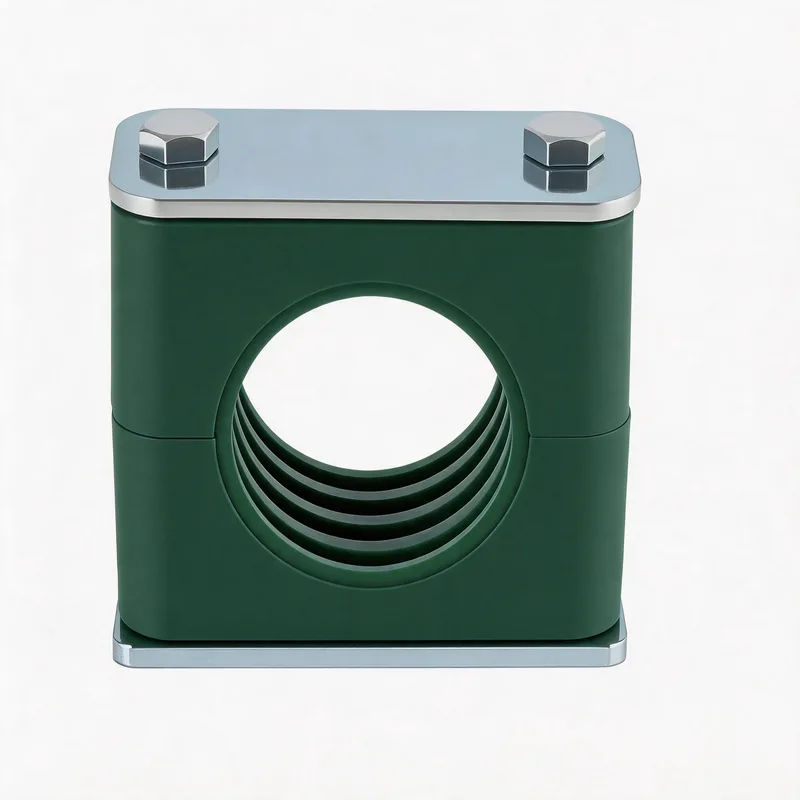
Typical use cases
- Do not assume mineral-oil clamp materials are suitable for HFD service
- Treat NBR cushions as high risk unless the exact fluid data approves them
- Review PVDF or project-approved metal assemblies before ordinary rubber-lined choices
- Check PP and PA clamp bodies against fluid grade, temperature and exposure duration
- Review bolts, rails, cover plates and coatings as part of the same clamp system
- Send the fluid trade name and SDS before releasing production material
Initial material review for HFD phosphate ester service
| Material option | Initial rating | Why it matters | Before release |
|---|---|---|---|
| NBR cushion / rubber insert | Avoid as default | Phosphate ester fluids can attack, swell or soften some elastomers. | Use only with written compatibility data for the exact HFD product. |
| PVDF clamp body or insert | Preferred review point | PVDF is often reviewed first for broader chemical resistance. | Confirm size, load, temperature, availability and project approval. |
| Metal clamp assembly | Project-approved option | Useful when fire, heat, mechanical abuse or polymer limits are important. | Check alloy, surface protection, hard contact and galvanic corrosion. |
| PP / PA clamp bodies | Conditional | Exposure may be splash, vapor, residue or accidental immersion. | Check fluid grade, temperature, concentration and exposure duration. |
| Bolts, rails, plates and coatings | Always review | Hardware may see vapor, splash, corrosion and cleaning chemicals. | Confirm stainless grade, coating system, certificates and mating parts. |
This table is a selection screen, not a chemical guarantee. Final approval depends on the fluid supplier, project specification and service conditions.
1. Why HFD is different from mineral hydraulic oil
Mineral hydraulic oil compatibility is often familiar for standard DIN 3015 clamp systems, especially PP or PA bodies and NBR cushions. HFD phosphate ester fluids are different chemical systems, so swelling, softening, stress cracking and loss of damping performance must be reviewed before the same material is reused.
2. Why NBR should not be the default choice
NBR is widely used with many mineral oils, but that does not make it safe for every fire-resistant hydraulic fluid. In HFD service, an NBR-lined clamp should be released only after checking the exact fluid trade name, supplier compatibility data, operating temperature and whether exposure is splash, residue, vapor or continuous contact.
3. When PVDF or metal should be reviewed first
PVDF is often the first polymer to review when chemical resistance is the main risk. Metal clamp assemblies may be reviewed when fire exposure, high temperature, mechanical abuse or project material rules make polymer bodies unsuitable. Both options still need a load, vibration, corrosion and installation review.
4. What about PP and PA clamp bodies?
PP and PA may still appear in HFD-adjacent systems, especially where the clamp is not continuously wetted. The decision depends on the exact HFD fluid, temperature, cleaning practice, outdoor exposure, expected service life and whether the clamp body will see splash, mist, residue or immersion.
5. Check the complete clamp assembly
The clamp body is only one part of the material decision. Bolts, rail nuts, mounting rails, cover plates, base plates and coatings may face the same fluid mist, washdown or corrosion environment. For HFD service, review the assembly BOM as one package instead of approving the body material alone.
6. RFQ checklist for HFD service
For a reliable recommendation, send pipe OD, pipe material, clamp series, exact HFD fluid trade name, SDS, operating temperature, ambient temperature, exposure mode, pressure, vibration source, corrosion class, required certificates and whether PVDF or metal options are already approved by the project.
Frequently asked questions
Can NBR inserts be used with HFD phosphate ester fluid?
Do not treat NBR as the default choice for HFD service. Many phosphate ester fluids can cause elastomer swelling, softening or loss of properties, so use NBR only when the exact fluid supplier and project data approve it in writing.
Is PVDF always required for HFD pipe clamps?
Not always, but PVDF is a practical review point because of its broad chemical resistance. Temperature, load, clamp size, availability and the exact HFD product still need to be checked before release.
What information is needed for an HFD clamp material review?
Send the fluid trade name, SDS, operating temperature, ambient temperature, exposure mode, pipe OD, pipe material, pressure, vibration level, corrosion class and any project-approved material list.
Related WeiQue series


Recommended reading
References
These pages summarize public standard metadata and industry application information. They do not reproduce the paid DIN standard text.