
DIN 3015 style clamps are mainly associated with rigid tube and pipe support, but some static hose routes can also be supported when the hose cover OD, construction and permitted compression are known.
The critical distinction is restraint versus movement. A clamp may locate a static hose, but it must not crush the cover, interfere with the crimp or lock a hose section that is intended to flex with equipment motion.
Sometimes, for a static hose section with a known cover OD and an approved compression range. Do not select by hose nominal ID or dash size, and do not rigidly clamp a section that must flex, articulate or absorb machine movement.
Related product photos
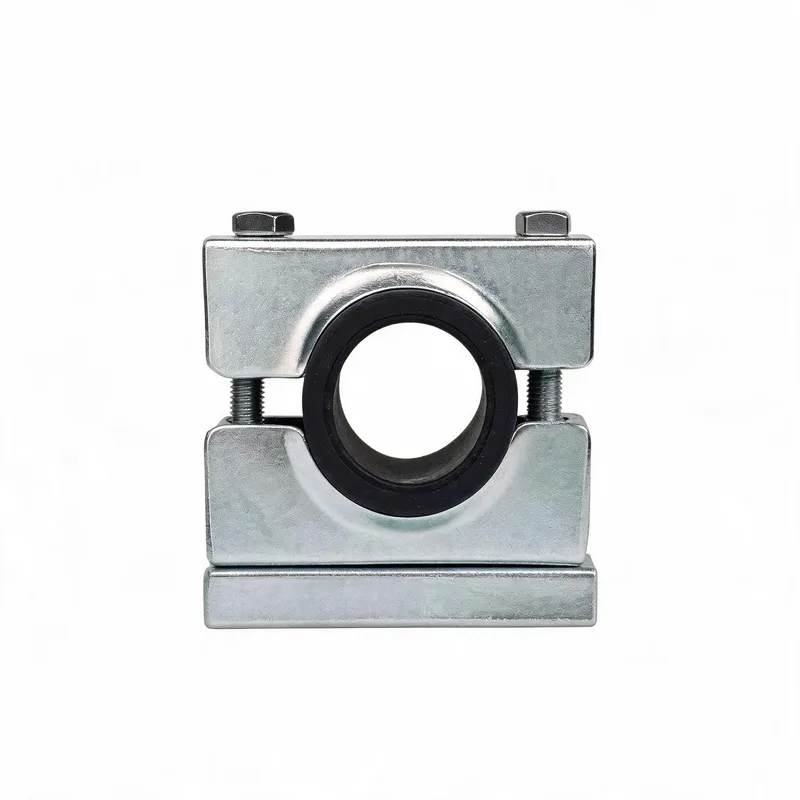
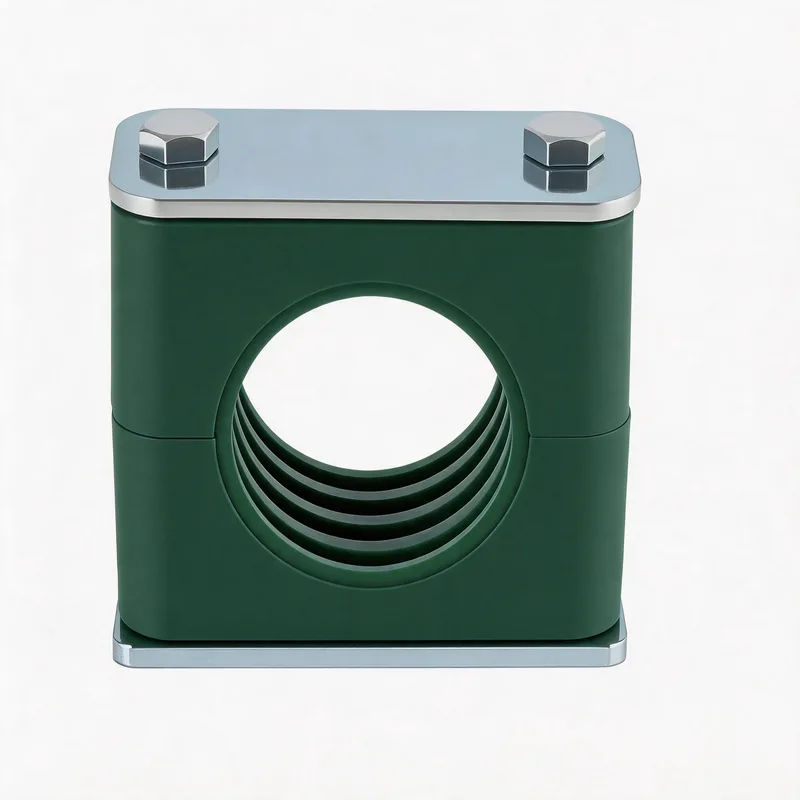
Typical use cases
- Measure actual hose cover OD at the intended support point
- Do not convert hose nominal ID or dash size directly into clamp bore
- Keep clamps away from crimp sleeves and active bend zones
- Allow moving hoses to flex without rubbing, twisting or being pinched
Hose support decision matrix
| Hose condition | DIN 3015 style clamp? | Primary check | Main risk |
|---|---|---|---|
| Static straight hose on a fixed frame | Conditional | Actual cover OD, approved compression and suitable insert profile | Cover indentation, reinforcement damage or creep |
| Hose that moves with cylinder, boom or door | Usually not as a rigid restraint | Movement envelope, bend radius, torsion and abrasion | Fatigue, pull-out, kinking or rubbing |
| Hose-to-rigid-tube transition | Prefer support on rigid tube side | Coupling access and hose bend allowance | Hose motion transferring load into rigid fitting |
| Hose with spiral guard or protective sleeve | Review the complete outside surface | Sleeve OD, local thickness and whether sleeve can move | Uneven loading, sleeve cutting or false fit |
| Hose close to crimp sleeve or coupling | Avoid clamping the crimp transition | Manufacturer keep-out length and inspection access | Stress concentration and hidden cover damage |
A hose clamp decision must follow the hose manufacturer’s routing, compression and minimum bend-radius limits. A nominal hose designation is not enough.
Why actual hose OD is essential
Hydraulic hose is commonly purchased by nominal inside diameter or dash size, while the outside diameter changes with reinforcement, cover thickness, pressure class, manufacturer and protective sleeve. Measure the finished outside surface where the clamp will sit and provide its tolerance.
Do not use bolt torque to compensate for hose fit
A hose is compressible, so a clamp can appear to fit even when the bore is too small. Extra tightening may deform the cover or reinforcement without producing a controlled support. Use a bore and insert profile approved for the hose OD and required restraint.
Static support and moving-hose guidance are different jobs
A static hose may need location and abrasion control. A moving hose needs a defined bend, sufficient free length, twist control and clearance through the full machine cycle. For moving applications, guides, saddles, sleeves or purpose-designed hose supports may be more suitable than a rigid block clamp.
RFQ data for hose support review
Send hose manufacturer and part number, nominal ID or dash size, measured cover OD, working and peak pressure, temperature, fluid, static or moving duty, minimum bend radius, movement envelope, protective sleeve, fitting type, quantity and a photo or routing drawing.
Frequently asked questions
Should clamp size follow hose dash size?
No. Hose dash size normally relates to nominal inside diameter. Clamp selection needs the actual outside diameter of the hose cover at the support point, including its tolerance and any protective sleeve.
Can a clamp be tightened until a hydraulic hose stops moving?
No. Excessive compression can damage the cover, reinforcement or hose geometry. Use an approved bore or insert and follow the hose manufacturer’s compression and routing limits.
Where should a clamp be placed near a hose fitting?
Keep the clamp away from the crimp sleeve and bend transition. Support a suitable straight, static section or support the rigid tube side, while preserving coupling access and the hose minimum bend radius.
Related WeiQue series


Recommended reading
References
These pages summarize public standard metadata and industry application information. They do not reproduce the paid DIN standard text.