
A pipe changes length as its temperature changes. If every clamp prevents axial movement, the resulting thermal force can be transferred into fittings, valves, equipment nozzles, brackets and the tube itself.
A controlled layout gives each support a defined job: selected fixed points establish the movement reference, guides control direction and sliding supports or reviewed interfaces allow the required travel.
Do not make every clamp a rigid fixed point. A thermal-movement layout normally uses selected fixed points to establish the movement reference, guided supports to control direction and sliding supports or suitable interfaces to permit calculated axial movement.
Related product photos
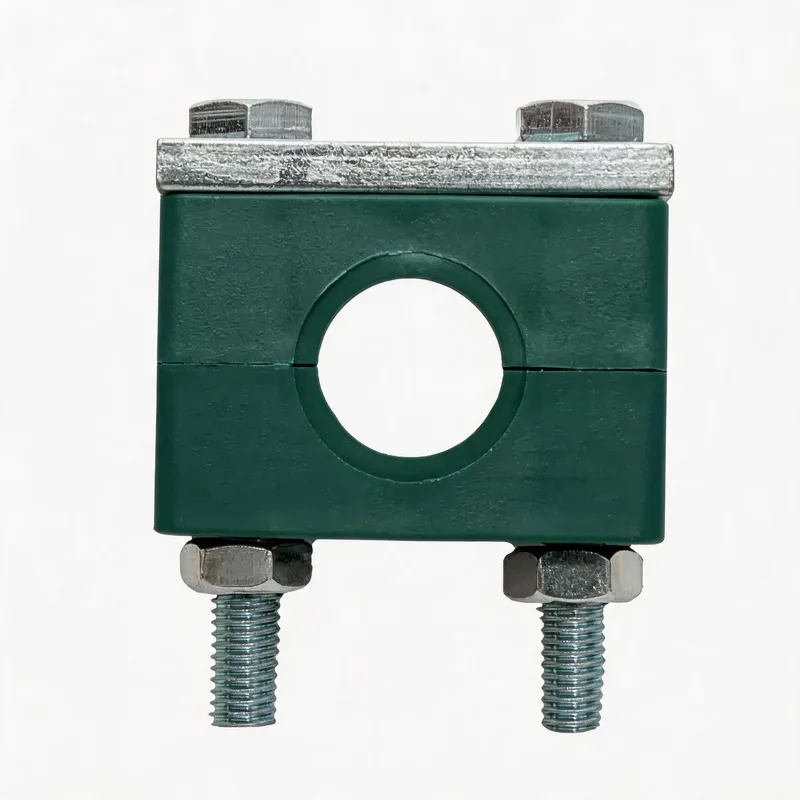
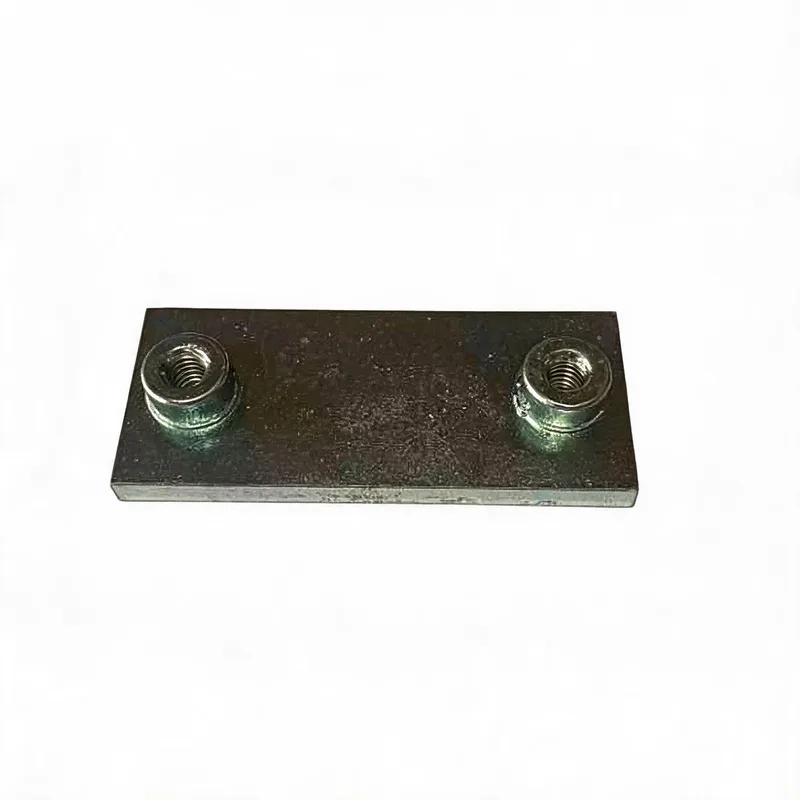
Typical use cases
- Define the thermal movement direction before choosing clamp details
- Use only the fixed points required by the piping design
- Keep guides stiff laterally while preserving intended axial travel
- Check cold and hot clearances around bends, valves and equipment
Support function matrix
| Support function | Controls | Allows | Main design check |
|---|---|---|---|
| Fixed point / anchor | Specified translation and sometimes rotation | Only movement intentionally released by design | Thermal, pressure, friction and dynamic loads into structure |
| Guide | Lateral movement and pipe direction | Designed axial movement | Guide clearance, wear length and lateral stiffness |
| Sliding support | Weight and selected lateral position | Calculated travel along the sliding direction | Friction, contact pressure, surface and available travel |
| Ordinary support clamp | Pipe position and vibration according to its detail | Only movement proven by the selected detail | Do not assume it is automatically a guide or slider |
The labels fixed, guided and sliding describe engineering functions. The clamp body alone does not define the complete support behavior.
Start from the cold-to-hot movement case
Identify installation temperature, minimum and maximum operating temperatures, pipe material, straight lengths, bends, connected equipment and any imposed movement. The piping or stress design should define expected displacement and support loads before clamp hardware is finalized.
A fixed point needs a complete load path
Calling a clamp a fixed point does not make the structure strong enough. The body, bolts, base plate, welds, rail restraint, bracket and machine frame must carry the specified axial and lateral loads without slip or unacceptable deformation.
Guides must allow the intended travel
A guide should prevent unwanted lateral movement while avoiding axial binding through the full temperature range. Check guide length, clearances, tube ovality, coatings, dirt buildup, misalignment and whether the moving pipe can contact nearby hardware.
Do not rely on uncontrolled friction
A tightly closed standard clamp may grip, slip intermittently or wear the tube depending on material and condition. If sliding is required, define the contact interface, friction assumption, surface protection, travel and inspection plan instead of relying on accidental movement.
RFQ and layout information to send
Send pipe OD, wall and material, installation and operating temperatures, route drawing, straight lengths, bends, equipment connections, calculated movements and loads if available, support function at each point, mounting structure, environment, quantity and required documentation.
Frequently asked questions
Should every pipe clamp restrain axial movement?
No. Rigidly restraining every point can transfer thermal strain into tubes, fittings, valves, equipment nozzles and brackets. The support function must follow the piping movement design.
What is the difference between a fixed point and a guide?
A fixed point establishes a movement reference and resists the specified directions and loads. A guide controls lateral direction while permitting the intended axial movement. Their hardware and supporting structure must match those different load paths.
Can a standard DIN 3015 clamp automatically act as a sliding support?
No. Sliding behavior depends on clamp profile, contact pressure, tube surface, insert material, friction, clearance and mounting detail. Use a reviewed sliding or guiding arrangement rather than assuming a tightened clamp will slide predictably.
Related WeiQue series


Recommended reading
References
This page explains support functions and does not replace piping-code compliance or project pipe-stress analysis.