
Temperature is one of the first material selection filters for a pipe clamp, but the relevant temperature is the actual clamp-body temperature — not the fluid temperature alone. Heat transfer through the pipe wall, insulation, airflow and duty cycle all affect how hot the clamp body gets.
Generic temperature labels for polymer materials can be misleading; always check manufacturer data for the specific grade before releasing a specification.
Related product photos
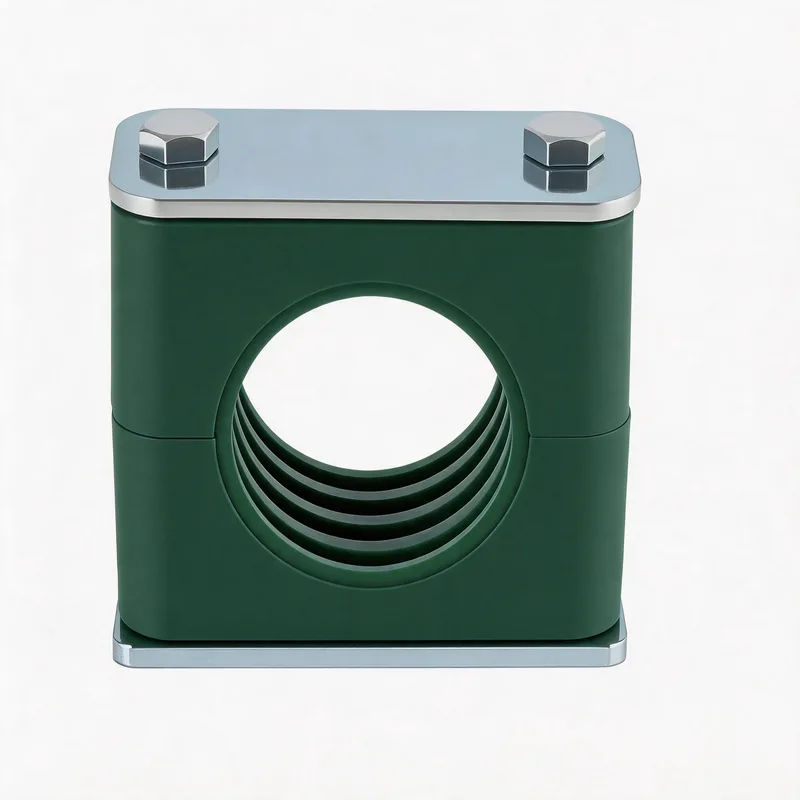
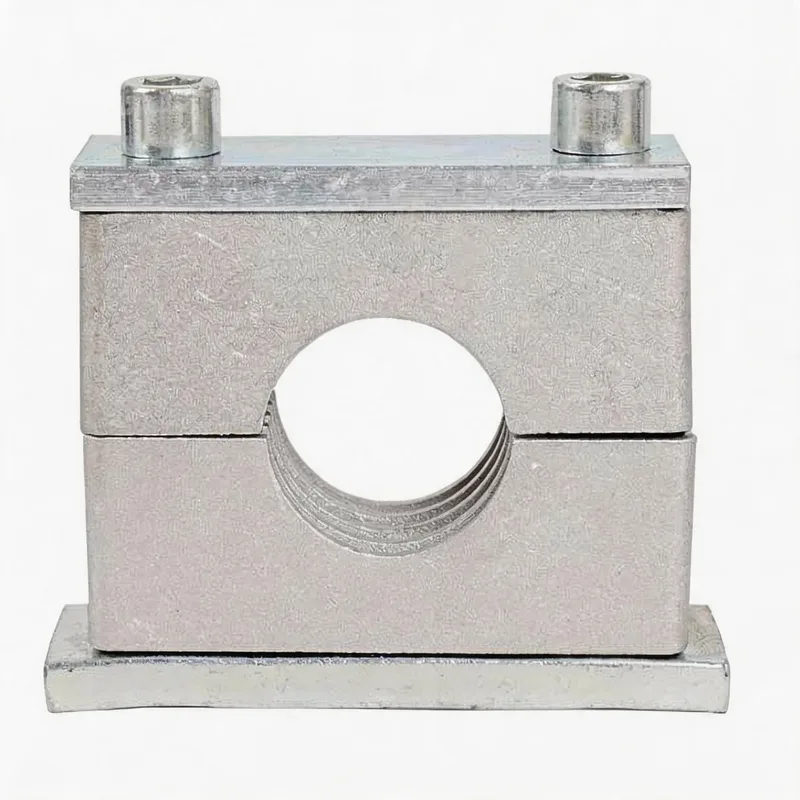
Typical use cases
- Base material selection on clamp-body temperature, not fluid temperature alone
- PP and PA have grade-specific temperature limits; a generic name is not a rating
- NBR fluid compatibility must be confirmed before checking temperature
- For critical service, request manufacturer data sheet and temperature statement
Material temperature range reference
| Material | Min. (°C) | Max. (°C) | Typical use | Key check |
|---|---|---|---|---|
| PP (polypropylene) | −10 | +80 | Standard indoor hydraulic and pneumatic lines | Grade, UV exposure, creep at upper limit |
| PA (polyamide) | −30 | +100 | Higher-stress, wider temperature or mobile equipment | Grade, moisture absorption, conditioning |
| NBR (nitrile rubber insert) | −30 | +100 | Vibration damping with mineral oil compatibility | Confirm fluid compatibility before temperature; HFD not compatible |
| Aluminum body | −60 | +200 | High-temperature service, fire-adjacent, load retention at heat | Contact hardness, galvanic corrosion, insert compatibility |
| Carbon steel (zinc-plated) | −20 | +300 | Heavy loads, large diameters, structural outdoor service | Coating thermal limit, corrosion at elevated temperature |
| Stainless steel 316L | −196 | +400 | Marine, washdown, food, chemical, cryogenic service | Chloride stress corrosion above 60 °C, bolt galling risk |
Approximate continuous service guidance only. Exact limits depend on material grade, load, duration, environment and manufacturer data. Verify with the supplier data sheet before release.
The relevant temperature is at the clamp body, not the fluid
A pipe carrying 90 °C fluid does not necessarily heat the clamp body to 90 °C. Insulation, forced air, contact area and operating cycle all reduce heat transfer. Conversely, a clamp near a heater surface, direct sunlight or a hot process oven can reach temperatures above the fluid temperature. Measure or calculate the actual clamp-body temperature before discarding a material as unsuitable.
Polymer creep at the upper temperature limit
A polymer clamp body can remain below its melting point and still lose stiffness or creep under sustained bolt and pipe load at elevated temperature. Long-term creep reduces preload and can allow tube movement even when the joint appeared correctly tightened at installation. Check manufacturer long-term creep data at the expected temperature and load, not only the quoted softening point.
NBR: fluid compatibility comes before temperature
NBR (nitrile rubber) is well suited to mineral hydraulic oils and many general industrial fluids, but it must be reviewed for HFC water-glycol fire-resistant fluids and should not be used for HFD phosphate ester fluids, which cause swelling, softening and loss of insert function. Confirm fluid compatibility first; then check the NBR grade for the expected temperature and any ozone or UV exposure.
Aluminum and stainless: contact and corrosion checks
Aluminum clamp bodies avoid polymer softening at higher temperatures but introduce harder tube contact, potential galvanic corrosion and different vibration damping behavior. Stainless steel 316L has an excellent temperature range but is susceptible to chloride stress corrosion cracking above approximately 60 °C in high-chloride environments, and stainless bolts gall easily and require anti-seize and correct torque.
Low temperature and impact resistance
Some polymers embrittle below their rated lower temperature limit. PP can become brittle at low ambient temperatures more rapidly than certain PA grades. For installations that may see low ambient temperatures, mechanical shock during transport, or outdoor winter conditions, confirm the material impact behavior at the minimum expected service temperature.
RFQ information for temperature-critical clamps
Send pipe OD and material, fluid type and grade, operating and ambient temperature, heat source exposure if any, insulation details, estimated clamp-body temperature, operating pressure, vibration, required material grade or certification, quantity and service environment.
Frequently asked questions
What temperature can a PP pipe clamp handle?
Approximately −10 °C to +80 °C for continuous service, but this varies with grade, load and duration. Check the specific grade data sheet. PP clamps near the upper limit may creep under sustained bolt load; confirm the manufacturer creep data if the installed temperature exceeds about 60 °C.
When should I choose PA instead of PP?
Consider PA when the clamp body faces higher mechanical stress, repeated assembly, mobile equipment vibration or a wider operating temperature range. Some PA grades tolerate higher temperatures — up to approximately 100 °C — with better toughness than PP. Confirm the grade, moisture conditioning and fluid compatibility.
Can I use an NBR cushioned clamp at 110 °C?
Only if both the NBR grade and the fluid are approved at that temperature. Standard NBR is typically rated to about 100 °C; some special grades go higher. Fluid compatibility must be confirmed separately — HFD phosphate ester fluids attack NBR at any temperature. Request the supplier temperature and fluid compatibility data before specifying.
Related WeiQue series


Recommended reading
References
These pages summarize public standard metadata and industry application information. They do not reproduce the paid DIN standard text.