
Soft thermal insulation is not normally a structural support material. Tightening a standard clamp around it can compress the insulation, loosen the joint and damage the jacket or vapor barrier.
The support detail must transfer pipe loads through a load-bearing component while maintaining thermal continuity, moisture control and access for inspection.
Do not normally transfer pipe weight through soft insulation. The support should use a designed load-bearing insulation insert, pipe shoe, saddle or direct pipe attachment while preserving the insulation and vapor-barrier system around the support.
Related product photos
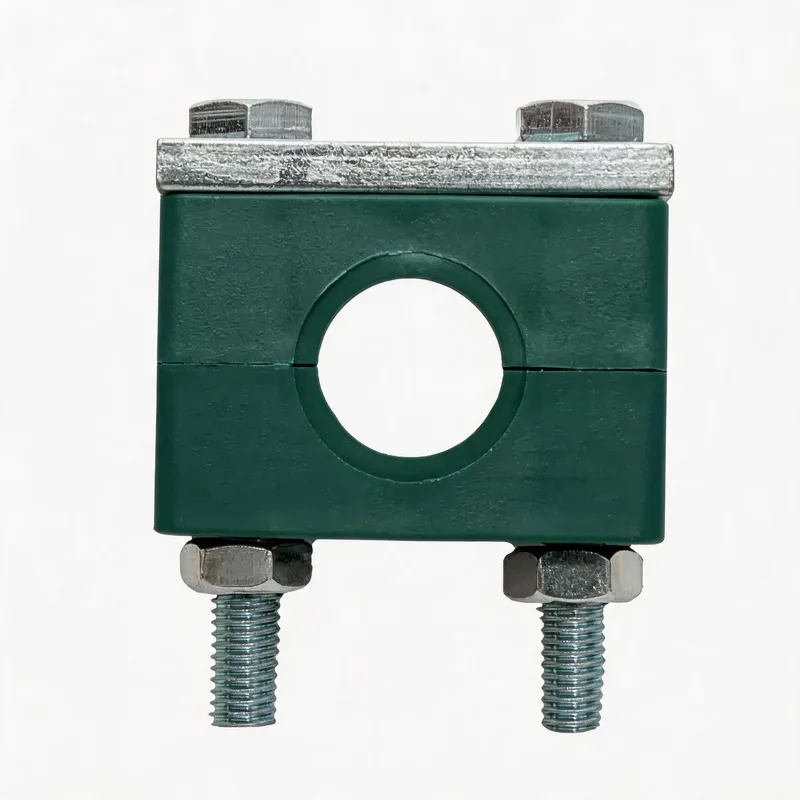
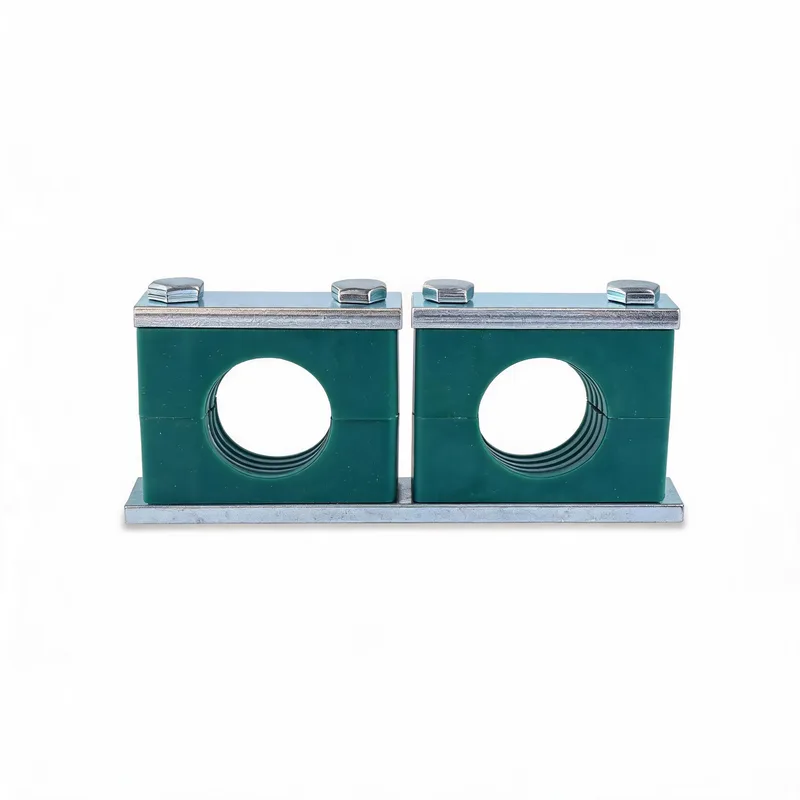
Typical use cases
- Do not rely on soft insulation to retain clamp preload
- Use a designed load-bearing insert, shoe or saddle
- Keep cold-service vapor barriers continuous and sealed
- Provide drainage and inspection against corrosion under insulation
Insulated-pipe support options
| Detail | Use | Critical check |
|---|---|---|
| Load-bearing insulation insert | Maintain insulation while carrying radial load | Compression strength, creep and vapor sealing |
| Pipe shoe or saddle | Transfer weight to structure and provide clearance | Local pipe stress, thermal bridge and movement |
| Clamp directly on bare pipe | Selected details where insulation terminates or is rebuilt | Coating repair, sealing and condensation control |
| Clamp over soft insulation | Generally unsuitable for carrying pipe load | Compression, preload loss and jacket damage |
The insulation outside diameter alone is not enough to select a standard pipe clamp.
Separate thermal and structural functions
Identify which component carries pipe weight, lateral load and axial force, and which component limits heat flow. A load-bearing insulation insert may combine functions, but its compression, creep and temperature data must be approved.
Protect the vapor barrier in cold service
Cold pipe supports are common moisture entry points. Seal joints, penetrations and jacket transitions so humid air cannot reach the cold pipe. Wet insulation increases heat gain and can hide corrosion under insulation.
Allow thermal movement
A pipe shoe, saddle or outer clamp may need to slide or guide as the line changes temperature. Define fixed, guided and sliding points together with insulation clearances; do not let the jacket accidentally become the sliding surface.
RFQ data for insulated supports
Send pipe OD, material and wall, operating and ambient temperatures, insulation type and thickness, jacket and vapor barrier, pipe and fluid weight, support function, calculated movement, corrosion coating, mounting structure, quantity and applicable insulation specification.
Frequently asked questions
Can a clamp be tightened directly over soft insulation?
Normally no for a load-bearing support. Soft insulation can compress, lose thickness, break its jacket and reduce preload. Use a designed load-bearing insert or support detail.
Why is the vapor barrier important at cold pipe supports?
A discontinuity lets moisture reach the cold surface, causing condensation, wet insulation, heat gain and corrosion under insulation. Support penetrations and joints need compatible sealing.
Should the clamp bore match the insulation OD?
Only when the approved support detail uses a load-bearing insulation insert or outer support component. Do not size a normal clamp around soft insulation without confirming compression and load transfer.
Related WeiQue series


Recommended reading
References
These pages summarize public standard metadata and industry application information. They do not reproduce the paid DIN standard text.