
The short answer for specification: standard polypropylene and polyamide pipe clamp bodies are UL94 HB class — they ignite under sustained flame, burn slowly and do not self-extinguish. For open industrial halls this is normally accepted. For enclosed spaces where escape routes and smoke matter — ship accommodation and machinery spaces under the IMO FTP Code, tunnels, offshore modules and some substation rooms — the specification should either call for a flame-retardant V-2/V-0 grade body with the rating stated at the actual wall thickness, or switch to metal clamps, which remove the combustibility question entirely.
Fire performance is one of the most frequently mis-specified properties in pipe clamp procurement, for two reasons. First, UL94 ratings are quoted without thickness — a material certified V-0 at 3.0 mm may only achieve V-2 or HB at the thinner sections of a real clamp body. Second, flame-retardant additives change the mechanical properties buyers already selected the material for: impact strength, elongation and sometimes continuous temperature rating all shift. The fire requirement therefore cannot be bolted onto an RFQ as an afterthought line — it interacts with the material choice made for load, temperature and chemical exposure.
Standard PP and PA pipe clamp bodies are UL94 HB — they do not self-extinguish. For enclosed spaces (shipboard per IMO FTP, tunnels, offshore modules), specify halogen-free V-0 grades with the rating stated at the clamp's thinnest wall thickness, or use non-combustible metal clamps.
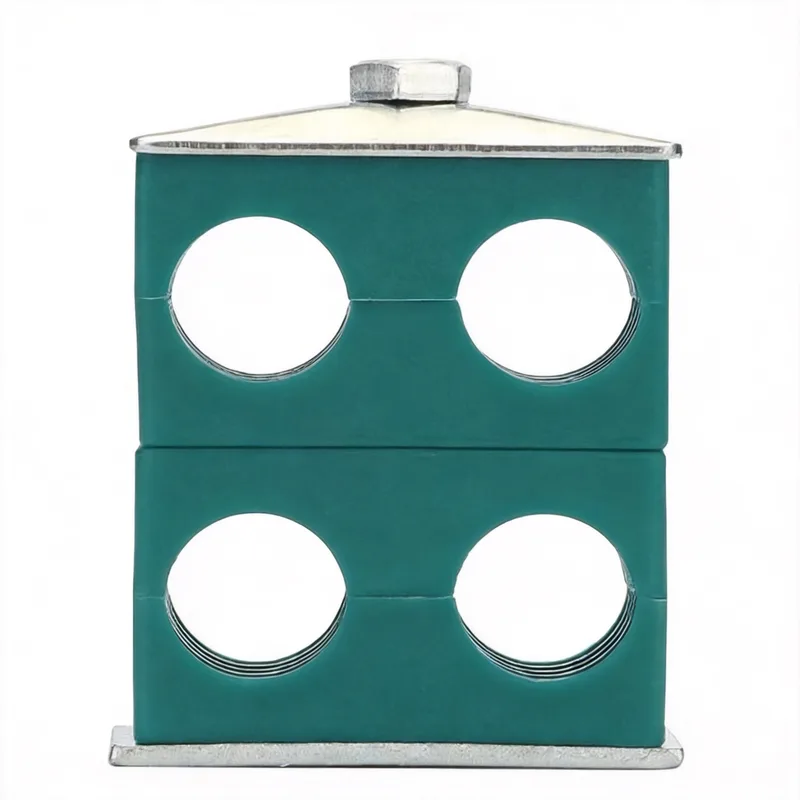
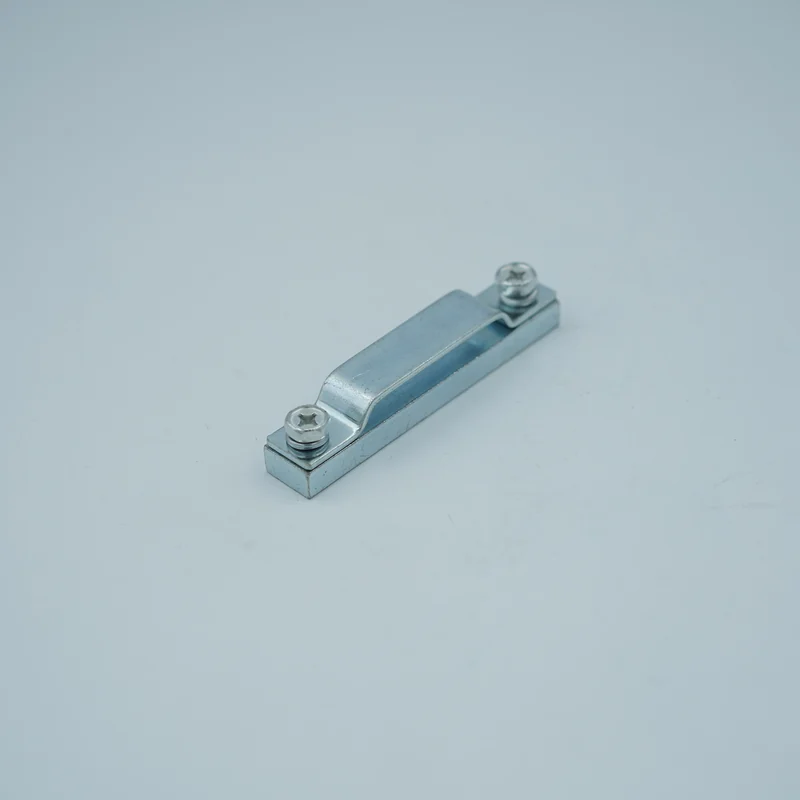
Mounting methods at a glance
Key points
- UL94 HB means the specimen burns horizontally at a limited rate — it is a flammability classification, not a flame-retardance claim. HB materials keep burning after the ignition source is removed.
- V-2, V-1 and V-0 all self-extinguish in the vertical test; the differences are afterflame time and whether flaming drips are allowed. V-0 (≤10 s afterflame, no flaming drips) is the class most enclosed-space specifications require.
- In enclosed spaces, smoke kills before flame: NBS smoke chamber research shows smoke production varies enormously between polymers of similar flammability class. Halogen-free flame retardants (melamine polyphosphate, DOPO derivatives, intumescent systems) are preferred because halogenated smoke is both toxic and corrosive to electronics.
- Flame-retardant loading typically reduces impact strength and elongation — published testing of FR polypropylene systems shows measurable mechanical property loss as retardant content rises. Re-verify the clamp mechanical rating on the FR grade, not the standard grade datasheet.
- For a handful of clamps in a fire-critical zone, metal clamps with elastomer inserts are usually cheaper and faster than sourcing certified FR polymer bodies — the compliance document is a material certificate instead of a flammability test report.
Pipe clamp body options by fire performance
| Body option | Typical UL94 class | Smoke / toxicity | Where accepted |
|---|---|---|---|
| Standard PP | HB | Moderate smoke, low corrosivity | Open industrial halls, outdoor plant |
| Standard PA66 / GF-PA66 | HB (some V-2) | Moderate smoke | General industry; better drip behavior than PP |
| Halogen-free FR PP (intumescent) | V-2 to V-0 (state thickness) | Low toxicity, halogen-free | Enclosed spaces where PP properties needed |
| FR GF-PA66 (MPP / DOPO systems) | V-0 achievable | Low smoke, halogen-free options | Shipboard, rail, tunnel specifications |
| Halogenated FR grades | V-0 | Corrosive, toxic smoke — increasingly excluded | Legacy specs only; check project smoke rules first |
| Metal clamp (steel / aluminium / SS) | Non-combustible | None | Fire-critical zones; simplest compliance route |
UL94 ratings are only valid at the tested specimen thickness. Always request the rating at a thickness equal to or thinner than the thinnest load-bearing section of the clamp body, and ask for the yellow card or test report rather than a datasheet line.
What UL94 classes actually certify — and the thickness trap
UL94 is a small-flame bench test on standard bar specimens, and its classes describe behaviour after a calibrated Bunsen flame is applied and removed. HB is the horizontal test: the bar may burn continuously as long as the flame front advances below a specified rate. It is the default class of unmodified polypropylene and many polyamides — meaning a standard clamp body, once ignited, continues to burn. V-2, V-1 and V-0 come from the vertical test, where the specimen must self-extinguish: the classes differ in permitted afterflame seconds and whether flaming drips that ignite the cotton indicator below are allowed (V-2 permits them; V-0 does not). Two caveats matter for clamp procurement. First, the rating is only valid at the tested thickness: flame retardance improves with wall thickness, so a resin certified V-0 at 3.0 mm may be V-2 or unrated at 1.5 mm. A clamp body has thin webs and ribs, and the honest question to a supplier is the rating at the thinnest structural section. Second, UL94 is a material test, not a product test: the yellow card belongs to the moulding resin, and it says nothing about how the finished clamp behaves in a real fire with a larger heat source. That is exactly why enclosed-space regulations use different, larger-scale tests — which is the subject of the next section.
Shipboard and enclosed spaces: IMO FTP, smoke and toxicity
On SOLAS vessels, materials in accommodation, service and machinery spaces fall under the IMO FTP Code, which works with larger-scale tests than UL94: surface flammability (spread of flame), and smoke and toxicity testing in the smoke chamber derived from the NBS apparatus, where optical density of the smoke and concentrations of specific toxic gases are measured. Pipe clamps are not structural fire divisions and do not need fire-integrity ratings, but shipyard and classification-society material lists routinely require low flame spread and acceptable smoke/toxicity behaviour for polymer components installed in quantity along escape routes, in accommodation ceilings and in machinery spaces. Research on smoke generation shows why the rules treat smoke separately from flammability: polymers with similar flame classifications can differ enormously in smoke production, and in an enclosed compartment the smoke — its optical density blocking escape visibility and its toxic components — is the dominant hazard, not the flame front. This is also why halogenated flame retardants, which achieve excellent UL94 ratings, are increasingly excluded from marine, rail and tunnel specifications: their smoke is both more toxic and corrosive enough to damage electronics far from the fire. The practical rule for buyers: for enclosed-space projects, do not specify "flame retardant" alone. Specify the governing framework (IMO FTP part, or UL94 class at thickness), add "halogen-free" if smoke rules apply, and ask the supplier which certificate they will actually deliver with the goods.
What flame retardants do to the properties you already specified
Flame retardance is not free. To move polypropylene from HB to V-0, intumescent flame-retardant systems are typically loaded at 20–30% by weight; published studies of such systems document the trade-off directly — flammability performance improves while tensile and impact properties decline as loading rises. For glass-fibre-reinforced PA66, halogen-free systems based on melamine polyphosphate or DOPO-derived phosphorus compounds achieve V-0 at practical loadings, and the mode-of-action research shows they work through char formation and gas-phase flame inhibition — but the same additive packages reduce toughness and can lower the continuous-use temperature relative to the base resin. For a pipe clamp, the properties at risk are precisely the ones the clamp exists to provide: impact resistance during installation and service, retention of clamping force, and temperature capability near hot lines. The correct procurement sequence is therefore: first confirm the clamp still meets its mechanical duty using the FR grade datasheet (not the standard grade); second, confirm the temperature rating of the FR grade against the line temperature; third, check chemical exposure — some phosphorus-based retardants absorb moisture and interact with hot humid environments. If the FR grade fails any of these checks, the metal-clamp route with elastomer inserts is usually the better engineering answer than pushing the polymer further.
What we see in shipbuilding orders, and what to write in the RFQ
Fire questions in the enquiries we handle come almost exclusively from two buyer groups: shipyard purchasers and EPC contractors on tunnel or offshore projects. The pattern is consistent — the question arrives as a single line, "are your clamps flame retardant?", and the productive answer is always to ask which requirement governs, because the paperwork differs completely: a UL94 V-0 yellow card, an IMO FTP test report and a simple metal material certificate are three different procurement paths with different costs and lead times. The way these enquiries typically resolve across the industry is a mixed order — metal clamps for the machinery space and escape routes, standard polymer clamps for open deck areas — because splitting the specification by zone is almost always cheaper than certifying everything to the strictest rule. For the RFQ, write four lines. State the governing requirement per zone: UL94 class with the required thickness, or the IMO FTP part number, or non-combustible metal — not the word "fireproof" alone. State halogen-free explicitly if the project has smoke or toxicity rules. State the service temperature and mechanical duty so the supplier quotes an FR grade that still meets them. And require the compliance document by name: yellow card, FTP test report or EN 10204 material certificate. WeiQue supplies standard PP and PA clamp bodies, flame-retardant grades on project quantities, and steel, aluminium and 316L metal clamps with elastomer inserts; tell us the zone list and governing rules and we will propose the split that minimises certification cost.
Frequently asked questions
Are standard polypropylene pipe clamps flame retardant?
No. Unmodified PP is UL94 HB class — it ignites under sustained flame and continues to burn after the flame is removed. Flame-retardant V-2/V-0 grades exist but must be specified explicitly, with the rating stated at the clamp's thinnest wall thickness, and they carry mechanical property penalties versus standard grades.
Do pipe clamps on ships need IMO FTP fire certificates?
Pipe clamps are not structural fire divisions, so they carry no fire-integrity rating. But shipyard and class material lists often require low flame spread and acceptable smoke/toxicity for polymer parts installed in quantity in accommodation and machinery spaces. Confirm the governing list with the yard; metal clamps with a plain material certificate are often the simplest compliance route.
Does a UL94 V-0 clamp body have the same strength as the standard grade?
Usually not. Reaching V-0 in PP typically needs 20–30% flame-retardant loading, which measurably reduces impact strength and elongation; halogen-free FR PA66 systems also trade some toughness. Always re-verify mechanical duty and temperature rating against the FR grade datasheet, not the standard grade.
Related WeiQue series


Recommended reading
References
Further reading: open-access research on flame-retardant polypropylene systems, halogen-free flame retardants in glass-fibre PA66, and smoke production measurement in the NBS chamber
- Thermal Stability, Combustion Behavior, and Mechanical Property in a Flame-Retardant Polypropylene System — Applied Sciences 7(1):55 (MDPI, open access)
- Mode of Action of Zn-DOPOx and Melamine Polyphosphate as Flame Retardants in Glass Fiber-Reinforced Polyamide 66 — Polymers 14(18):3709 (MDPI, open access)
- Intrinsic Smoke Properties and Prediction of Smoke Production in National Bureau of Standards (NBS) Smoke Chamber — Fire 6(3):109 (MDPI, open access)