
A DIN 3015 assembly does not have one universal reuse answer. Polymer bodies, metal plates, bolts, locking devices and mounting parts age and fail in different ways.
Reuse should be approved only after the supported OD, service condition, visible damage, dimensions, material identity and tightening or locking history have been checked.
Sometimes, but reuse is a component-by-component decision. Undamaged clamp bodies and plates may be reusable after dimensional and material checks; damaged, corroded, stretched, unknown or single-use fasteners and locking parts should be replaced.
Related product photos
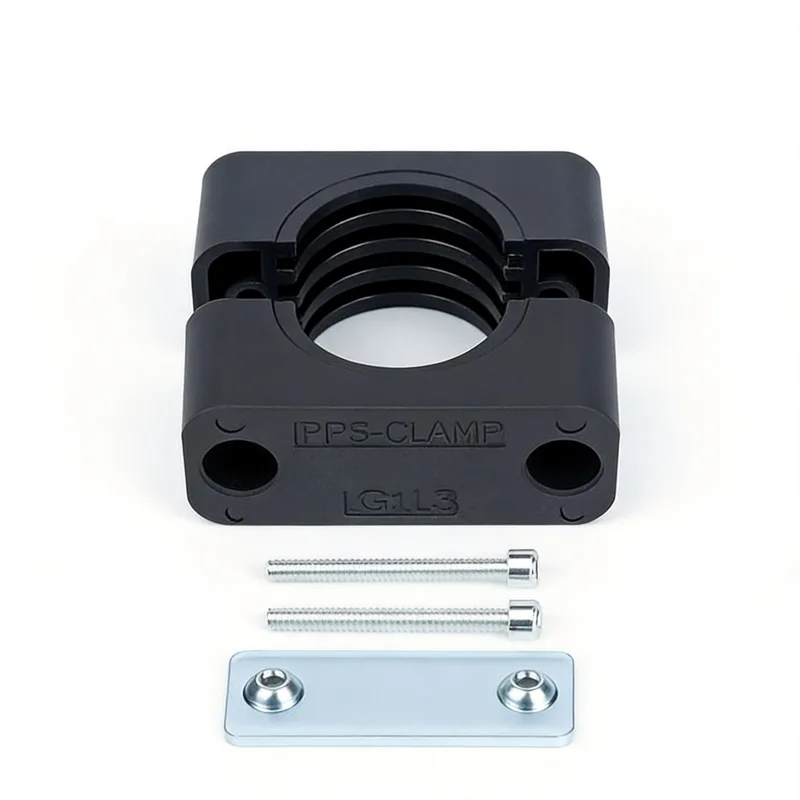
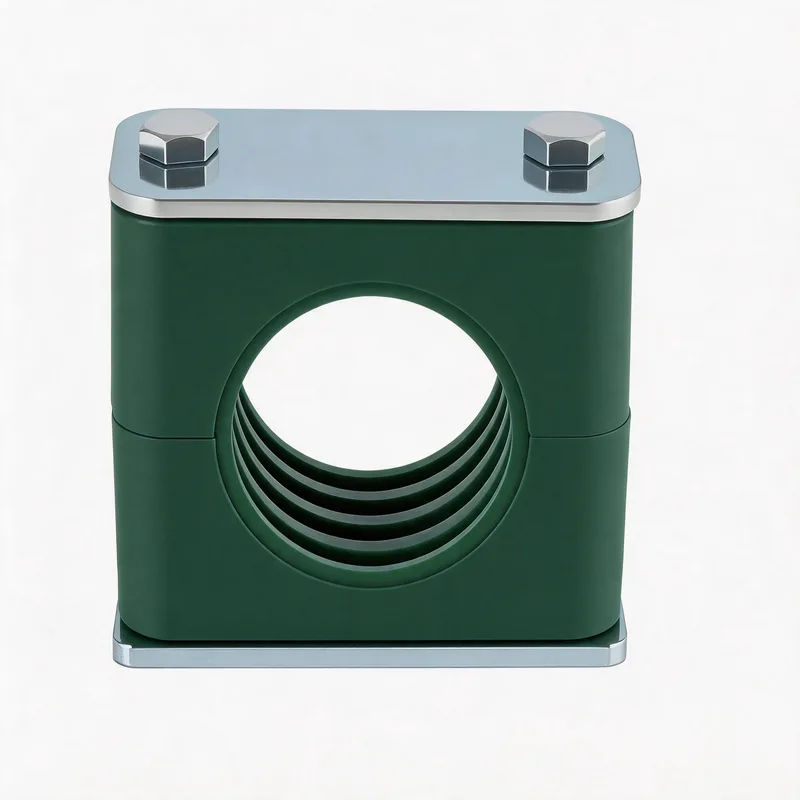
Typical use cases
- Separate reusable structural parts from wear and locking parts
- Reject cracked, deformed, corroded or chemically attacked parts
- Do not reuse unknown fasteners only because they still thread in
- Reapprove fit when tube OD, material, temperature or fluid changes
Component reuse decision matrix
| Component | Possible to reuse? | Required checks | Replace when |
|---|---|---|---|
| Polymer clamp bodies | Conditional | Bore, cracks, compression set, heat and chemical aging | Cracked, enlarged, brittle, swollen or wrong for new OD |
| Cover and base plates | Often, after inspection | Flatness, holes, corrosion, welds and finish | Bent, cracked, thinned or severely corroded |
| Clamp bolts | Only under an approved rule | Grade, threads, straightness, coating and load history | Unknown, damaged, necked, corroded or over-tightened |
| Locking nuts or adhesive | Follow product-specific limits | Remaining locking function and application instructions | Locking performance is uncertain or consumable is spent |
| Rail nuts and mounting rail | Conditional | Profile fit, thread, local deformation and end restraint | Slips, rocks, has damaged profile or cannot retain preload |
A part that looks clean may still be unsuitable because its grade, material, exposure or previous tightening history is unknown.
Start with why the clamp was removed
Routine access, pipe replacement, vibration damage and chemical attack create very different reuse decisions. If removal followed movement, leakage, repeated loosening or overheating, find and correct that cause before approving any old part.
Inspect fit rather than color alone
Polymer color is not a reliable remaining-life indicator. Check the supported OD, bore condition, mating faces, bolt-hole shape and whether the halves close in the intended geometry without excessive force.
Treat fasteners and locking parts separately
A reusable body does not prove that its bolts or locking parts are reusable. Tightening history, lubricant, coating and locking method affect achieved preload. Where history is unknown, matched new hardware is often the more controlled maintenance choice.
Document the reuse approval
Record location, part identity, inspection result, rejected components, replacement hardware, tightening method and the person approving return to service. For quotation, send photos, pipe OD, series, material, mounting method and which components must be supplied new.
Frequently asked questions
Can plastic DIN 3015 clamp bodies be reused?
Only after checking for cracks, permanent deformation, polished or enlarged bores, chemical attack, heat aging and loss of fit. Replace the body when the supported OD or service condition has changed outside the approved range.
Should clamp bolts be reused after removal?
Not automatically. Confirm the bolt grade, thread condition, corrosion, straightness, coating, tightening history and project reuse rule. Replace bolts with damaged threads, necking, unknown grade or uncertain loading history.
Can prevailing-torque nuts and thread-locking adhesive be reused?
Treat them as locking systems with product-specific reuse limits. Many inserts lose prevailing torque after cycles, and cured thread-locking adhesive must be cleaned and reapplied according to its instructions.
Related WeiQue series


Recommended reading
References
These pages summarize public standard metadata and industry application information. They do not reproduce the paid DIN standard text.