
DN, NPS and NB are useful piping designations, but they are not physical dimensions that can be copied directly into a pipe clamp order. A DIN 3015 clamp contacts the outside surface, so its bore must follow the actual outside diameter at the support point.
This distinction matters most on small nominal pipe sizes. For example, DN20 commonly corresponds to NPS 3/4 in an ASME wrought-steel pipe system, where the outside diameter is about 26.7 mm rather than 20 mm.
No. DN and NPS identify a nominal piping system, not the clamp bore. Convert the designation through the applicable pipe standard or measure the actual outside diameter at the support point before selecting a DIN 3015 clamp.
Related product photos
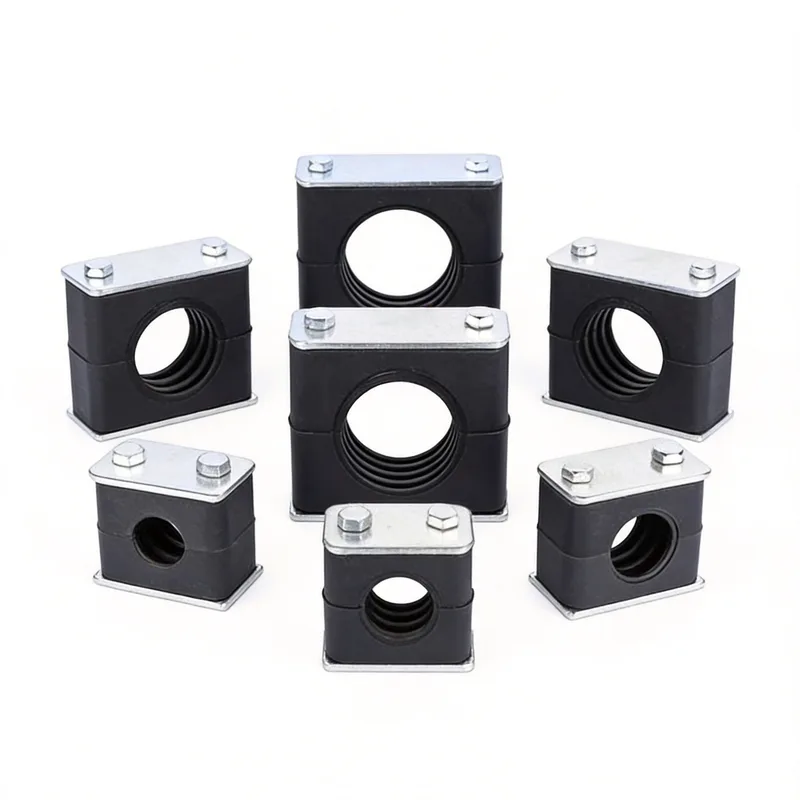
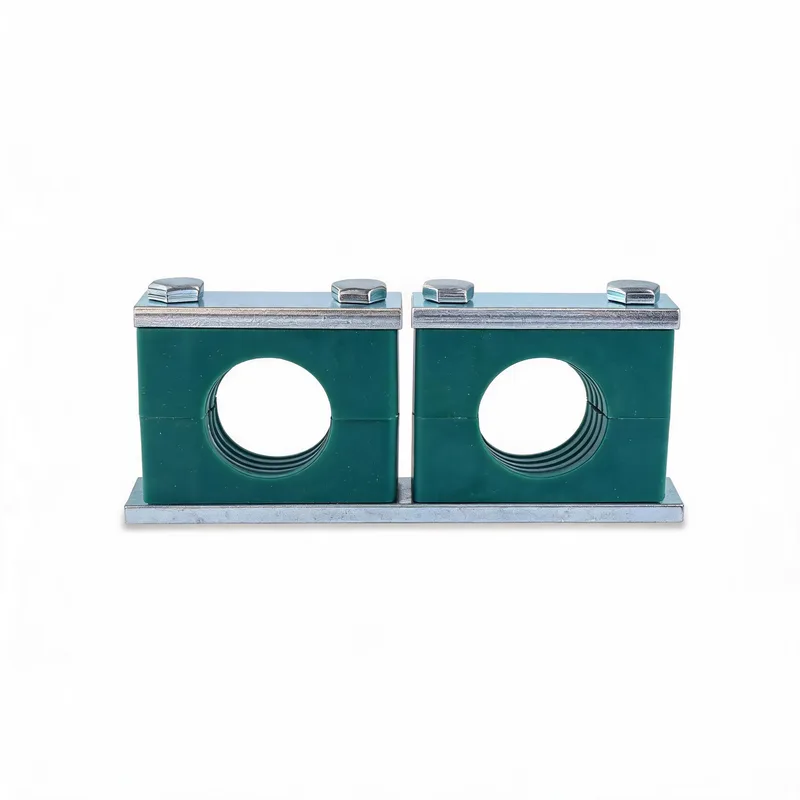
Typical use cases
- Treat DN and NPS as lookup keys, not clamp bore dimensions
- Confirm the pipe or tube standard before using any conversion table
- Use actual OD at the clamp position as the controlling dimension
- Keep thread size, hose dash and fitting size separate from pipe OD
Nominal designation versus clamp selection
| Information received | What it tells you | Can it define the bore? | Next action |
|---|---|---|---|
| DN20 | Nominal metric piping designation | No | Confirm pipe standard and actual OD |
| NPS 3/4 | Nominal inch piping designation | No | Use the governing dimensional standard |
| 20 mm tube OD | Physical outside diameter | Usually, subject to tolerance | Confirm available bore and fit range |
| 3/4-inch thread | Connection thread designation | No | Measure the tube under the clamp |
DN20, NPS 3/4 and 20 mm OD are three different kinds of information. They must not be treated as interchangeable clamp sizes.
Why DN20 is not a 20 mm outside diameter
DN is a dimensionless nominal designation for piping components. It groups compatible pipework, valves and fittings, but the number after DN is not a direct millimeter measurement of the outside surface. The actual OD comes from the selected pipe standard.
Typical ASME examples are references, not a universal clamp table
In common ASME wrought-steel pipe dimensions, DN15 / NPS 1/2 is about 21.3 mm OD, DN20 / NPS 3/4 about 26.7 mm OD, DN25 / NPS 1 about 33.4 mm OD and DN50 / NPS 2 about 60.3 mm OD. These examples show the nominal-versus-actual difference; confirm the exact standard, tolerance, coating and measured surface before releasing a clamp.
Schedule normally changes wall thickness, not clamp OD
Within one ASME NPS size, changing schedule normally changes wall thickness and inside diameter while the standardized outside diameter remains the same. That does not make NPS itself a clamp size: the dimensional standard must still be identified, especially when tubing, plastic pipe or another national standard is involved.
A reliable DN or NPS enquiry workflow
Record the nominal designation exactly, identify the pipe material and dimensional standard, add schedule or wall thickness, then confirm actual OD from the standard or a field measurement. Only after that should the clamp bore, DIN 3015 series, body material and mounting hardware be selected.
RFQ data when only nominal size is available
Send DN, NPS or NB exactly as shown, pipe material standard, schedule or wall thickness, measured OD if possible, coating or insulation at the clamp point, quantity, preferred series, mounting method, fluid, pressure, temperature and a marked drawing or photo.
Frequently asked questions
Is DN20 pipe 20 mm outside diameter?
Not necessarily. DN20 is a nominal designation. In the common ASME NPS 3/4 wrought-steel pipe system, the outside diameter is about 26.7 mm, but the governing pipe standard must be confirmed.
Does pipe schedule change the clamp size?
For a given ASME NPS, schedule normally changes wall thickness and inside diameter while the outside diameter remains fixed. Clamp bore therefore follows the OD, but the pipe standard and OD still need confirmation.
What should I send if the drawing lists only DN or NPS?
Send the DN or NPS designation, pipe material standard, schedule or wall thickness, measured OD if available, quantity, clamp series, mounting method and a marked drawing or photo.
Related WeiQue series


Recommended reading
References
Nominal-size examples are based on public ASME and ISO standard descriptions. Confirm the purchased standard or measured OD before releasing a clamp order.