
Compressed air and pneumatic pipework shares many clamp selection principles with hydraulic systems but has different priorities: lower operating pressure, a wider range of pipe materials and bores, more condensate and oil mist exposure, and often stronger vibration from piston compressors.
A well-supported compressed air line reduces pressure drop, prevents long-span vibration and fatigue, protects fittings and connections, and makes leak detection and maintenance easier.
Related product photos
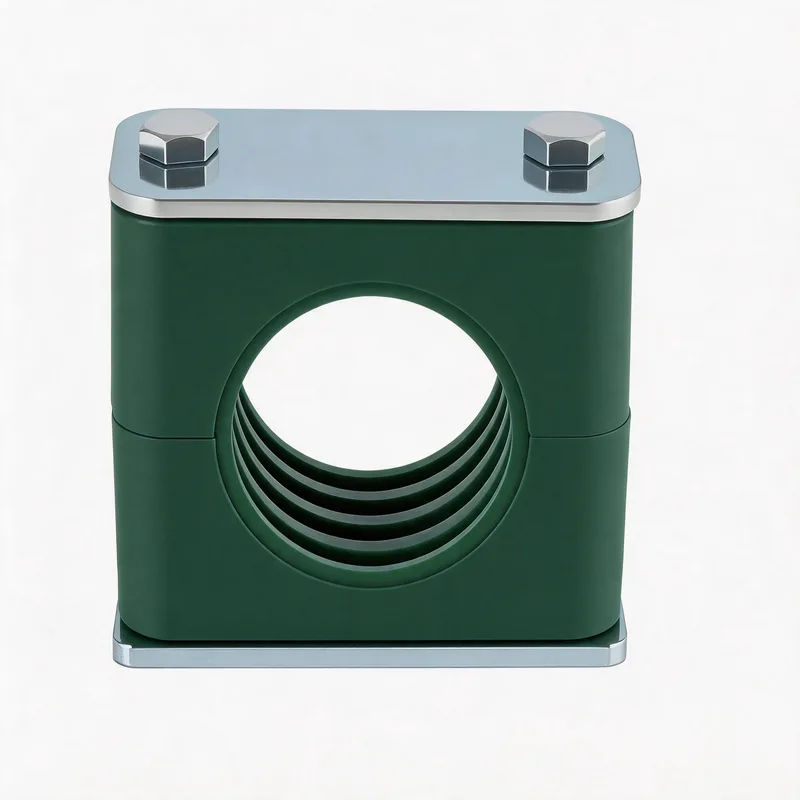
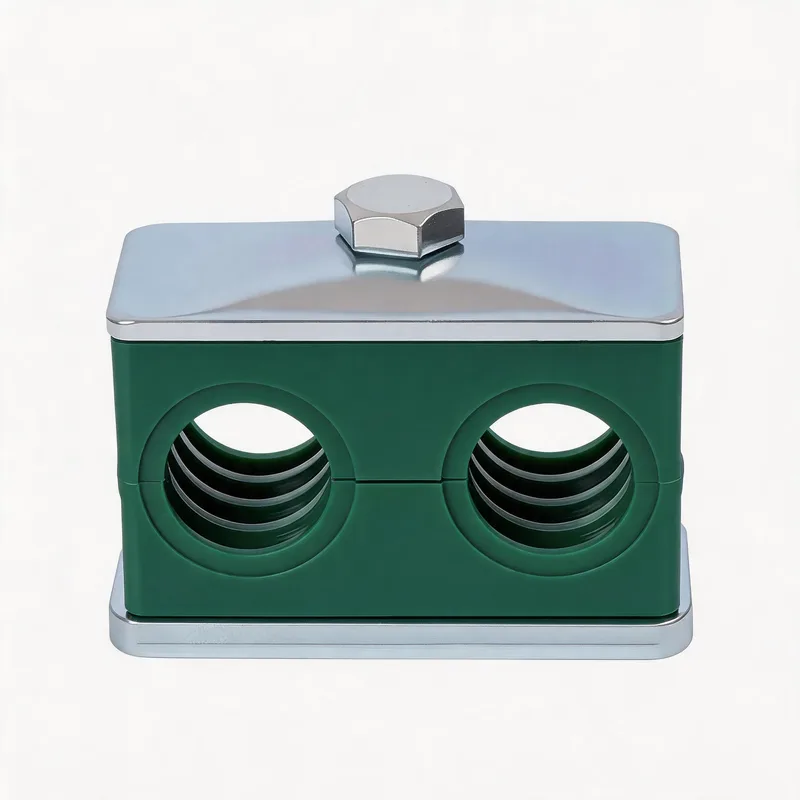
Typical use cases
- Select bore from the actual pipe OD, not nominal air line flow size or thread size
- Use heavy series or cushioned clamps within 2–3 m of piston compressor outlets
- Reduce clamp spacing near branch tees, moisture traps, hose reels and tools
- Confirm corrosion protection for outdoor compressed air headers
Compressed air pipe clamp selection matrix
| Location | Recommended series | Key consideration |
|---|---|---|
| Compressor outlet and receiver header | WQH heavy or WQF cushioned | Pressure pulse and vibration from piston compressor |
| Distribution header along wall or ceiling | WQL standard or WQH heavy | Pipe weight, spacing, condensate drain points |
| Drop legs to tools and workstations | WQL standard | Flexible hose transition, easy service access |
| Pneumatic actuator and cylinder lines | WQL standard or WQF cushioned | Cycling load, proximity to valves and quick-exhaust ports |
Final selection depends on actual pipe OD, pressure, vibration source, spacing and project standard.
Bore selection for compressed air pipe
Select the clamp bore from the actual outside diameter of the pipe or tube at the support point. Compressed air systems use a wide range of pipe types — copper, aluminum, galvanized steel, stainless, HDPE and composites — and each type may have a different OD for the same nominal flow size. Always measure the actual OD rather than selecting by flow size, thread designation or pipe schedule.
Vibration near compressors and actuators
Piston compressors create strong pressure pulses and mechanical vibration. Clamps within two to three metres of a compressor outlet or reciprocating actuator should use DIN 3015-2 heavy series or cushioned NBR clamps. Reduce unsupported span near quick-exhaust valves, cylinder ports and hose-to-pipe transitions. The same principles apply to diaphragm and screw compressors, though pulse amplitude is usually lower.
Condensate and oil mist exposure
Compressed air often carries moisture and compressor oil mist. Most PP and PA clamp bodies are unaffected by clean air and typical compressor oils, but sustained oil mist at high concentration, standing condensate water in the clamp bore or aggressive cleaning chemicals may need a material review. Confirm chemical compatibility when the process uses solvent-based coatings, releasing agents or corrosive cleaning products near the line.
Spacing and layout
Compressed air headers often run long distances along walls and overhead structures. Shorten clamp spacing near branch tees, service drops, moisture traps and demand points. For overhead headers, the additional weight of condensate and fittings increases clamp load. Confirm clamp spacing against actual pipe weight, span and vibration, not only a generic spacing table.
Outdoor and hygiene environment checks
Compressed air networks in outdoor environments need corrosion protection review for the clamp, base plate and hardware. Where humidity, salt air, UV or aggressive washing applies, evaluate stainless or hot-dip galvanized hardware. For food, pharmaceutical or beverage facilities where air contacts the product, confirm all clamp and fastener materials meet the applicable hygiene or food-contact standard.
RFQ data for compressed air pipe clamps
Send pipe material and OD, working pressure, compressor type and output, line temperature, vibration level, indoor or outdoor, corrosion exposure, cleaning chemicals if any, clamp series preference, mounting method, quantity, and any applicable safety, hygiene or certification requirements.
Frequently asked questions
Can I use the same DIN 3015 clamps for both compressed air and hydraulics?
Yes in most cases. Select by actual tube OD, pressure class, vibration and material. Compressed air systems typically operate at lower pressure than hydraulic lines, so a standard-series clamp that fits the OD and bore is usually acceptable. Confirm the material for any oil mist, condensate or cleaning chemical exposure.
What clamp spacing should I use for a compressed air header?
Spacing depends on pipe OD, wall thickness, pipe material and total mass including condensate. A general starting point for horizontal steel headers is 1000–2000 mm, shortened near branch tees, valves, hose connections and compressor outlets. Always confirm against actual pipe weight and any vibration amplification in the span.
Do I need cushioned clamps for a rotary screw compressor outlet?
Not always, but it is worth reviewing. Rotary screw compressors produce lower-amplitude pressure pulses than piston compressors, so rigid standard-series clamps often suffice. If the installation shows bolt loosening, noise or pipe vibration at or near the compressor outlet, consider cushioned or heavy-series clamps in that section.
Related WeiQue series


Recommended reading
References
These pages summarize public standard metadata and industry application information. They do not reproduce the paid DIN standard text.