
For pipe clamps in hydrogen facilities, three specification rules cover most of the risk: use A2-70 or A4-70 austenitic stainless fasteners, or carbon steel no stronger than grade 8.8 with zinc-flake (not electro-galvanized) coating, because hydrogen embrittlement susceptibility rises sharply above roughly 1000 MPa tensile strength; tighten clamp spacing near reciprocating compressors, because hydrogen measurably accelerates fatigue crack growth in pipework steel; and verify −40 °C impact toughness for any polymer clamp component in dispenser pre-cooling zones.
Hydrogen infrastructure — electrolysers, refuelling stations, blending stations and dedicated pipelines — is one of the fastest-growing sources of industrial pipe clamp demand, and it arrives with a specification culture different from conventional hydraulics. Project specifications routinely extend fastener restrictions to every bolted item inside the fenced area, including pipe supports, because site inspection cannot distinguish a clamp bolt from a flange bolt once installed. Understanding why these restrictions exist makes the RFQ faster to write and the supplier data easier to check.
For hydrogen facilities: specify A2-70/A4-70 stainless or grade 8.8 zinc-flake fasteners (never electro-galvanized 10.9/12.9 — embrittlement risk above ~1000 MPa), halve clamp spacing within 3 m of reciprocating compressors, and use PA or metal clamps rated to −40 °C in dispenser pre-cooling zones.
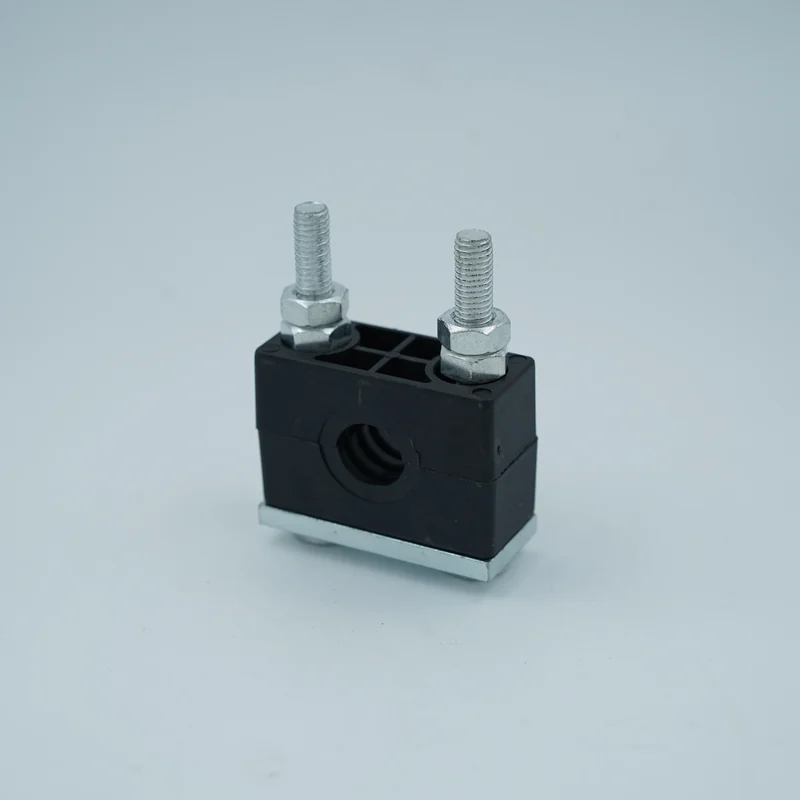
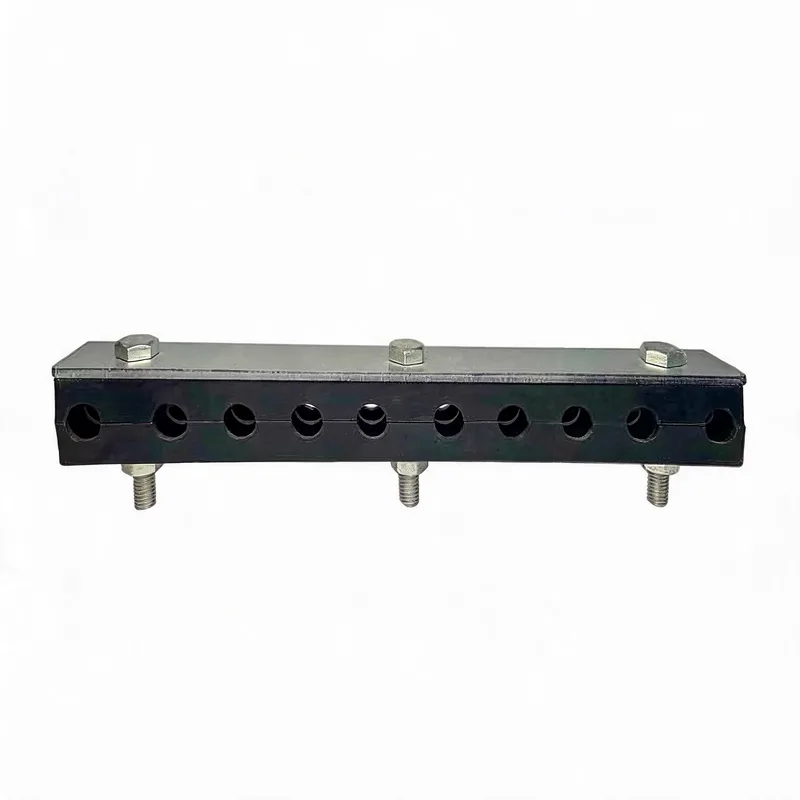
Mounting methods at a glance
Key points
- Hydrogen embrittlement needs three things at once: a susceptible microstructure (high-strength steel), tensile stress (bolt preload) and a hydrogen source (electroplating bath or the process gas). A clamp bolt is permanently under all of the first two — controlling the material is the only practical lever.
- Published fatigue testing of pipeline steel shows hydrogen exposure can accelerate fatigue crack growth by up to an order of magnitude — vibration control at supports is therefore a leak-prevention measure in hydrogen pipework, not just a comfort issue.
- Accident analyses of hydrogen refuelling stations repeatedly identify piping joints and fittings as leading leak locations — clamp layout that keeps cyclic bending stress away from joints directly addresses the dominant failure statistics.
- Dispenser pre-cooling brings hose and tubing zones to −40 °C: standard PP clamp bodies embrittle below approximately −20 °C, so specify PA bodies or metal clamps with elastomer inserts rated for the actual minimum temperature.
- The clamp body itself never touches the hydrogen — polymer bodies need no hydrogen-compatibility review. The engineering attention belongs on fasteners, vibration and temperature, not on the PP/PA material datasheet.
Clamp fastener options for hydrogen facilities
| Fastener option | Embrittlement risk | Hydrogen facility suitability | Notes |
|---|---|---|---|
| Grade 12.9, electro-galvanized | High | ★☆☆☆ Avoid | Strength ~1200 MPa + plating hydrogen; commonly banned by project specs |
| Grade 10.9, electro-galvanized | Elevated | ★★☆☆ Restricted | Requires post-plating baking evidence; many specs still exclude it |
| Grade 8.8, zinc-flake coated | Low | ★★★★ Good | Non-electrolytic coating adds no hydrogen; strength below susceptibility threshold |
| Grade 8.8, hot-dip galvanized | Low | ★★★☆ Good (outdoor) | Thicker coating needs oversize nut tapping; check torque adjustment |
| A2-70 austenitic stainless | Very low | ★★★★ Very good | Austenitic structure has low hydrogen diffusivity; default for indoor H2 skids |
| A4-70 austenitic stainless | Very low | ★★★★ Best (outdoor/coastal) | Adds molybdenum corrosion resistance for outdoor refuelling stations |
Susceptibility threshold guidance: hydrogen embrittlement risk in carbon steel fasteners rises sharply above roughly 1000 MPa tensile strength (approximately grade 10.9 and above, or hardness above ~320 HV). Grade 8.8 (800 MPa) sits below the commonly applied limit.
Why hydrogen projects restrict high-strength fasteners
Hydrogen embrittlement is the loss of ductility and load-carrying capacity that occurs when atomic hydrogen diffuses into steel and accumulates at microstructural trap sites — grain boundaries, inclusions and regions of high triaxial stress such as thread roots. A bolt that passed every dimensional and torque check can fracture days or weeks after installation, with a brittle intergranular fracture surface and no visible warning. Research on high-strength steels consistently shows that susceptibility is strongly correlated with strength level: below roughly 1000 MPa tensile strength, the microstructure tolerates diffusible hydrogen reasonably well; above it, the tolerance collapses. This is why grade 8.8 (nominal 800 MPa) is widely accepted while grade 12.9 (1200 MPa) is widely banned in hydrogen facilities. The hydrogen source matters as much as the steel. For pipe clamp bolts, which do not contact the process gas, the dominant source is electroplating: the acid pickling and electrolytic zinc deposition steps charge the steel surface with hydrogen, which is why quality standards require post-plating baking for high-strength electroplated parts. Zinc-flake coatings (Geomet, Delta-Protekt and equivalents) are applied without electrolysis and introduce no hydrogen, which makes grade 8.8 with zinc-flake the standard carbon-steel choice for hydrogen sites. Austenitic stainless fasteners (A2-70, A4-70) take a different route to safety: the face-centred cubic structure has hydrogen diffusivity several orders of magnitude lower than ferritic steel, so hydrogen cannot readily reach and accumulate at internal trap sites.
Vibration, hydrogen-accelerated fatigue and clamp spacing
Hydrogen refuelling stations compress gas to 700–900 bar with reciprocating compressors, and electrolyser skids run process pumps and cooling circuits — both put sustained pulsation and broadband vibration into small-bore pipework and instrument tubing. In conventional hydraulics, the consequence of under-supported vibrating pipe is fatigue cracking on a timescale of years. In hydrogen service the same cyclic stress is more dangerous, for a documented reason: fatigue testing of pipeline steels in hydrogen shows crack growth rates accelerated by up to roughly ten times compared to air, because hydrogen concentrates at the crack tip and lowers the energy needed for crack advance. Accident analyses of hydrogen refuelling stations consistently identify piping joints, fittings and connections as the leading leak locations — precisely the points where vibration-induced bending stress concentrates. The support layout rules follow directly. Halve the normal clamp spacing within roughly three metres of a reciprocating compressor or pulsating line. Place a clamp close to each side of valves, filters and instrument connections so the joint itself carries no bending moment. Use cushioned (elastomer-insert) clamps on the compressor discharge section to attenuate transmission rather than rigidly coupling the pulsation into the support structure, and specify a re-torque check after the first 500 operating hours, when initial settlement of inserts and gaskets is complete.
Cold zones, outdoor exposure and clamp body material
The clamp body never contacts the hydrogen, so polymer bodies need no gas-compatibility review — but hydrogen facilities still impose two environmental conditions that standard clamp specifications miss. The first is dispenser pre-cooling. To meet vehicle fill-time targets, refuelling protocol requires the gas to be pre-cooled, and dispenser hose and tubing zones routinely operate at −40 °C. Standard polypropylene clamp bodies embrittle below approximately −20 °C and can crack under vibration or impact at dispenser temperatures; polyamide retains useful impact toughness to −40 °C and is the correct polymer choice in these zones, with metal-plus-elastomer clamps as the conservative alternative. The second condition is outdoor siting. Most refuelling stations and many electrolyser installations are outdoors: UV-stabilised body material should be stated explicitly in the RFQ, and fastener corrosion protection should be selected for the site — A4-70 stainless for coastal or de-icing-salt environments, A2-70 or zinc-flake 8.8 inland. One further point belongs in the specification even though it concerns the metal parts rather than the polymer: in ATEX-classified zones around compressors and dispensers, some project specifications require electrical bonding continuity of metallic supports or, conversely, prefer non-sparking polymer-bodied clamps for incidental-contact surfaces. Confirm which convention the project follows before finalising the clamp bill of materials, because it changes whether the rail and base hardware need bonding provisions.
What we see in hydrogen orders, and what to write in the RFQ
Hydrogen enquiries — typically from electrolyser skid builders and refuelling station integrators — differ from conventional hydraulic orders in a consistent, industry-wide way: the fastener specification arrives first, before pipe size or quantity. The standard pattern is a request to confirm A4-70 bolting with EN 10204 3.1 certificates on every clamp assembly, and hydrogen project specifications commonly require the supplier's standard zinc-plated hardware to be replaced across the whole order even for clamps outside the classified zone — exactly the "whole fenced area" convention described above. Buyers preparing a hydrogen RFQ can save a full quotation round by including five lines from the start. State the facility type and pressure level (electrolyser skid, 700 bar refuelling station, blending station) so the supplier understands the specification context. State the fastener requirement explicitly: material class (A2-70 / A4-70 / 8.8 zinc-flake), the prohibition of electro-galvanized high-strength bolts, and the certificate type (EN 10204 3.1 with material traceability is the common request). State the minimum design temperature for each zone — ambient for most of the site, −40 °C for dispenser areas. State vibration sources: compressor type and any pulsating lines, so the supplier can propose cushioned clamps and reduced spacing where they matter. And state the ATEX zone classification with the project convention for support bonding, if metallic supports are involved. WeiQue supplies DIN 3015 clamps with A2-70, A4-70 and zinc-flake 8.8 hardware with 3.1 certificates; send these five lines with your tube schedule and we will return a zone-by-zone clamp bill of materials.
Frequently asked questions
Can I use standard zinc-plated grade 12.9 bolts on pipe clamps in a hydrogen plant?
No. Hydrogen embrittlement susceptibility rises sharply above roughly 1000 MPa tensile strength, and electro-galvanizing charges the steel with hydrogen during plating. Most hydrogen project specifications ban electro-galvanized 10.9 and 12.9 bolting site-wide, including supports. Use A2-70/A4-70 stainless or grade 8.8 with zinc-flake coating instead.
Do polymer pipe clamp bodies need hydrogen compatibility testing?
No — the clamp body clamps the outside of the pipe and never contacts the gas. The real requirements are environmental: −40 °C impact toughness in dispenser pre-cooling zones (use PA, not PP), UV stabilisation for outdoor sites, and the project convention on ATEX bonding for metallic support parts.
What clamp spacing should I use near a hydrogen compressor?
Halve the normal spacing for the pipe size within roughly 3 m of a reciprocating compressor, place a clamp on each side of valves and instrument connections, and use cushioned clamps on the discharge section. Hydrogen accelerates fatigue crack growth in steel pipework by up to roughly 10×, so vibration control at supports is a leak-prevention measure. Re-check torque after the first 500 operating hours.
Related WeiQue series


Recommended reading
References
Further reading: open-access research on hydrogen embrittlement of high-strength steel, hydrogen-accelerated fatigue of pipeline steel, and hydrogen refuelling station accident analysis
- Hydrogen Embrittlement Susceptibility of a Newly Developed Grain-Refined Ultra-High Strength Steel — Materials 18(5):987 (MDPI, open access)
- Hydrogen-Accelerated Fatigue of API X60 Pipeline Steel and Its Weld — Metals 13(3):563 (MDPI, open access)
- Accident Analysis Modeling and Case Study of Hydrogen Refueling Station Using Root Cause Analysis (RCA) — Safety 11(2):60 (MDPI, open access)