
General clamp spacing rules are only a starting point near a hydraulic pump. Pump outlets, motor frames, manifolds, filters, valves and hose-to-tube transitions can introduce pressure pulses and structure-borne vibration.
The practical goal is to prevent the pipe from acting like a cantilever, protect fittings from repeated bending and keep service access for filters, gauges and hose replacement.
Related product photos
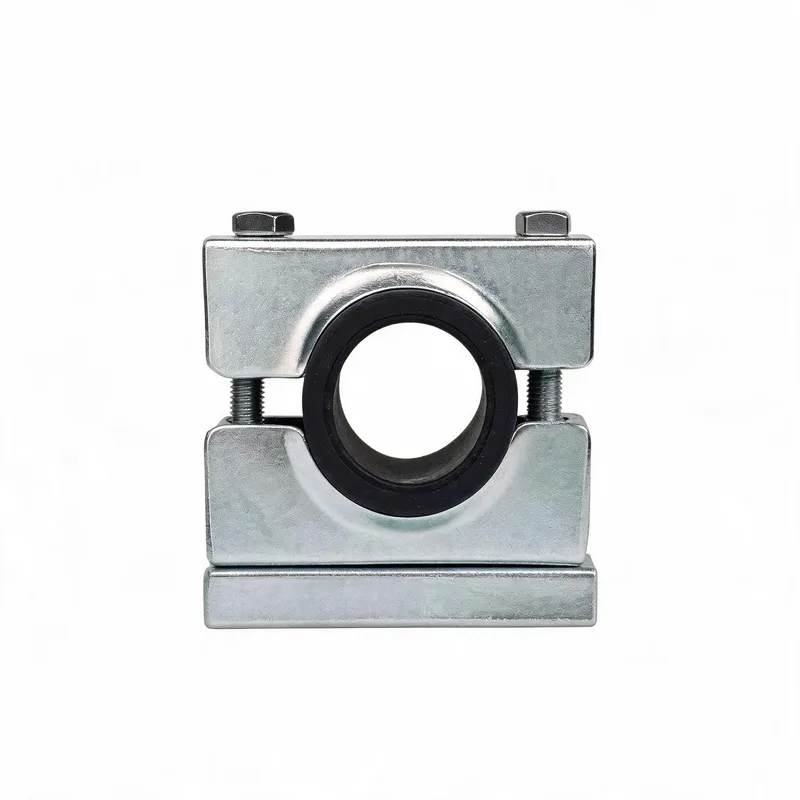
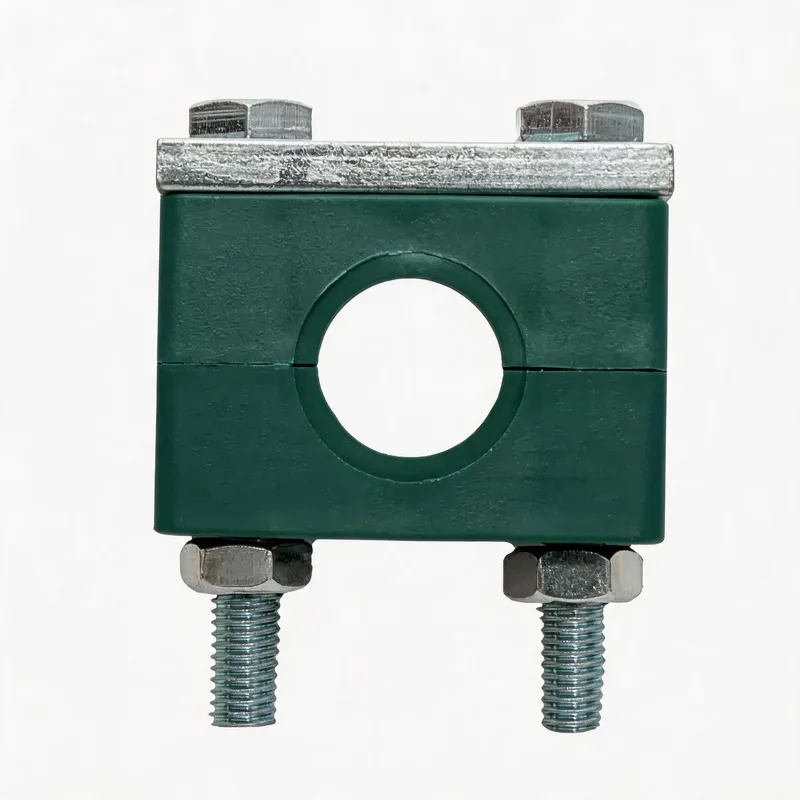
Typical use cases
- Place supports closer to pump outlets, manifolds, valves and hose transitions
- Avoid long cantilevered tube sections leaving fittings unsupported
- Review heavy series where pipe OD, weight or vibration is high
- Check bracket stiffness before assuming a clamp point is effective
- Leave service access for filters, gauges, couplings and hose removal
Pump-area support priority
| Location | Why it matters | Clamp review | Common mistake |
|---|---|---|---|
| Pump outlet | Highest pulsation and fitting bending risk | Short span, stiff base, heavy series if needed | Leaving the first clamp too far away |
| Manifold or valve block | Ports should not carry pipe weight | Support near exits while keeping wrench access | Clamping only after a long routed bend |
| Hose-to-tube transition | Hose movement can shake the tube end | Support tube side, check movement envelope | Letting hose load pull on rigid tube |
| Filter, cooler or gauge branch | Service access and local weight change | Support before and after heavy components when practical | Blocking maintenance with an over-tight layout |
Exact spacing must be validated by pipe OD, wall thickness, pressure, vibration, bracket stiffness and site rules.
1. Start from the vibration source
Near pumps, the first support decision should start from the vibration source rather than from a generic spacing table. Identify pump outlet, motor frame, manifold ports, valves and hose transitions, then place clamps to reduce unsupported length and local bending.
2. Protect fittings from pipe weight
Threaded ports, flanges, valve bodies, gauge branches and hose adapters should not become the main support for a tube run. Add a clamp close enough to share the pipe weight while still allowing assembly and maintenance access.
3. Choose series and mounting together
A heavy series clamp on a flexible bracket may still move as a complete assembly. Review clamp series, body material, mounting plate or rail, rail nut, bolt length and bracket stiffness as one system. If the route is compact, confirm wrench access before finalizing the layout.
4. RFQ checklist for pump-area supports
Send pipe OD, wall thickness, material, fluid, pressure, pump type if known, distance from pump outlet, nearby valves or hose transitions, vibration notes, mounting surface, available space, preferred series and photos or a routing drawing.
Frequently asked questions
Should pipe clamp spacing be shorter near a hydraulic pump?
Usually yes. Pump outlets, motor frames, valve blocks and hose transitions can introduce pulsation and structure-borne vibration, so supports should normally be reviewed closer to these points.
Is a heavy series clamp always required near pumps?
Not always. The decision depends on pipe OD, weight, pressure pulses, span, bracket stiffness and vibration level. Heavy series is a review point when the line is large, long, mobile or visibly vibrating.
Related WeiQue series


Recommended reading
References
These pages summarize public standard metadata and industry application information. They do not reproduce the paid DIN standard text.