
The specification rule for rail: pipe clamps and cable supports inside a passenger rail vehicle are governed by EN 45545-2, the European standard for the fire behaviour of materials and components on railway vehicles — a different and generally stricter framework than the UL94 bench test or the marine IMO FTP Code. Under EN 45545-2 a component is assigned a requirement set (an "R" number) according to where it sits in the vehicle and how it is used, and it must meet that set at a hazard level (HL1, HL2 or HL3) fixed by the vehicle's operation and design category. Standard PP or PA clamp bodies generally do not meet the stricter R requirements on their own; the honest answer is usually a flame-retardant polymer grade with test data, or a metal clamp, with the requirement confirmed at the clamp's actual section — not a blanket "flame retardant" claim.
This matters commercially because rail is one of the areas where Chinese manufacturing leads at scale — China operates the world's largest high-speed network, and its rolling-stock supply chain builds both for the domestic network and for export, where trains are routinely specified to EN 45545 (and to NFPA 130 for North America). A pipe clamp supplier serving that supply chain is expected to speak EN 45545 fluently: to take a requirement set and hazard level from the vehicle builder and return material that meets it with the right test evidence, rather than treating rail like any other industrial line. Chinese domestic rolling stock also carries national fire-protection requirements, so a clamp that is right for a Chinese metro is not automatically right for an EN 45545 export train — the governing document has to be named, not assumed.
Rail-vehicle pipe clamps are governed by EN 45545-2, which assigns a requirement set (R1–R26) and hazard level (HL1–HL3) by the clamp's location in the vehicle. Standard PP usually fails; specify a flame-retardant polymer grade with an EN 45545-2 test report, a flame-retardant EPDM insert where damping is needed, or a metal clamp for HL3 and escape routes.
Mounting methods at a glance
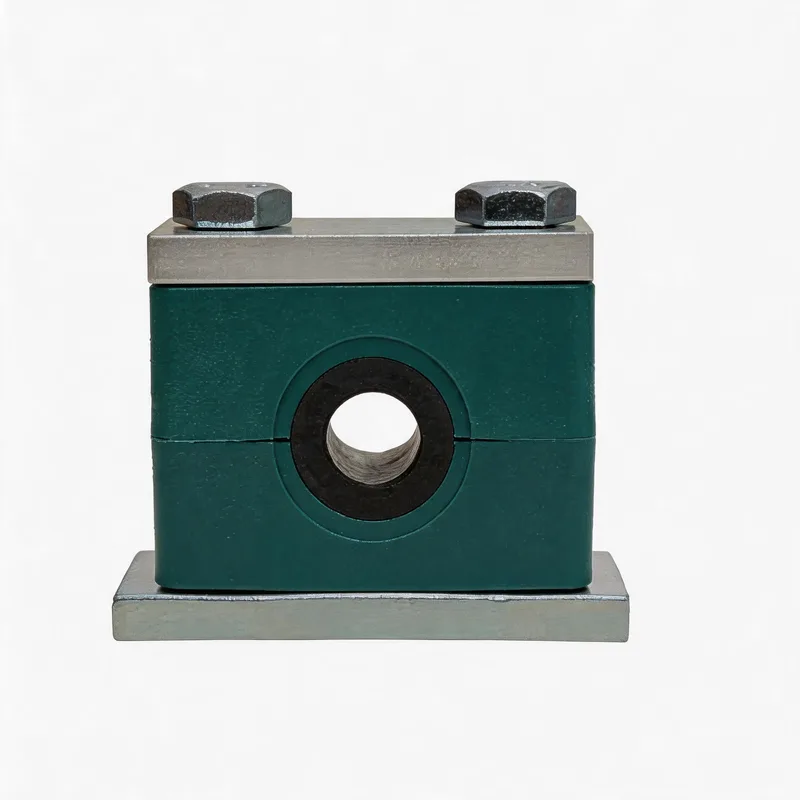
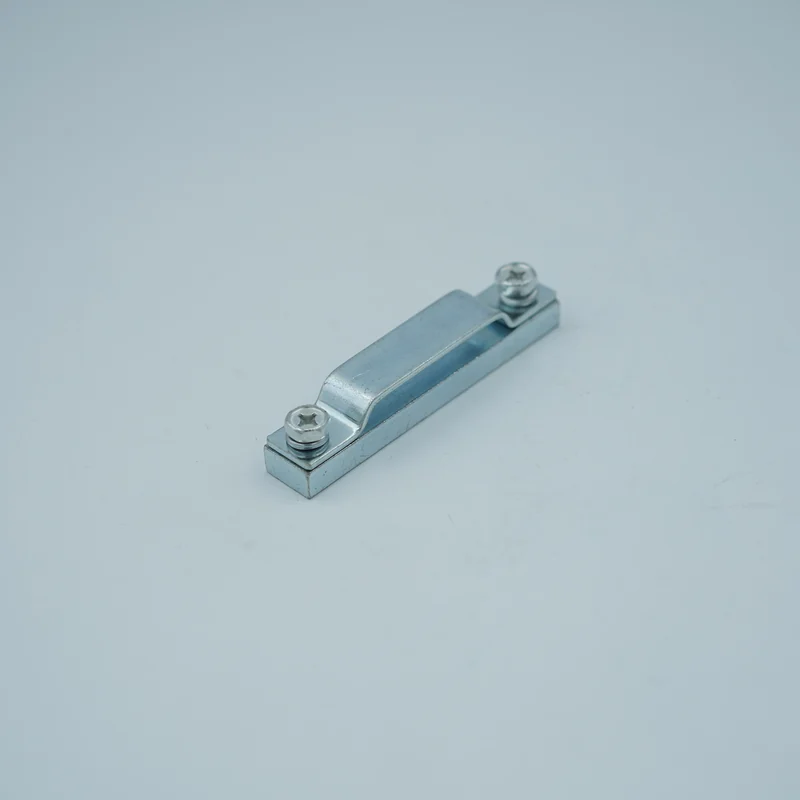
Key points
- EN 45545-2 does not classify a material once and for all — it assigns a "requirement set" (R1–R26) by the component's location and use, tested at a hazard level (HL1–HL3) set by the vehicle category. The same clamp can be acceptable in one position and non-compliant in another.
- The tests behind an R set go well beyond flammability: they cover flame spread, heat release, smoke optical density and gas toxicity — in an enclosed carriage the smoke and toxic gas are the dominant hazard to escaping passengers, which is why halogen-free flame-retardant formulations are preferred.
- Standard PP is normally not accepted for listed rail interior locations; standard PA may be marginal; a compliant polymer clamp needs a flame-retardant grade with an EN 45545-2 test report for the required R set, not just a datasheet line saying "flame retardant".
- Rail is a vibration environment as well as a fire-regulated one: bogie and track-input vibration means cushioned clamps are common, so the elastomer insert must satisfy both the damping duty and the EN 45545 requirement — flame-retardant EPDM-based grades exist for exactly this combined demand.
- For the strictest positions — escape routes, HL3 vehicles — a metal clamp removes the fire question entirely: it is non-combustible, so the compliance document becomes a material certificate rather than an EN 45545-2 fire test report, which is often the fastest and cheapest route for a handful of critical supports.
Clamp material vs EN 45545-2 suitability in rail vehicles
| Clamp material | EN 45545-2 fit | Typical location |
|---|---|---|
| Standard PP | ★☆☆☆ Usually fails R requirement | Not accepted for most listed rail locations |
| Standard PA / GF-PA | ★★☆☆ Some grades marginal | Only with test data for the specific grade |
| FR polymer (HL2/HL3 grade) | ★★★★ Meets R set with test report | Interior, technical and equipment areas |
| FR elastomer insert (EPDM-based) | ★★★★ Damping + fire compliance | Vibration-critical cushioned clamps |
| Metal (steel / stainless / aluminium) | ★★★★ Non-combustible — simplest route | Escape routes, HL3, high-temperature areas |
The required R set and hazard level come from the vehicle builder, driven by the vehicle operation/design category and the component location — a clamp in an escape area at HL3 faces a stricter requirement than the same clamp in a sealed underfloor equipment box. Always obtain the R number and HL from the project specification before selecting material.
How EN 45545-2 works: hazard levels and requirement sets
EN 45545-2 is the part of the EN 45545 series that governs the fire behaviour of materials and products used on railway vehicles, and it is structured differently from a single pass/fail bench test. Two ideas drive it. First, the hazard level: the vehicle is placed in an operation and design category — broadly, how easily passengers can escape and whether the vehicle runs underground, is automatic without staff, or is double-deck or a sleeper — and this yields a hazard level of HL1, HL2 or HL3, with HL3 the most demanding. A metro running in tunnels or a sleeper car carries a higher hazard level than a simple above-ground regional unit, because escape is slower and the consequences of smoke are greater. Second, the requirement set: every material and component is matched to a requirement number, R1 through R26, according to where it is installed and how it is used — an interior surface, a component in a technical compartment, an electrical enclosure part, and so on. The R number points to a specific battery of tests and pass thresholds, and those thresholds tighten with the hazard level. The tests themselves cover flame spread, heat release, smoke optical density and the toxicity of combustion gases, referenced to international methods. The practical meaning for a pipe clamp is that "does this clamp meet EN 45545?" is not a yes/no question about the material in the abstract — it is a question about a specific R set at a specific HL, and it can only be answered once the vehicle builder states both.
Why standard PP and PA usually fall short
The clamp bodies that serve most industrial pipework — unmodified polypropylene and unmodified or glass-filled polyamide — are chosen for mechanical duty, chemistry and cost, not for the fire performance a passenger carriage demands. Unmodified PP is a readily combustible material that continues to burn and drips; it will not pass the flame-spread, heat-release and smoke thresholds of the stricter R sets, and it is normally excluded from listed rail interior positions. Standard PA behaves somewhat better and some glass-filled grades sit closer to the line, but "closer" is not "compliant", and acceptance still depends on a test report for the exact grade against the exact R requirement. To reach a passing result, a polymer needs a flame-retardant formulation. Published research on fire-safe polymers and flame-retardant systems shows how these formulations work — char-forming intumescent additives, phosphorus and nitrogen synergists, and nano-fillers that build a protective barrier layer — and, importantly, that halogen-free chemistries can reach the required performance without the corrosive, highly toxic smoke that halogenated flame retardants produce. That last point matters more in rail than almost anywhere: in a sealed carriage the smoke optical density and gas toxicity limits are as decisive as the flame limits, because they determine whether passengers can see and breathe well enough to reach an exit. The procurement consequence is that a rail clamp specification is not met by naming a material family; it is met by naming a flame-retardant grade with EN 45545-2 test evidence for the required R set — or by removing the polymer from the equation with a metal clamp.
Fire and vibration together: the cushioned-clamp case
Rail is unusual in demanding fire compliance and vibration control from the same component. A rail vehicle is a continuous vibration environment — bogie dynamics, track irregularities, traction equipment and, on high-speed stock, aerodynamic excitation all feed vibration into the pipework and cable runs that a clamp supports. That makes cushioned clamps with an elastomer insert common on rail, to damp vibration and prevent fastener loosening and fatigue. But the insert is a material like any other under EN 45545-2, so it must satisfy the fire requirement of its location as well as its damping duty. This is where formulation matters: standard NBR or EPDM chosen purely for damping may not meet the smoke and toxicity limits, whereas flame-retardant elastomer grades are formulated to do both. Published work on intumescent flame-retardant EPDM — using ammonium polyphosphate, pentaerythritol and expandable graphite systems — demonstrates that an EPDM compound can be given substantial flame retardancy while remaining a usable elastomer, which is exactly the combination a rail cushioned clamp needs. The specification point is to state both duties explicitly: the clamp must damp the vibration at its position and the insert must meet the EN 45545-2 requirement set for that position, and the supplier should confirm the elastomer grade against both, not treat the fire rating and the damping as separate line items handled by different parts.
What we see in rolling-stock orders, and what to write in the RFQ
Rail enquiries in this product category follow a recognisable pattern: the fire requirement arrives as a formal reference to EN 45545 with a requirement set and hazard level, embedded in a larger rolling-stock material specification, and the buyer expects the supplier to work to it rather than to a generic "flame retardant" line. A common outcome is a split specification by location — flame-retardant polymer clamps for equipment and technical areas, metal clamps for escape routes and the strictest HL3 positions, and cushioned flame-retardant clamps where vibration and fire both apply — because certifying every position to the single strictest requirement is more expensive than matching each position to its actual R set. To keep a rail RFQ efficient, four lines carry the information a clamp supplier needs. State the governing standard and the specifics: EN 45545 (or NFPA 130, or the Chinese national requirement) with the requirement set number and hazard level, per location — not just "must be fire rated". State the location and quantity of clamps in each requirement class, so the material can be matched rather than over-specified. State the vibration duty, so cushioned flame-retardant clamps are proposed where damping is needed and rigid ones where it is not. And require the compliance evidence by name: an EN 45545-2 test report for the required R set on polymer parts, or a material certificate on metal parts. WeiQue supplies standard, flame-retardant, cushioned and metal DIN 3015 clamps and works to a stated EN 45545 requirement set and hazard level; send the requirement set, hazard level and location list with your line schedule and we will propose the material split that meets each position with the least certification cost.
Frequently asked questions
Are your pipe clamps EN 45545 compliant?
That question can only be answered against a specific requirement set and hazard level. EN 45545-2 assigns each component a requirement number (R1–R26) by its location and use, tested at HL1, HL2 or HL3 per the vehicle category. Send the R set and HL from your vehicle specification and we confirm a material — flame-retardant polymer with test report, FR-EPDM insert, or metal — that meets it; a blanket "yes" without those two values means nothing.
Can I use standard PP or PA clamps inside a passenger train?
Generally no for listed interior positions. Standard PP is readily combustible and normally excluded; standard PA may be marginal but still needs test data for the exact grade against the required R set. A compliant polymer clamp uses a flame-retardant grade with an EN 45545-2 report; for the strictest positions a metal clamp is often the fastest route.
Does a cushioned clamp insert also need to meet EN 45545?
Yes. The elastomer insert is a material under EN 45545-2 like any other, so it must meet the fire requirement of its location as well as its damping duty. A standard NBR/EPDM chosen only for damping may fail the smoke and toxicity limits; specify a flame-retardant EPDM-based grade that satisfies both, and have the supplier confirm the insert against the required R set.
Related WeiQue series


Recommended reading
References
Further reading: the governing standard is EN 45545-2 (fire behaviour of materials and components on railway vehicles); NFPA 130 applies in North America, and Chinese rolling stock carries national fire-protection requirements. Open-access research below covers fire-safe and flame-retardant polymers, intumescent flame-retardant EPDM, and materials for rail vehicle structures.
- Flame Retardancy, Fire Behavior and Flame Retardant Mechanism of Intumescent Flame Retardant EPDM Containing Ammonium Polyphosphate/Pentaerythritol and Expandable Graphite — Materials 12(24):4035 (MDPI, open access)
- Fire-Safe Polymer Composites: Flame-Retardant Effect of Nanofillers — Polymers 13(4):540 (MDPI, open access)
- Cost, Draping, Material and Partitioning Optimization of a Composite Rail Vehicle Structure — Materials 15(2):449 (MDPI, open access)