
Short answer: pick the formation first, then the cleat — never the other way round. Trefoil is compact and keeps the three phases as one restrained bundle; flat spaced runs cooler and carries more current but pushes the outer cables apart under fault. Whichever you choose, the cleat must hold an IEC 61914 short-circuit rating obtained in that same formation, because a rating is a property of the tested arrangement, not of the cleat alone.
The reason this is worth stating plainly is that formation and cleat are usually decided by different people. The cable formation comes out of the electrical design — rating, volt drop, route width, containment. The cleat is often ordered later, against a datasheet figure, by someone who has the short-circuit current but not the drawing. That is where a trefoil-tested rating gets applied to a flat run. Once the formation is settled, the spacing calculation and the RFQ checklist follow from it.
Choose the cable formation first, then the cleat. Trefoil is compact and holds the three phases as one restrained bundle; flat spaced runs cooler and carries more current but pushes the outer cables apart under fault. Whichever is used, the cleat must carry an IEC 61914 short-circuit rating obtained in that same formation and spacing — the rating describes the tested arrangement, not the cleat on its own, so a trefoil figure does not apply to a flat run.
The cleat follows the formation, not the other way round
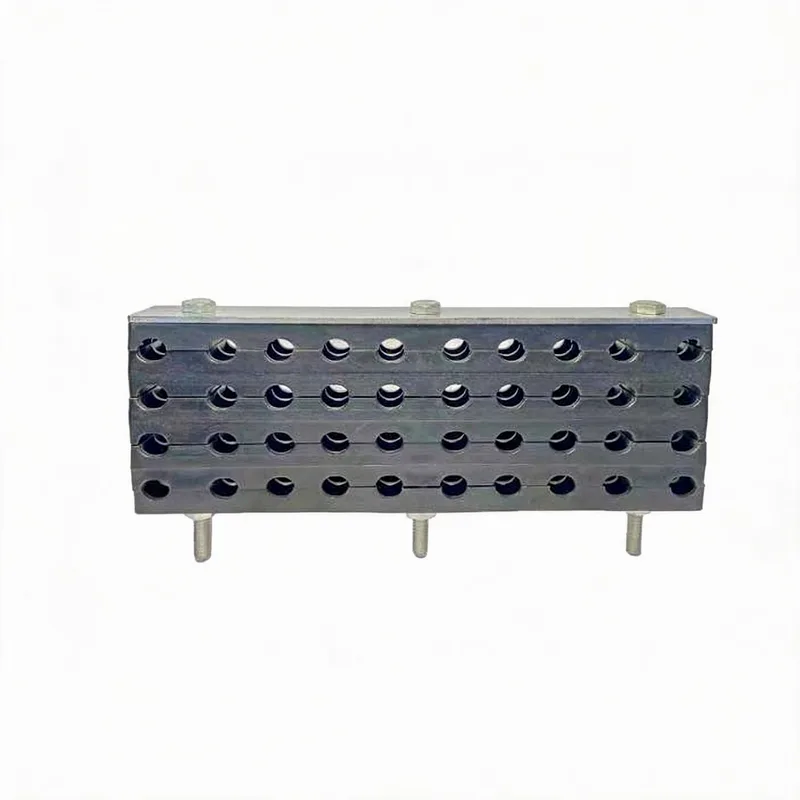
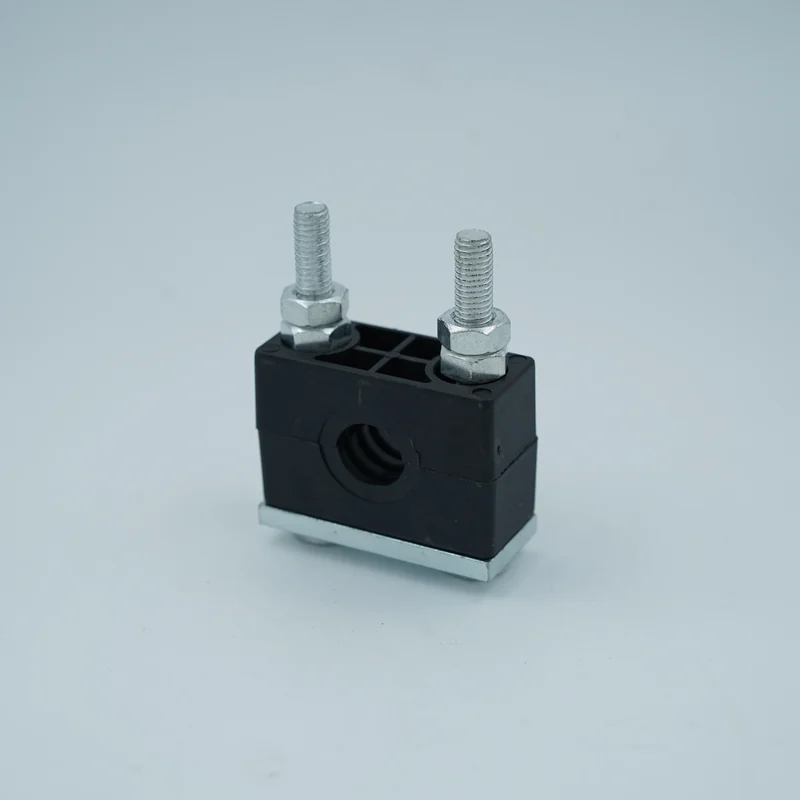
Key points
- Formation is decided by the electrical design; the cleat is selected to suit it. Reversing the order is how a trefoil rating ends up on a flat run
- An IEC 61914 short-circuit rating is a property of the tested arrangement — formation, spacing and cable size together — not of the cleat on its own
- Force between parallel conductors rises as they get closer, so trefoil sees high force between touching phases while the bundle geometry lets one cleat react it as a unit
- Flat spaced formation dissipates heat better and carries more current, but each cable is restrained separately and the fault force is reacted into the support structure
- Never exceed the tested cleat spacing: wider spacing raises the load per cleat above what the type test covered, whatever the formation
- State the formation in the enquiry. Without it a quotation is provisional, because the supplier cannot tell which tested rating applies
What changes with formation
| Decision dimension | Trefoil (touching) | Flat, spaced |
|---|---|---|
| Current rating | Lower — cables heat each other | Higher — air between cables |
| Route width needed | Compact | Wider, grows with spacing |
| Short-circuit force | High between phases, restrained as one bundle | Lower per pair, pushes outer cables apart |
| Cleat type | Trefoil cleat encircling all three | Single-way or multi-way bar |
| Induced sheath voltage | Lower — fields largely cancel | Higher, rises with spacing |
| IEC 61914 rating transfers? | No — valid only for the tested formation | No — valid only for the tested formation |
Why the force changes when the cables move apart
The electromagnetic force between two parallel current-carrying conductors is inversely proportional to the distance between them: halve the separation and the force per metre doubles. During a short circuit the currents are enormous and the force scales with their product, which is why fault forces on cable supports are orders of magnitude above anything seen in normal service. Trefoil places the three phases in contact, so the separation is one cable diameter and the per-pair force is at its highest — but the three-phase geometry means those forces act outward from the centre of the bundle, and a cleat that encircles all three reacts them internally as a single restrained group. Flat formation increases the separation and therefore lowers the force between any two conductors, but removes the bundle: the outer cables are pushed away from the centre line, each cleat restrains one cable, and the whole force has to be carried into the tray, ladder or structure behind it. Neither arrangement is inherently safer. They fail differently, and the cleat and its fixings have to be selected for the way the particular arrangement loads them.
Why a rating does not travel between formations
A cable cleat short-circuit rating is established by type test to IEC 61914: a sample installation holding cables in a defined formation, at a defined spacing, is subjected to a specified peak current, and the assembly either retains the cables or it does not. The number that comes out of that test describes the whole arrangement — the cleat, the cable size, the formation and the spacing between cleats. Change any one of them and the test no longer covers what is installed. This is not a technicality: a trefoil cleat holds three cables against each other and the load path runs through the cleat body; a flat installation puts the same nominal current through a different geometry with a different load path into the fixings. Asking for a cleat rated at a given kA is therefore incomplete without saying in what formation and at what spacing. When a supplier answers that question with a single number and no arrangement attached, that is the point to ask for the test evidence rather than to place the order. For the calculation that sits alongside the tested rating, see short-circuit force and spacing; the distinction from ordinary pipe supports is covered in cable cleats versus pipe clamps.
Where the mismatch actually happens
The recurring pattern in cable cleat enquiries is not a disagreement about physics — it is a handover. The formation is fixed early, in the electrical design, for reasons that have nothing to do with cleats: the circuit needs a certain rating so the cables go flat and spaced, or the containment is narrow so they go trefoil. Months later a procurement package asks for cleats rated to a peak current, and the person raising it has the fault level from the study but not the layout drawing. A datasheet figure gets matched to the fault level, the order goes out, and nobody has checked which formation that figure was tested in. It surfaces on site, when the cleat physically does not suit how the cables are actually run, or it does not surface at all until a fault occurs. The way to close it costs nothing: put the formation on the enquiry line next to the current, so the supplier is answering the question that was actually asked. Where the route is long enough to change character — spaced on the ladder, trefoil through a wall penetration — say so, because those are two selections, not one.
What to send with the enquiry
Five items make a cable cleat package quotable in one pass. The cable outside diameter, because the cleat is made to it. The formation — trefoil, flat touching, or flat spaced, and the centre-to-centre spacing if spaced. The prospective peak short-circuit current from the system study, not the nominal rating. The required cleat spacing along the run, or a statement that you want the supplier to propose the maximum spacing the tested rating allows. And the environment, which decides material rather than strength: cast aluminium inland, 316L stainless for coastal, marine and offshore. With those five a supplier can name a cleat that carries an IEC 61914 rating for that exact arrangement and confirm the spacing that rating was obtained at. Without the formation, any figure quoted is an answer to a different question. The full list for a tender package is in the IEC 61914 RFQ checklist, and material selection is covered in the SS316 guide and the aluminium guide.
Frequently asked questions
Can I use a cleat rated in trefoil for a flat formation run?
No. An IEC 61914 short-circuit rating comes from a type test of a whole arrangement — the cleat, the cable size, the formation and the spacing between cleats. Change the formation and the load path through the cleat and into the fixings changes with it, so the tested result no longer describes what is installed. Ask the supplier which formation the rating was obtained in, and at what spacing.
Which formation gives lower short-circuit force?
The force between two parallel conductors is inversely proportional to their separation, so flat spaced formation lowers the force between any two cables compared with trefoil, where the phases touch. But that is not the same as being easier to restrain: trefoil holds the three phases as one bundle that a single cleat reacts internally, while in flat formation each cable is restrained separately and the force is carried into the tray or structure. They fail differently rather than one being safer.
What must I state in the enquiry besides the short-circuit current?
Cable outside diameter, the formation (trefoil, flat touching, or flat spaced with the centre-to-centre distance), the prospective peak short-circuit current from the system study rather than the nominal rating, the cleat spacing you need along the run, and the environment, which decides material — cast aluminium inland, 316L stainless for coastal, marine and offshore. Without the formation any quoted figure answers a different question.
Related WeiQue series


Recommended reading
References
IEC 61914 (cable cleats for electrical installations) is cited by number rather than linked, as it is a sold document. Short-circuit levels, formation and spacing are project data and must be confirmed against the system study and the layout drawings, not against this page.