
Short answer: a DIN 3015 pipe clamp is not "equipment" under the ATEX Directive, so there is no Ex certificate for it and no supplier can issue one. Directive 2014/34/EU defines equipment as devices capable of causing an explosion through their own potential sources of ignition. A passive clamp has none. The two things that genuinely need deciding are electrostatic charge on the polymer body and whether the support is part of the equipotential bonding design.
This distinction matters commercially, not just technically. RFQs for hazardous-area projects routinely carry a line asking the clamp supplier for an ATEX certificate. That line cannot be satisfied, and chasing it stalls the order while nobody addresses the questions that do apply. Both of those belong to the installation designer and the project Ex authority — the supplier contributes material data, not a compliance verdict. Knowing which side owns which decision is what keeps a hazardous-area clamp package moving. Related reading: hazardous-area classification in oil and gas facilities and hydrogen service support specification.
A DIN 3015 pipe clamp is not "equipment" under ATEX Directive 2014/34/EU, which defines equipment as devices capable of causing an explosion through their own potential sources of ignition. A passive clamp has none, so no Ex certificate exists or can be issued. What does apply is electrostatic charge on polymer bodies (IEC TS 60079-32-1) and whether the support is a nominated bonding point (IEC 60079-14) — both project decisions, not supplier declarations.
Clamp body material is the variable, not a certification grade
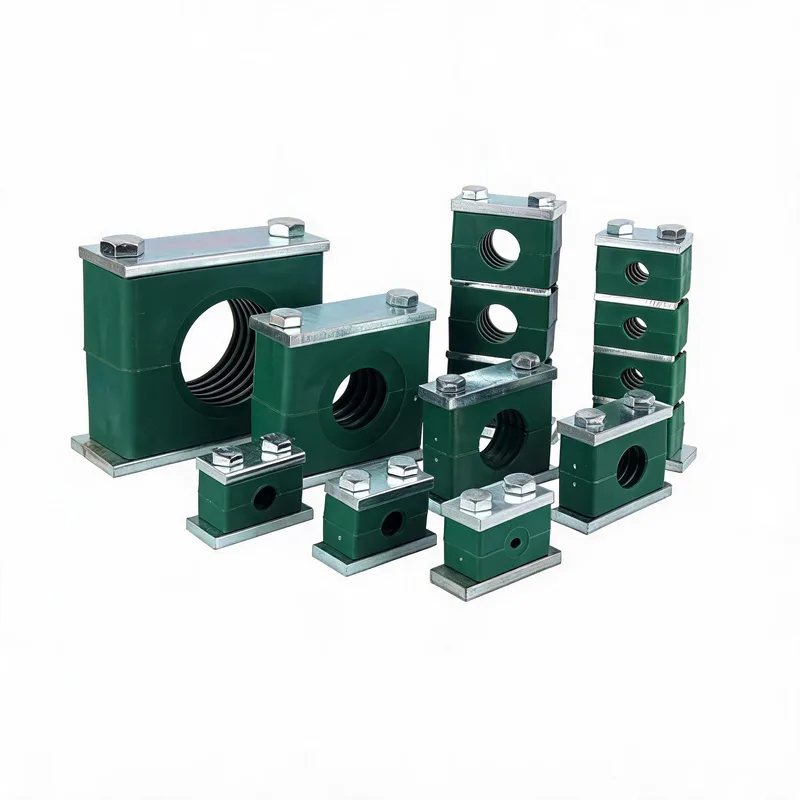
Key points
- A pipe clamp has no own source of ignition, so it falls outside the definition of equipment in ATEX Directive 2014/34/EU — no Ex certificate exists and none can be issued
- The questions that do apply are electrostatic charge on insulating surfaces and equipotential bonding of the pipework — addressed by IEC TS 60079-32-1 and IEC 60079-14 respectively
- Both decisions belong to the installation designer and the project Ex authority, not to the clamp supplier — the supplier provides material data and declarations
- In most plants the pipe is already bonded at flanges and equipment, so the clamp is not a bonding component unless the design explicitly makes it one
- Specifications sometimes require metallic supports for continuity and sometimes prefer non-sparking polymer bodies — confirm which convention the project follows before fixing the bill of materials
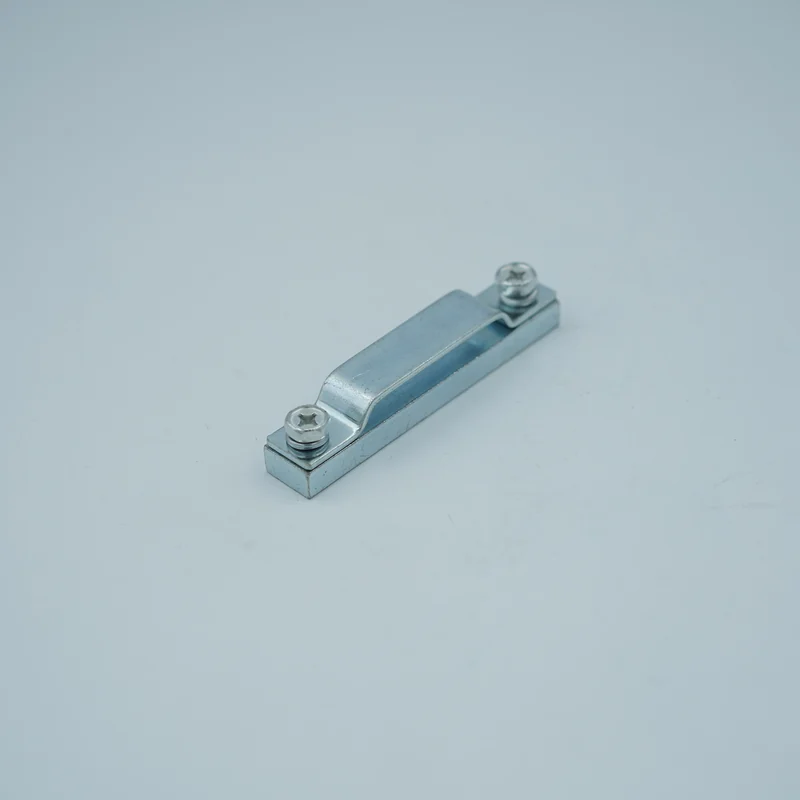
- Hot work is the controlled activity in a live zone: welded base plates need a work permit, which is why rail-nut and bolted mounting often win on brownfield sites
Who answers what
| Question raised in the RFQ | Governing document | Who decides | What the supplier can provide |
|---|---|---|---|
| Is the clamp ATEX certified? | Directive 2014/34/EU, definition of equipment | Not applicable — outside scope | A written statement of why no certificate exists |
| Can the polymer body hold a static charge? | IEC TS 60079-32-1 (electrostatics guidance) | Installation designer, against the zone | Body material grade and surface data |
| Does the support carry bonding? | IEC 60079-14 (installation design) | Project Ex authority | Metal or polymer body to the stated design |
| Can we weld base plates in the zone? | Site hot-work permit procedure | Plant operator | Rail-nut and bolted alternatives |
Why no Ex certificate exists for a pipe clamp
ATEX Directive 2014/34/EU applies to equipment and protective systems intended for use in potentially explosive atmospheres, and it defines equipment as machines, apparatus, fixed or mobile devices and their control components that are capable of causing an explosion through their own potential sources of ignition. The phrase doing the work is "their own". A motor, a light fitting, a pump and a sensor all have one — they carry current, generate heat, or move fast enough to spark. A block clamp bolted around a pipe has none of those. It does not switch, energise, rotate or heat. The directive also covers components, but a component in that sense is an item essential to the safe functioning of equipment or a protective system, which a pipe support is not. This is why searching for an ATEX-certified pipe clamp returns nothing: the certification body has no basis on which to assess one, and a supplier who offers such a certificate should be treated with suspicion rather than relief.
The question that does apply: charge on an insulating surface
Polymer clamp bodies are insulators. An insulating surface in a plant can accumulate charge from rubbing, from flowing product inside the pipe, from cleaning, or from a dust-laden airflow, and a sufficiently energetic discharge from that surface is an ignition source in its own right — separate from anything the clamp does mechanically. This is the subject of IEC TS 60079-32-1, the technical specification giving guidance on avoidance of electrostatic hazards, with its companion test methods in IEC 60079-32-2. Those documents are how a designer establishes whether an insulating part in a given zone is acceptable as-is, needs to be limited in area, needs a conductive grade, or needs to be replaced by metal. What matters commercially is that this is an assessment of the installation in its zone, not a property a clamp carries around with it. The same polymer body can be entirely acceptable in one location and ruled out in another, which is why no supplier declaration can pre-empt the answer. Where the assessment does rule out polymer, the all-metal route is the metal tube clamp range, and where corrosion is also in play it is 316L stainless.
Bonding: usually already solved elsewhere
The second question is whether the support forms part of the equipotential bonding of the pipework, which is an installation design matter under IEC 60079-14 and sits within the broader explosion-prevention framework of EN 1127-1. In most process plants the answer is that it does not: a steel pipe run is bonded at flanges, at equipment connections and at dedicated bonding points, and the supports are incidental to that path rather than responsible for it. Where the question becomes live is on pipe that is itself non-conductive or lined, on isolated spools, and on skids and packaged units where the pipework has few connections to plant steel. In those cases the design may nominate specific supports as bonding points, and that nomination changes the clamp specification: it fixes the body material, and it usually brings requirements for the rail, base and fasteners with it. This is exactly the point at which a project needs to state its convention rather than leave it implied, because the two common conventions point in opposite directions — one asks for metallic continuity through the support, the other prefers a non-sparking polymer body at surfaces that may be struck or rubbed.
What actually slows these orders down
The pattern across hazardous-area enquiries is consistent, and it is a documentation pattern rather than a technical one. An RFQ arrives with a hazardous-area boilerplate section copied from an electrical equipment package, carrying a line item for an ATEX certificate and often an IECEx scheme certificate alongside it. Nobody on either side wants to be the one to say the requirement does not apply, so the enquiry sits. Meanwhile the questions that do apply — zone, pipe material, whether the support is nominated for bonding, and whether the base can be welded in a live area — are not in the enquiry at all, because the boilerplate did not have fields for them. The practical move is to answer the certificate line in writing and immediately, explaining that a passive support falls outside the directive definition, and to attach the material declarations that do exist: body material grade, fastener grade and coating, and a REACH and RoHS statement. That converts a stalled line item into a document the buyer can put in the dossier, and it moves the conversation to the four questions that decide the specification. For the mounting question specifically, rail mount versus weld plate is usually the deciding comparison on a live site.
What to put in the enquiry
Replace the certificate line with four statements and the package can be quoted immediately. First, the zone classification and whether it is gas or dust, since dust zones bring surface-charge questions that gas zones may not. Second, the pipe material and whether it is lined or coated, because that determines whether bonding is even available through the pipe. Third, one sentence on the project convention: either supports are nominated bonding points, or they are not and the bonding is handled elsewhere. Fourth, whether hot work is permitted at the installation location, which decides between welded base plates and rail-nut or bolted mounting. With those four, a supplier can quote a complete bill of materials and supply the material declarations in the same package. Without them, any quotation is provisional. A general checklist for the rest of the enquiry is in the pipe clamp RFQ checklist.
Frequently asked questions
Can you supply an ATEX certificate for your pipe clamps?
No, and neither can anyone else. Directive 2014/34/EU applies to equipment capable of causing an explosion through its own potential sources of ignition. A pipe clamp does not switch, energise, rotate or heat, so it is outside the definition and no notified body has a basis to certify it. We supply a written statement of that scope position plus the declarations that do exist: body material grade, fastener grade and coating, REACH and RoHS.
Is a polymer clamp body a static hazard in a Zone 1 or Zone 21 area?
It depends on the installation, not on the part. An insulating surface can accumulate charge from rubbing, from product flow or from dust-laden air, and IEC TS 60079-32-1 is the guidance a designer uses to judge whether a given insulating part in a given zone is acceptable as-is, needs to be limited in area, needs a conductive grade, or must be metal. The same body can pass in one location and be ruled out in another, so ask the installation designer, not the supplier.
Does the pipe clamp need to provide earthing continuity?
Usually not. In most process plants a steel pipe run is bonded at flanges, equipment connections and dedicated bonding points, and supports are incidental to that path. It becomes a real question on non-conductive or lined pipe, on isolated spools, and on skids with few connections to plant steel — there the design may nominate specific supports as bonding points, which fixes the body material and usually brings requirements for rail, base and fasteners. State in the enquiry which convention the project follows.
Related WeiQue series


Recommended reading
References
IEC 60079-14 (electrical installations design, selection and erection) and EN 1127-1 (explosion prevention and protection, basic concepts) are cited by number rather than linked, as both are sold documents. Zone classification and the bonding design are project decisions and must be confirmed against the installation dossier, not against this page.