
DIN 3015 style clamps can support copper and aluminum tubing, but a selection that works on steel should not be copied without review. Tube stiffness, wall thickness, temper and surface durability change the contact behavior.
The clamp should hold the route without denting or ovalizing the tube, and the complete wet assembly should avoid an uncontrolled galvanic path between dissimilar metals.
Yes, when the clamp bore, body material, tightening method and support spacing are selected for the actual copper or aluminum tube. These tubes are generally easier to dent, ovalize or fret than steel, and wet contact with dissimilar metals may require electrical isolation and drainage.
Related product photos
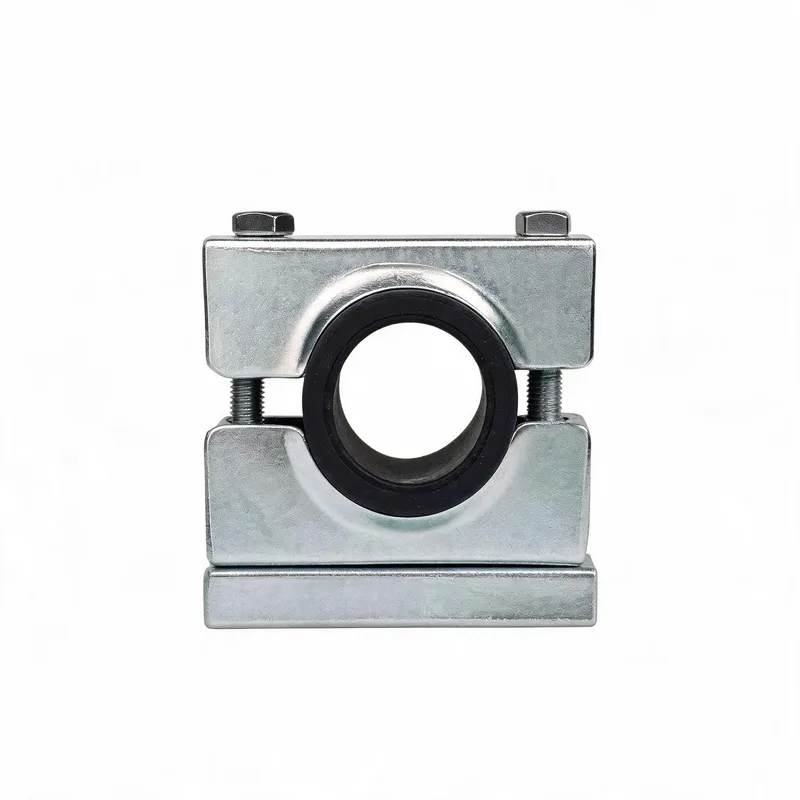
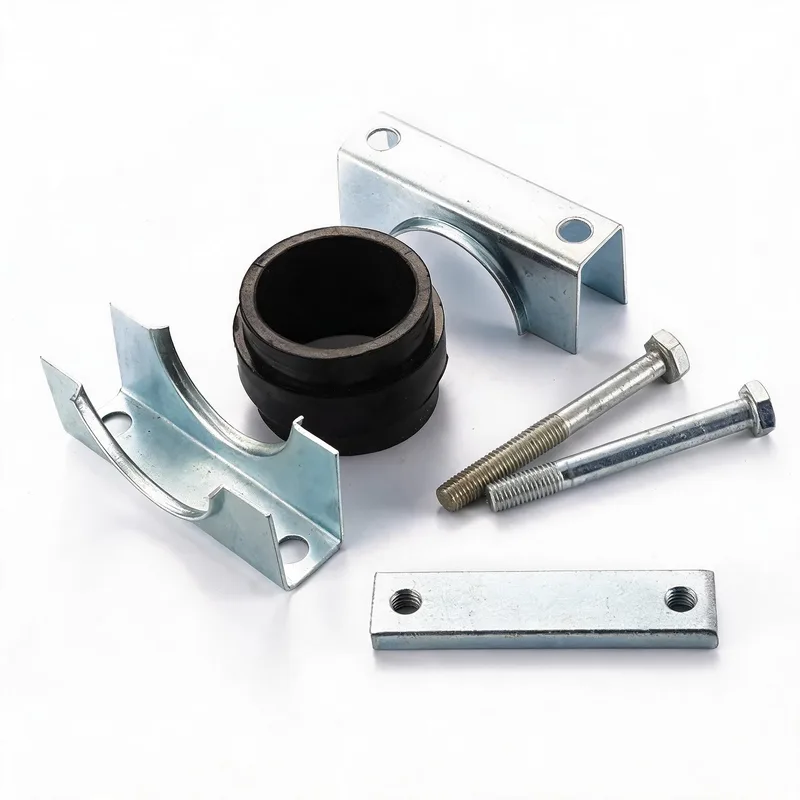
Typical use cases
- Use actual tube OD, alloy, temper and wall thickness
- Avoid forced closure and excessive local contact pressure
- Control micro-movement that can fret softer tube surfaces
- Review wet contact with steel, stainless and aluminum structures
Copper and aluminum clamp review matrix
| Design factor | Why it matters | Practical control |
|---|---|---|
| Tube alloy, temper and wall | Controls denting, ovalization and local stress | Use tube data, not material name alone |
| Clamp bore and body profile | Determines contact distribution and forced closure | Match actual OD and approved fit tolerance |
| Vibration and support spacing | Soft surfaces can fret under repeated micro-slip | Control excitation, span, alignment and damping |
| Dissimilar-metal wet contact | Can accelerate attack on the less noble metal | Use isolation, drainage and compatible hardware |
Polymer clamp bodies help isolate the tube, but exposed hardware and wet supporting structures still require review.
Identify the tube, not just the metal family
Record the tube standard, alloy, temper, outside diameter, wall thickness and operating pressure. Annealed copper, drawn copper and different aluminum alloys can have very different strength and surface response even at the same OD.
Distribute contact without forced closure
Use a clamp bore and profile approved for the actual tube. An undersized or misaligned clamp can create local flattening, while an oversized clamp can permit micro-movement and fretting. Extra bolt torque is not a substitute for correct fit.
Control vibration and rubbing
Copper and aluminum surfaces can show fretting, polishing and grooves when a tube moves repeatedly against a hard or contaminated interface. Support the route near excitation sources, keep clamps aligned and clean, and consider a compatible polymer body or damping insert where required.
Review galvanic contact as a complete assembly
A polymer body may separate most of the tube from steel hardware, but moisture can bridge exposed plate edges, bolts, brackets or conductive debris. Review material area ratios, electrolyte exposure, drainage, coating damage and maintenance access before selecting stainless or coated hardware.
RFQ data for nonferrous tubing
Send tube standard, alloy and temper, measured OD, wall thickness, pressure, fluid, temperature, route orientation, unsupported span, vibration source, indoor or outdoor moisture, nearby metals, required isolation, mounting method, quantity and certificate requirements.
Frequently asked questions
Can a standard clamp crush copper or aluminum tube?
It can if the bore is too small, the wall is thin, the tube is soft, hardware is mismatched or tightening is excessive. Check tube ovality and surface marks after the approved initial assembly or validation test.
Do copper and aluminum tubes need an insulating clamp body?
A polymer body can provide useful separation from metal hardware, but the complete wet contact path still matters. Review exposed plate edges, bolts, base structures, conductive contamination and whether drainage prevents a persistent electrolyte.
Should copper and aluminum lines use the same clamp spacing as steel?
Not automatically. Their stiffness, wall thickness, mass, vibration response and allowable deflection differ. Establish spacing from the actual tube system and support loads rather than copying a steel-line rule.
Related WeiQue series


Recommended reading
References
These pages summarize public standard metadata and industry application information. They do not reproduce the paid DIN standard text.