
A DIN 3015 clamp supports the outside of a tube; it does not contain the hydraulic fluid. For that reason, system pressure is not a direct clamp bore rating and does not automatically mean standard or heavy series.
Pressure remains important because pumps, valves and rapid load changes can create pulsation, vibration and fitting loads. The clamp decision must combine these effects with actual tube OD, tube and fluid mass, span, routing and mounting stiffness.
No. Hydraulic pressure alone does not determine clamp bore or DIN 3015 series. Pressure matters mainly through pulsation, vibration, tube and fluid mass, fitting loads and the stiffness of the complete support system.
Related product photos
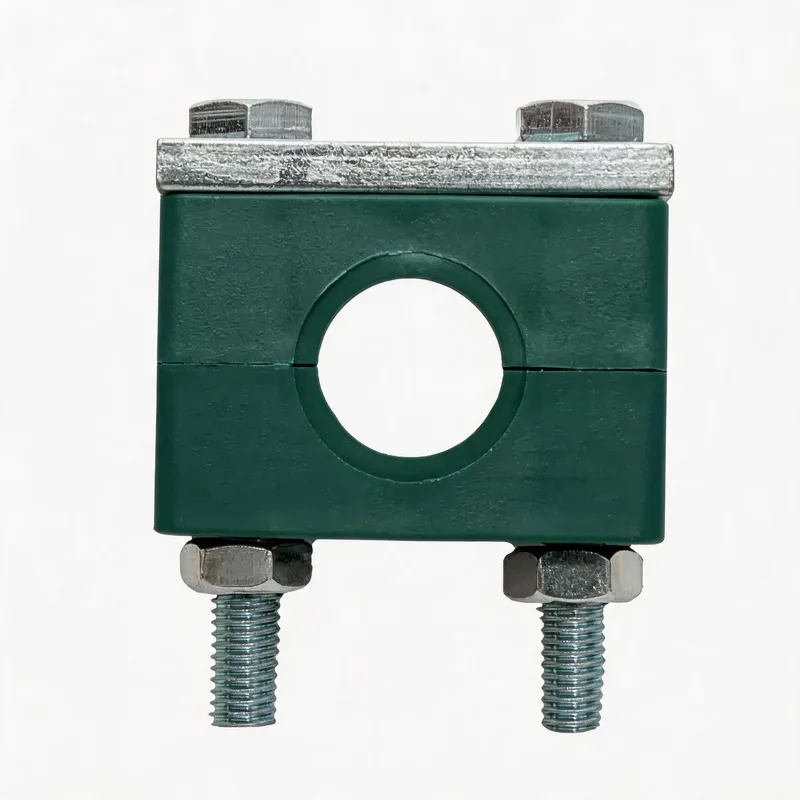
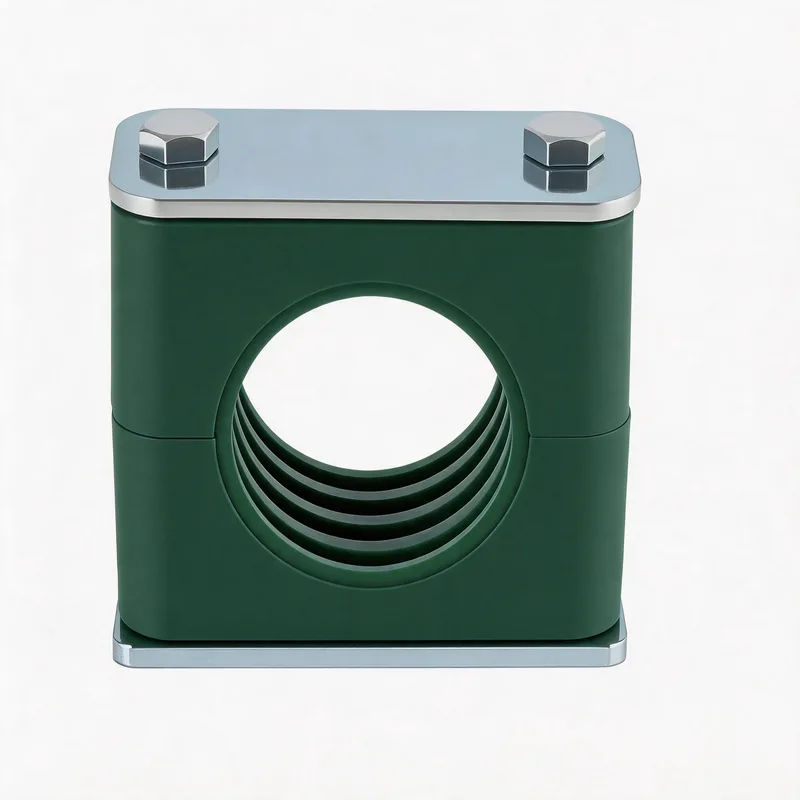
Typical use cases
- Choose clamp bore from actual tube OD, not from bar or psi
- Treat pressure pulsation and visible vibration as mechanical inputs
- Review heavy series when mass, span, shock or support demand increases
- Confirm the complete load path from tube to clamp, base and structure
What each input actually controls
| Input | Direct role in selection | Engineering interpretation |
|---|---|---|
| System pressure | Indirect | Signals possible pulsation, shock and fitting loads; it does not define clamp bore. |
| Actual tube OD | Direct | Defines the clamp bore interface and is required for model selection. |
| Tube wall, fluid and line mass | Direct mechanical input | Affects gravity load, inertia and support demand, especially on larger lines. |
| Pulsation and vibration | Direct mechanical input | Can shorten support spacing and justify a heavier clamp or stiffer mounting. |
| Span and routing | Direct | Bends, valves, manifolds and hose transitions change local support needs. |
| Base and structure stiffness | Direct system input | A strong clamp on a flexible bracket may still allow damaging movement. |
| Environment and temperature | Material input | Controls body material, hardware finish and corrosion review. |
A 350 bar compact line can use a different support solution from a 160 bar large, long or strongly vibrating line. Pressure values cannot be compared without the mechanical context.
Why a pressure-only clamp request is incomplete
The same pressure can exist in small rigid instrumentation tubing, a long hydraulic return layout or a large pump outlet. These systems have different mass, natural frequency, pulse energy, fitting loads and service access. “Clamp for 250 bar” therefore does not identify a bore, DIN series, group or mounting assembly.
When higher pressure should trigger a closer review
Review pulsation amplitude and frequency, pump outlet movement, valve switching shock, unsupported fitting mass, hose transitions and bracket stiffness. If the line moves visibly, repeatedly loosens hardware or transfers load into fittings, correct the support layout instead of selecting from pressure alone.
Minimum data for a pressure-related clamp RFQ
Send actual tube OD and wall, tube material, working and peak pressure, fluid, temperature, pump or valve location, visible vibration, proposed spacing, mounting surface, quantity and any project standard. Photos or a simple marked-up routing drawing make the review faster.
Engineering boundary
This guide supports preliminary clamp selection. It does not calculate pipe stress, fatigue life, pressure containment or structural qualification. The final assembly and spacing must follow the equipment designer, project specification and approved model data.
Frequently asked questions
Does a higher hydraulic pressure always require a heavy series clamp?
No. Heavy series should be reviewed when tube mass, span, pulsation, shock, vibration or mounting demand increases. A compact high-pressure line may have lower support demand than a larger, longer or strongly vibrating lower-pressure line.
Is pipe clamp bore selected by pressure or tube outside diameter?
The clamp bore is selected from the actual tube outside diameter and approved fit range. Pressure is a separate system input used to review pulsation, vibration and support loads.
What pressure information should be included in a clamp RFQ?
Send normal working pressure, expected peak or shock pressure, pump and valve locations, known pulsation frequency, visible movement and whether an accumulator or hose transition is nearby. Include tube OD, wall, material and support layout as well.
Related WeiQue series


Recommended reading
References
These pages summarize public standard metadata and industry application information. They do not reproduce the paid DIN standard text.