
A clamp that can be bolted together is not automatically the correct size. The bore should create the intended contact around the actual tube OD without relying on excessive closure force or leaving uncontrolled clearance.
An oversized bore can allow micro-movement and fretting. An undersized bore can concentrate pressure, distort parts and create a misleading feeling of tightness.
An oversized bore can allow micro-movement and fretting; an undersized bore can create forced closure, local tube pressure and insufficient bolt engagement. Extra torque is not a sizing correction.
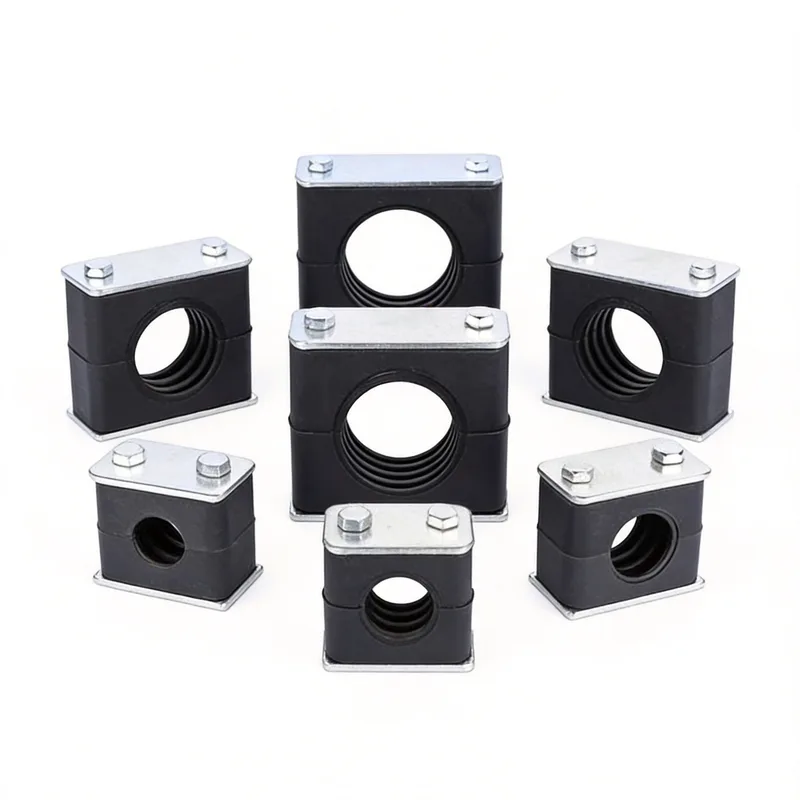
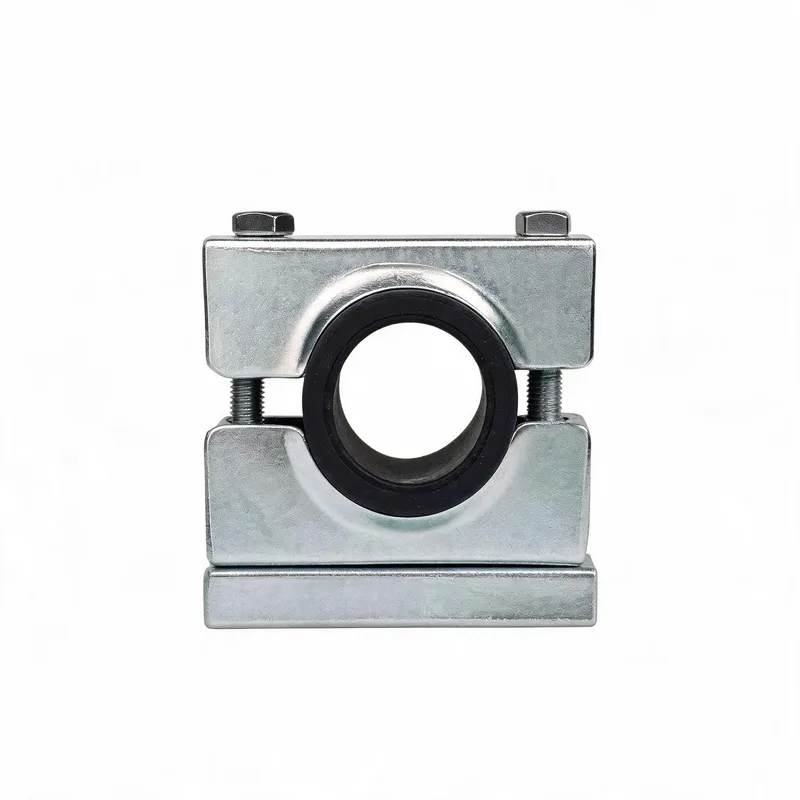
Related product photos
Typical use cases
- Check actual tube OD before changing bolt torque or locking method
- Look for polished marks, dust, noise and repeated bolt loosening
- Do not use improvised packing unless engineering has approved it
- Replace with the correct bore or approved insert solution
Oversized vs undersized clamp bore
| Condition | Likely symptoms | Main risk | Correct action |
|---|---|---|---|
| Bore too large | Tube can rotate or slide; polished contact marks; noise | Vibration, fretting and load transfer to fittings | Confirm OD and fit the correct body or approved insert |
| Bore too small | Large body gap, difficult bolt start, body deformation | Local tube pressure, damaged coating or insufficient thread engagement | Stop assembly and select the correct larger bore |
| Correct fit | Controlled closure and stable contact without forced distortion | Supports tube as designed | Apply specified hardware and tightening procedure |
Clamp body gap alone is not a universal acceptance dimension. Use manufacturer data, actual OD and the approved assembly specification.
1. Why an oversized bore does not control the tube
When the bore is larger than the supported tube, the assembly may close while contact remains limited. Pump pulsation, machine vibration or thermal movement can then make the tube rub against the body, transfer bending to fittings and repeatedly unload the bolts.
2. Why forced closure is not a sizing method
Forcing an undersized body closed can bow the cover plate, overstress bolts, reduce thread engagement or press sharply into the tube. Thin-wall, coated, stainless or soft-metal tubing deserves particular care because local damage may not be immediately visible.
3. Inspect before simply retightening
If a clamp is noisy, loose or repeatedly needs retightening, inspect tube OD, body marking, bore condition, mounting stiffness and nearby vibration sources. Retightening an incorrectly sized clamp can hide the symptom temporarily without correcting the load path.
4. RFQ data for a fit problem
Send measured tube OD, current clamp marking, photos of the closed body and contact marks, bolt size, mounting method, fluid, pressure, temperature and vibration notes. State whether the issue is movement, forced closure, damage or repeated loosening.
Frequently asked questions
Can tightening the bolts compensate for an oversized clamp bore?
Usually not. Extra bolt torque cannot create the intended full contact geometry and may overload the cover, bolts or body while the tube can still move.
Can I force an undersized clamp closed around the tube?
No. Forced closure can create excessive local pressure, distort the clamp body, reduce bolt engagement and damage coatings or thin-wall tube.
Related WeiQue series


Recommended reading
References
These pages summarize public standard metadata and industry application information. They do not reproduce the paid DIN standard text.