
Hydraulic manifold blocks concentrate many tubes, fittings, valves and service points into a small area. The clamp layout must support the tubes close enough to reduce vibration and fitting stress, but not so close that it blocks wrench access, valve adjustment or replacement work.
For valve stands and manifold frames, the best RFQ is usually a marked layout with tube OD, line ID, pressure or pulsation notes, mounting surface and required hardware scope. That lets the supplier quote clamp points instead of loose clamp bodies.
Around hydraulic manifold blocks and valve stands, pipe clamps should support tubes close enough to reduce fitting stress and vibration while preserving wrench access, valve service space and the correct mounting load path.
Typical manifold and valve-stand clamp choices
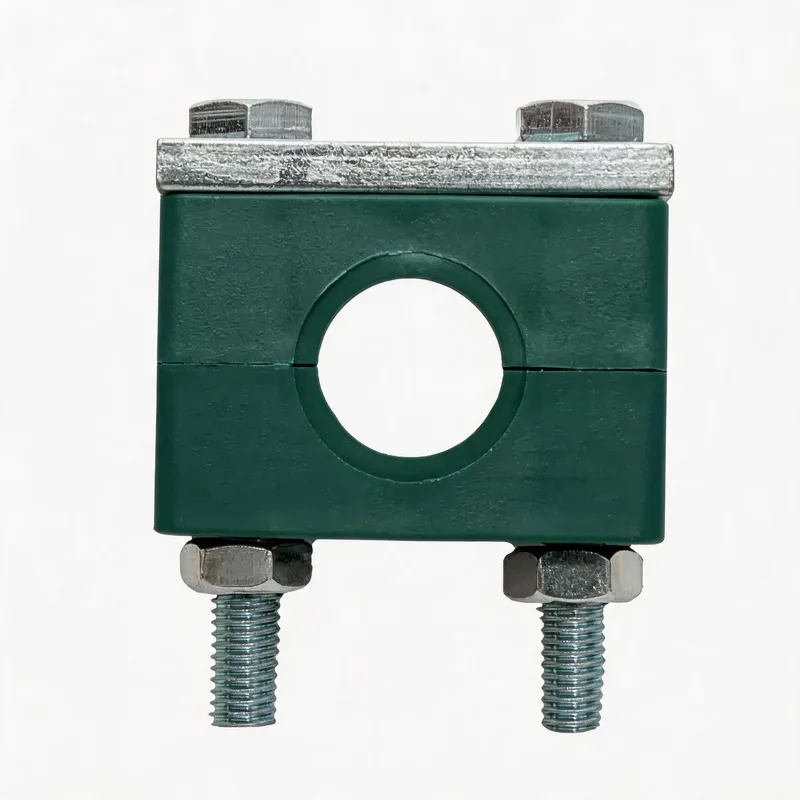
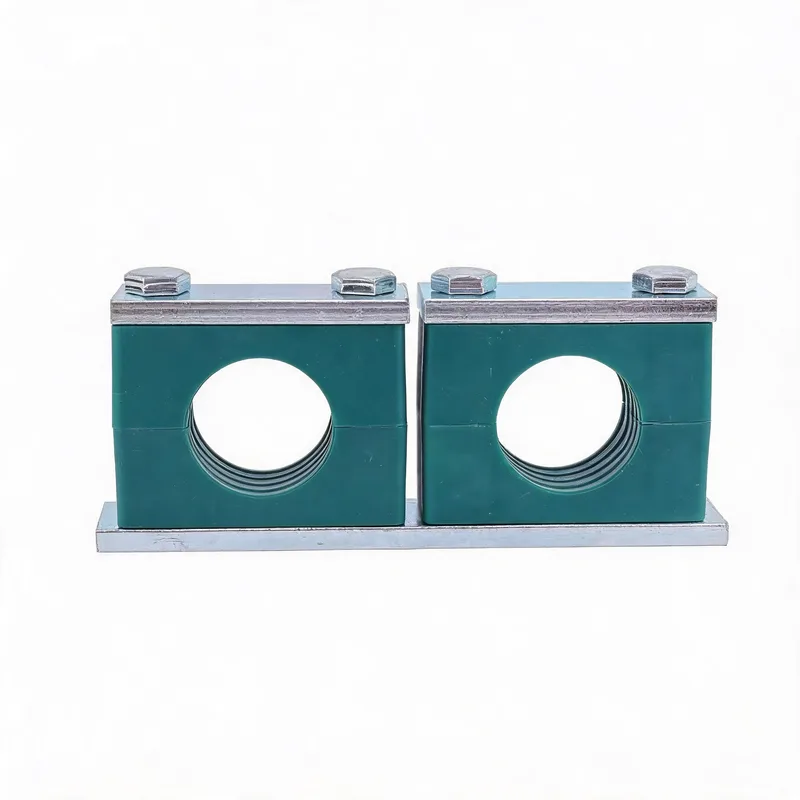
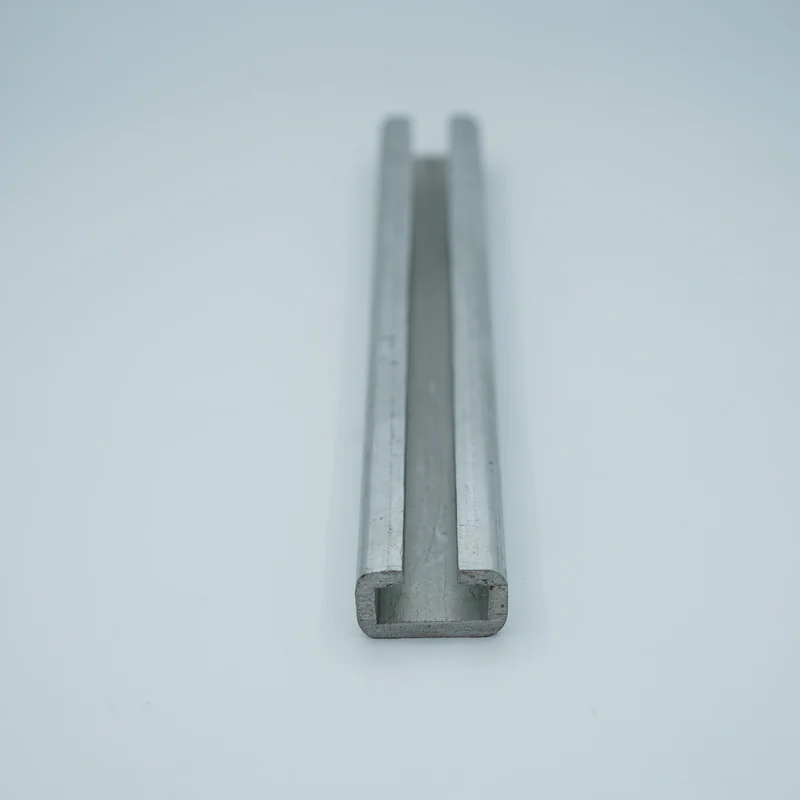
Manifold area clamp selection checks
| Area | Clamp Concern | Practical Selection Note |
|---|---|---|
| Pump outlet to manifold | Pressure pulsation and vibration. | Use short unsupported lengths; review heavy or cushioned clamps near vibration sources. |
| Valve ports | Fitting stress and wrench access. | Support close enough to protect fittings but leave straight length for tools. |
| Pilot / drain lines | Small tubes routed in pairs or bundles. | Twin clamps can save space when both lines share route and service access. |
| Frame or back plate | Mounting stiffness and adjustability. | Rails help layout adjustment; welded plates give a direct load path. |
| Service side | Filter, gauge, valve and cartridge replacement. | Do not place clamps where they block removal envelopes. |
Manifold clamp layout is a balance: close enough for vibration control, open enough for service.
Do not let fittings carry tube loads
A valve port or manifold fitting should not become the first support. Place a clamp so the tube weight and vibration are carried by the frame, not by the threaded or flanged connection. The first clamp still needs assembly clearance, so the answer is a layout check, not one universal distance.
Choose rail or welded plate by build sequence
Mounting rail is useful when tube routes are adjusted during commissioning or when many small lines share a back plate. Welded base plates are cleaner for repeated production frames or higher-load points. If the frame is painted before tubing, define whether plates are welded before coating or bolted after coating.
When twin clamps help manifold packaging
Twin clamps work well for paired pilot, drain, lubrication or return lines that run together and need the same support position. They are not ideal when one line must be removed frequently or when two lines have different movement, heat or service access requirements.
RFQ data for valve stands
For a clear quote, send tube OD list, manifold or valve stand drawing, marked clamp positions if available, pressure/pulsation notes, frame material and thickness, preferred rail or welded plate mounting, required fastener finish, certificate scope and whether the clamps should be packed by line number or as a complete frame kit.
Frequently asked questions
How close should a pipe clamp be to a hydraulic manifold?
Close enough that the manifold fitting does not carry tube weight or repeated bending, but far enough to leave wrench access and valve service space. There is no universal distance; check OD, vibration, fitting weight and maintenance envelope.
Are twin clamps good for manifold pilot lines?
Yes, when the two small lines share the same route and service access. Avoid twin clamps when one line must be removed frequently, has different movement, or needs separate identification and access.
What RFQ data is needed for valve stand clamp layouts?
Send tube OD list, valve stand drawing or photos, marked clamp positions if available, pressure or pulsation notes, frame material, preferred rail or weld-plate mounting, fastener finish and certificate scope.
Related WeiQue series


Recommended reading
References
These pages summarize public standard metadata and industry application information. They do not reproduce the paid DIN standard text.