
Clamp spacing is one of the quiet details that decides whether a pipe run stays stable over years of operation. Too much distance can increase vibration, sagging, noise and stress around fittings.
There is no single universal spacing number for every pipe. A safe layout depends on pipe outside diameter, wall thickness, line weight, pressure pulses, temperature movement, equipment vibration and the way the clamp is mounted.
Clamp spacing is not one universal number. It changes with tube OD, wall thickness, line mass, pressure pulses, temperature movement, mounting stiffness and nearby fittings.
Related product photos
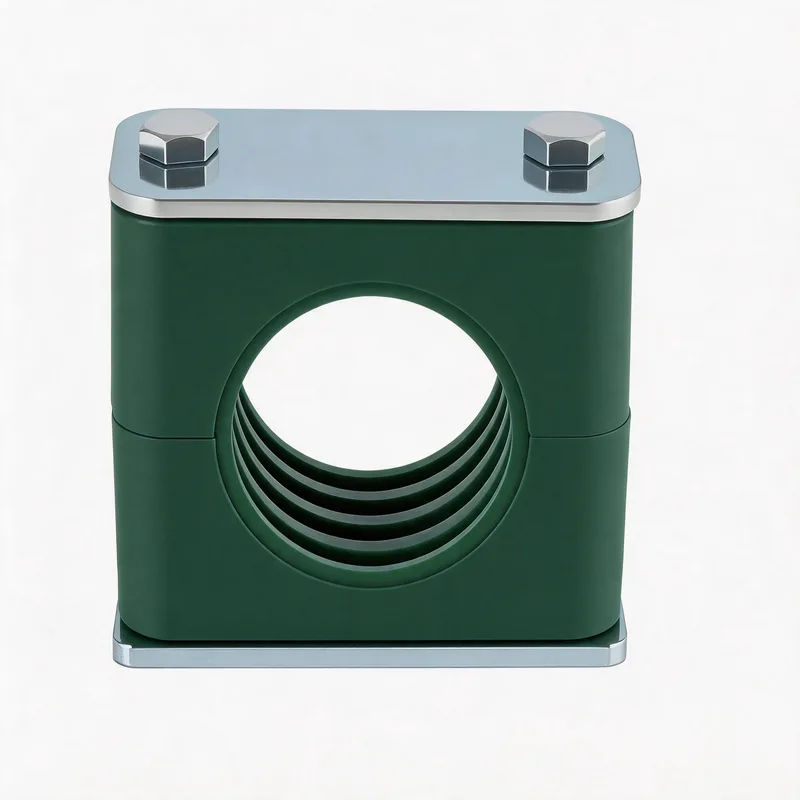
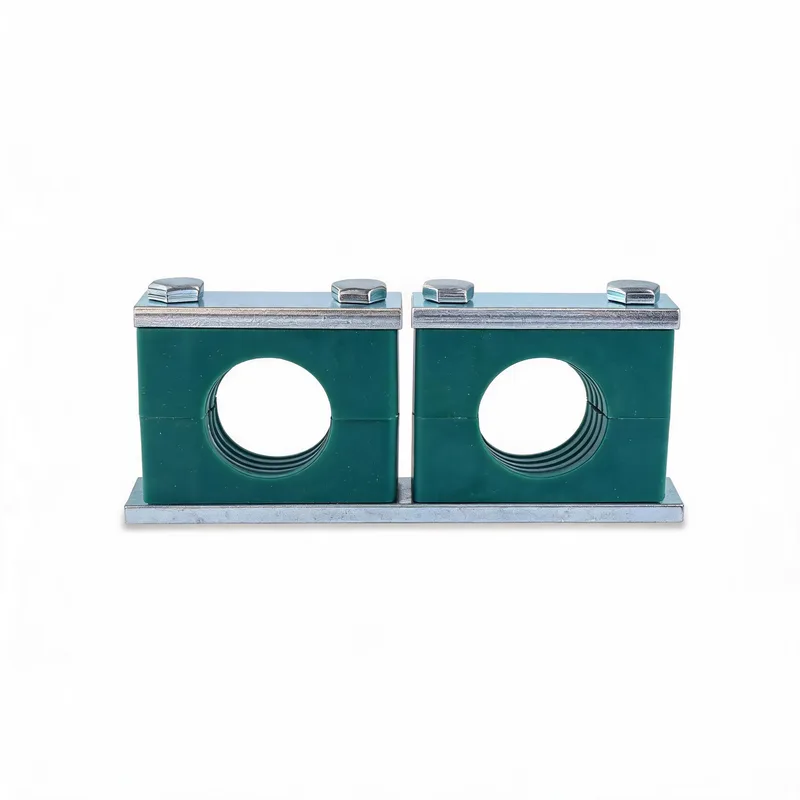
Typical use cases
- Use shorter spacing for small flexible lines, long unsupported runs and vibrating equipment
- Place clamps near bends, valves, manifolds and connection points to reduce local stress
- Allow for thermal movement instead of locking every support point rigidly
- Use heavy series or damping inserts when vibration or pipe mass is high
- Confirm final spacing with project standards, pipe stress requirements and site conditions
Why clamp spacing matters
A clamp does more than hold a pipe in place. It controls movement, separates parallel lines, reduces noise and protects fittings from repeated bending. If the unsupported span is too long, the pipe can sag under its own weight or move with pump pulses and machine vibration.
Main factors that change spacing
Pipe OD, wall thickness, fluid weight, operating pressure, temperature, vibration source and mounting stiffness should be reviewed together. Larger or heavier pipes usually need stronger supports; vibrating systems often need shorter spacing even when the pipe diameter is not large.
Horizontal and vertical pipe runs
Horizontal runs are more sensitive to sagging and should be checked for span length and pipe weight. Vertical runs may allow longer spacing in some layouts, but clamps must still control lateral movement and avoid loading threaded or flanged connections.
Bends, valves and connection points
Do not leave bends, valves, manifolds, hose transitions or instrument connections unsupported for long distances. A nearby clamp can reduce bending moment and prevent vibration from concentrating at the fitting.
Hydraulic vibration and heavy-duty layouts
Hydraulic lines near pumps, cylinders, mobile frames and power units can see pressure pulses and structure-borne vibration. In these areas, reduce spacing, avoid long cantilevered runs, and consider DIN 3015-2 heavy series or damping inserts.
Information needed for a spacing review
For a practical review, provide pipe OD and wall thickness, material, fluid, pressure, temperature, approximate route length, nearby valves or bends, vibration source, mounting surface and whether the line is horizontal, vertical or mobile equipment mounted.
Related WeiQue series


Recommended reading
References
These pages summarize public standard metadata and industry application information. They do not reproduce the paid DIN standard text.