
Hydraulic power units concentrate pumps, manifolds, valves, filters, coolers and tanks into a compact frame. Pipe clamps in this area do more than keep tubes neat: they help control vibration, protect fittings and make service work more predictable.
The best clamp choice depends on pipe OD, pump vibration, pressure pulsation, routing space, mounting surface and whether the line is a single run, a heavy main line or a paired supply and return line.
Related product photos
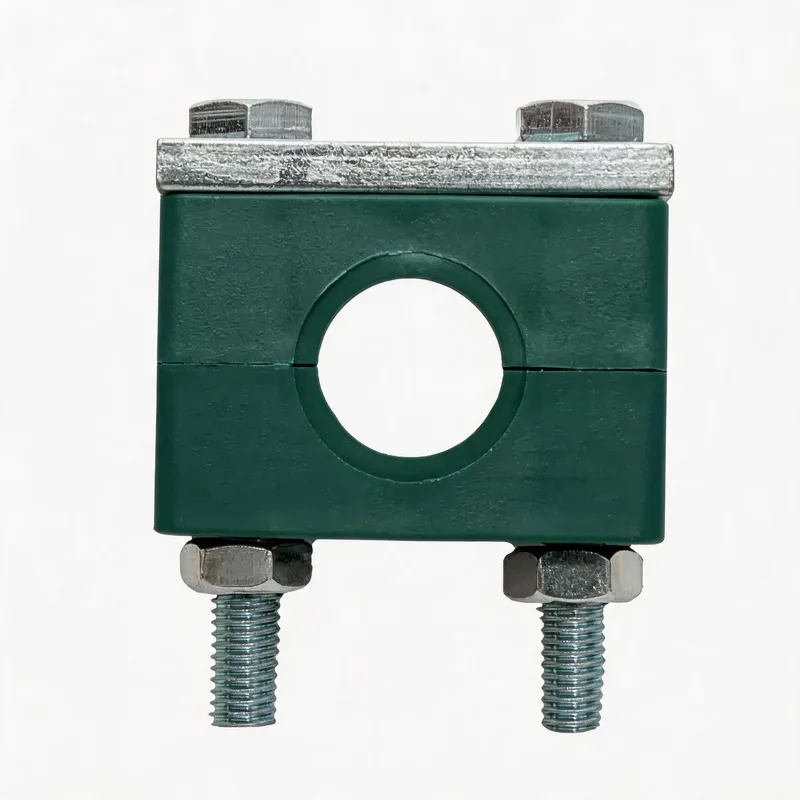
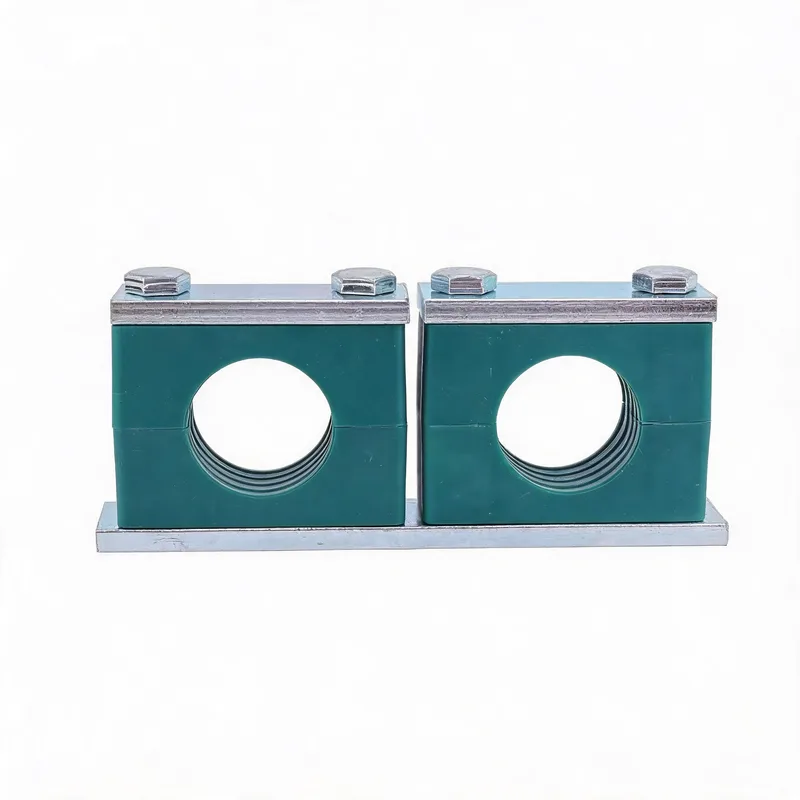
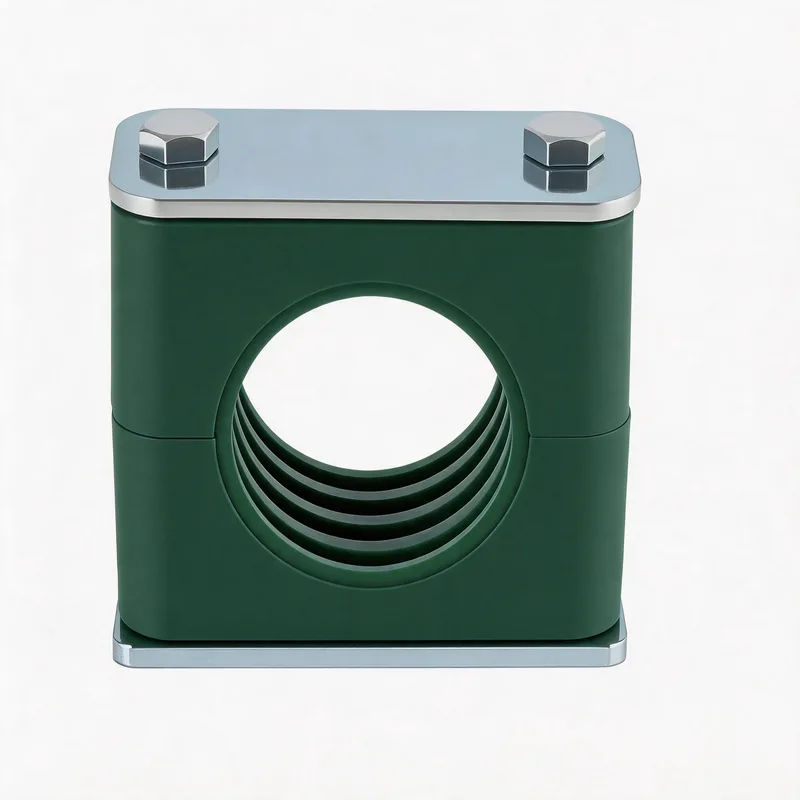
Typical use cases
- Pump outlet and return lines with pressure pulsation
- Compact frames where clamp spacing and access are limited
- Manifold, filter, cooler and tank connection areas
- Single, heavy and paired hydraulic tube routing
Start with the vibration source
Lines close to pumps, motors and manifolds often see pressure pulses and structure-borne vibration. Use shorter unsupported spans near these points, avoid long cantilevered tube sections and consider DIN 3015-2 heavy series or damping inserts where vibration is high.
Choose standard, heavy or twin clamps by line type
DIN 3015-1 standard series is often suitable for small and medium service lines on the frame. DIN 3015-2 heavy series is better for larger main lines, high vibration or longer spans. DIN 3015-3 twin clamps are useful when supply and return tubes run together in a compact route.
Protect fittings and service points
Do not leave valves, threaded connections, hose transitions, filters or manifold ports carrying tube weight. Add clamps close enough to reduce bending load, while still leaving room for wrench access, filter replacement and hose removal.
Material and environment checks
For indoor hydraulic oil service, PP or PA clamp bodies are common depending on temperature and load. For washdown, offshore, humid workshops or corrosive environments, check stainless hardware, body material and possible galvanic contact with the frame.
RFQ information to send
Send pipe OD, quantity, line function, pressure, temperature, fluid, vibration notes, mounting surface, preferred DIN series and photos or drawings of the hydraulic unit. Mark pump outlet, return, drain and service lines when possible.
Related WeiQue series


Recommended reading
References
These pages summarize public standard metadata and industry application information. They do not reproduce the paid DIN standard text.