
A trefoil cable cleat restrains three single-core phase cables in a compact triangular arrangement. Stainless steel grade 316 is often considered where chloride exposure, washdown, salt spray or long outdoor service makes ordinary plated steel unsuitable.
Material selection is only one part of the design. Cable outside diameter, prospective short-circuit current, peak force, fault duration, cleat spacing, mounting structure, fire performance and the tested cleat configuration must be reviewed together. IEC 61914 is commonly used as the project framework for cable-cleat testing and classification.
This page is an engineering selection guide, not a declaration that every SS316 trefoil cleat has the same rating. Final approval must use the proposed cleat model, cable data and project support arrangement.
An SS316 trefoil cable cleat is selected from actual cable OD, project short-circuit duty, tested cleat spacing, mounting structure, fire requirements and marine corrosion exposure. SS316 alone is not a short-circuit rating.
Related product photos
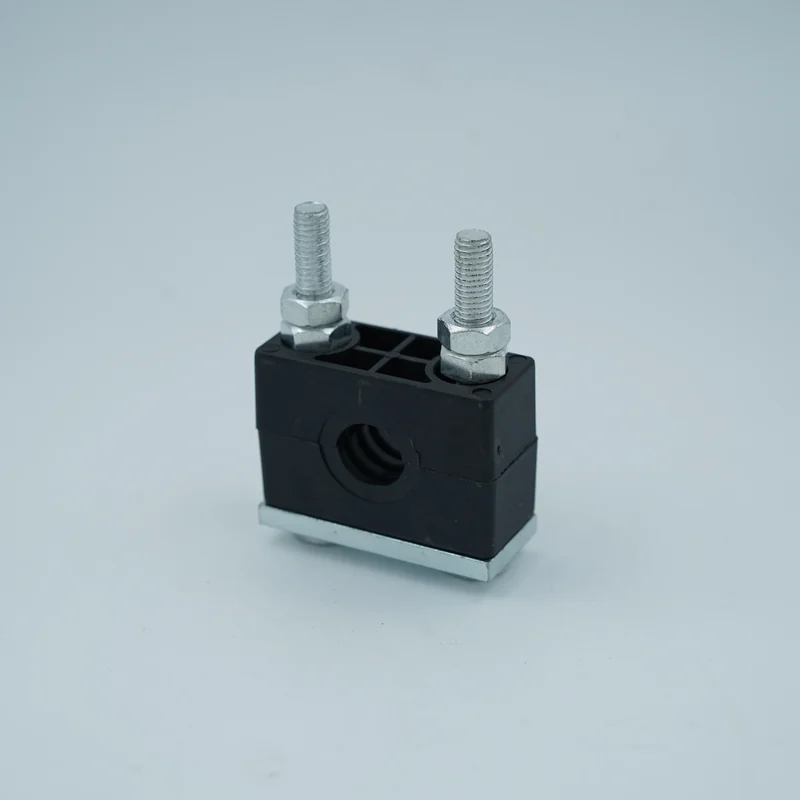
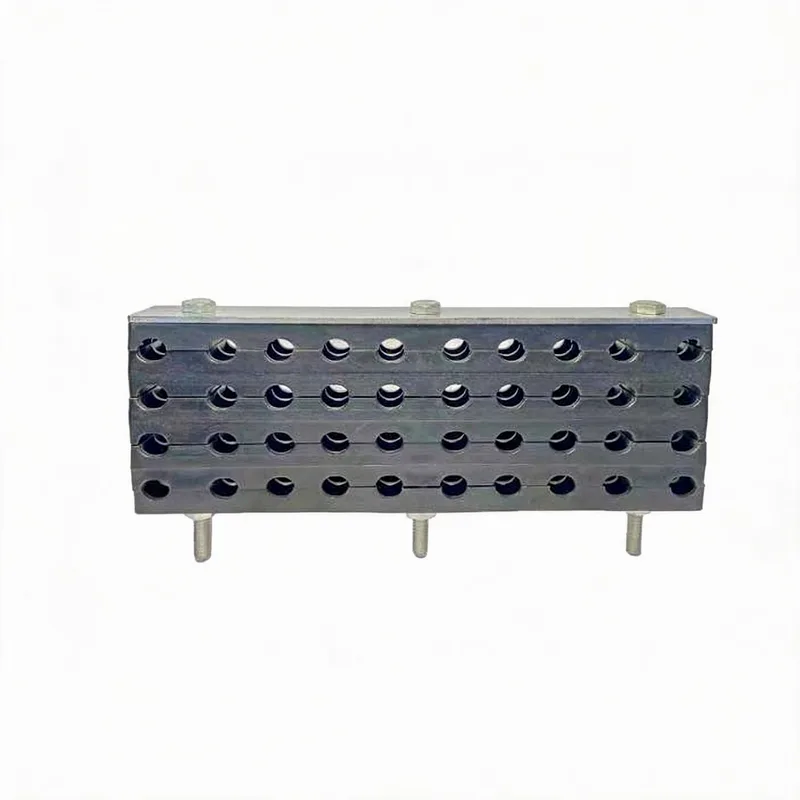
Typical use cases
- Select from the actual cable OD range and verified trefoil geometry
- Use project short-circuit data to determine the required tested configuration and spacing
- Keep cleat body, fasteners and mounting interface corrosion-compatible
- Confirm fire, impact and axial restraint requirements separately
SS316 trefoil cleat project checks
| Input | Why it matters | Required evidence |
|---|---|---|
| Cable OD and construction | Controls fit, contact and cable damage risk | Cable data sheet and approved size range |
| Peak short-circuit current and duration | Drives electromechanical restraint demand | Project fault study and applicable test report |
| Cleat spacing and support stiffness | Changes cable span force and load transfer | Approved layout and structural check |
| Marine corrosion exposure | Affects grade, finish, crevice and galvanic risk | Material certificate and corrosion specification |
Do not derive a universal spacing or short-circuit rating from “SS316”. Ratings belong to a tested or otherwise approved cleat, cable and installation configuration.
Where SS316 is a useful starting point
SS316 is commonly reviewed for offshore platforms, ships, coastal substations, ports, desalination plants, tunnels with chloride contamination and outdoor power systems exposed to washdown. Confirm whether the project requires 316 or 316L, passivation, pickling, a specific surface finish or positive material identification. Also review crevices beneath washers and interfaces with galvanized or aluminum support structures; an isolated stainless component does not eliminate system-level corrosion.
Short-circuit restraint and IEC 61914
During a short circuit, parallel phase conductors generate large transient forces. A trefoil cleat system must keep the conductors in the intended geometry and transfer those forces into the supporting structure without unacceptable cable, cleat or bracket damage. Request the project fault current, peak asymmetrical current, duration, cable type and proposed support spacing. Compare them with test evidence for the same cleat size range and a representative cable arrangement. A report for a different diameter, spacing, fastener or support rail should not be treated as automatically transferable.
Material consistency and stainless fasteners
Specify the complete assembly, not only the formed cleat body. The RFQ should identify body grade, bolts, nuts, washers, locking method, mounting feet and any isolation pads. Stainless threaded joints can gall, especially with rapid dry tightening or contaminated threads. Use a project-approved anti-galling method and adjust torque for the selected lubricant or coating. Where magnetic behavior matters, request measured or certified properties rather than assuming every austenitic stainless component is fully non-magnetic after forming.
RFQ data for an SS316 trefoil cable cleat
Send cable manufacturer and type, actual overall diameter and tolerance, three-phase arrangement, voltage class, conductor size, prospective RMS and peak short-circuit current, fault duration, proposed cleat spacing, horizontal or vertical route, mounting rail or bracket dimensions and material, indoor/outdoor/marine exposure, fire and impact requirements, stainless grade and surface treatment, fastener and locking requirements, test or certification standard, quantity by cable OD and required documentation.
Size chart: conductor size to cable OD to cleat band
A trefoil cleat is sized by the overall diameter of one single-core cable, not by the conductor cross-section. Buyers who only know the conductor size (for example 240 mm²) need to convert to an approximate cable OD first: a 240 mm² single-core XLPE cable is roughly 39 mm overall, which falls in a mid-range cleat band; a 630 mm² cable is around 59 mm; a 95 mm² cable around 27 mm. These are indicative — armour, insulation and manufacturer construction change the real diameter, so always confirm against the cable data sheet. Our free trefoil cable cleat size finder converts a cable OD to the matching cleat band and includes the full conductor-mm² to cable-OD table, so you can move from either starting point to a size band in one step before sending an RFQ.
Price and commercial factors for SS316 cleats
There is no single list price for a trefoil cable cleat: cost is driven by the cable OD band (larger cleats use more material), stainless grade (316L costs more than 304), the tested short-circuit class required, quantity, surface treatment and documentation. Because a cleat is a safety-critical restraint under fault current, the wrong basis for comparison is unit price alone — compare like-for-like on the same cable OD band, the same short-circuit evidence and the same certification level. A cheaper cleat that is not backed by test data for your fault current is not comparable to one that is. For a firm quotation, send the cable OD, quantity by size band, the project short-circuit data and any required certificates; we return a like-for-like price within one working day.
Frequently asked questions
How do I choose the right size of SS316 trefoil cable cleat?
Size by the overall diameter of one single-core cable, not the conductor cross-section. Convert the conductor size to an approximate cable OD if needed (a 240 mm² XLPE cable is about 39 mm), then pick the cleat band that covers it. Use our free trefoil cable cleat size finder for the conversion, and always confirm the real OD from the cable data sheet.
What does an SS316 trefoil cable cleat cost?
There is no single list price. Cost depends on the cable OD band, stainless grade (316L over 304), tested short-circuit class, surface treatment, quantity and documentation. Compare like-for-like on the same OD band, the same fault-current evidence and the same certification level — a cheaper cleat without test data for your short-circuit current is not comparable. Send the cable OD, quantity by band and project fault data for a firm quotation.
Does specifying SS316 guarantee the short-circuit rating?
No. SS316 is a corrosion choice, not a short-circuit rating. The withstand capability belongs to a tested cleat, cable and installation configuration — cable OD, spacing, fasteners and support. Always confirm test evidence for your fault current and a representative cable arrangement, not just the material grade.
Does SS316 define the short-circuit rating of a trefoil cable cleat?
No. Short-circuit performance belongs to the complete tested or approved configuration: cleat geometry, cable OD, spacing, fasteners and supporting structure. SS316 primarily addresses material and corrosion requirements.
Is SS316 always enough for offshore cable cleats?
Not automatically. Confirm 316 or 316L grade, surface treatment, crevice drainage, galvanic interfaces, fastener material, galling control and the project corrosion category.
What data is needed to quote an SS316 trefoil cleat?
Provide cable type and OD, fault RMS and peak current, duration, proposed spacing, route orientation, support dimensions and material, environment, fire requirements, stainless grade, fasteners, test standard and quantity.
Related WeiQue series

Recommended reading
References
These pages summarize public standard metadata and industry application information. They do not reproduce the paid DIN standard text.