
High-temperature clamp selection cannot be made from fluid temperature or polymer name alone. Heat transfer through the pipe, insulation, airflow, radiation and duty cycle determines the body temperature.
As temperature rises, polymer stiffness and long-term load retention can fall. The approved material grade and complete assembly must maintain fit and support function for the required life.
Choose from the actual temperature at the clamp body, not the fluid temperature alone. PP may suit moderate service, PA can offer higher mechanical and temperature capability in some grades, and aluminum is reviewed when polymer temperature, fire or load retention is inadequate.
Related product photos
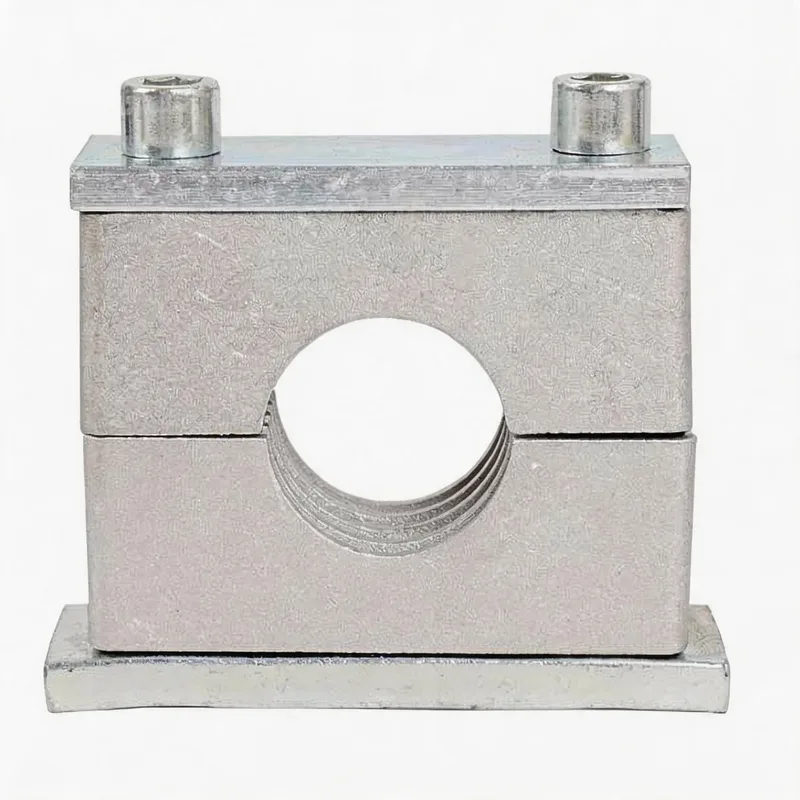
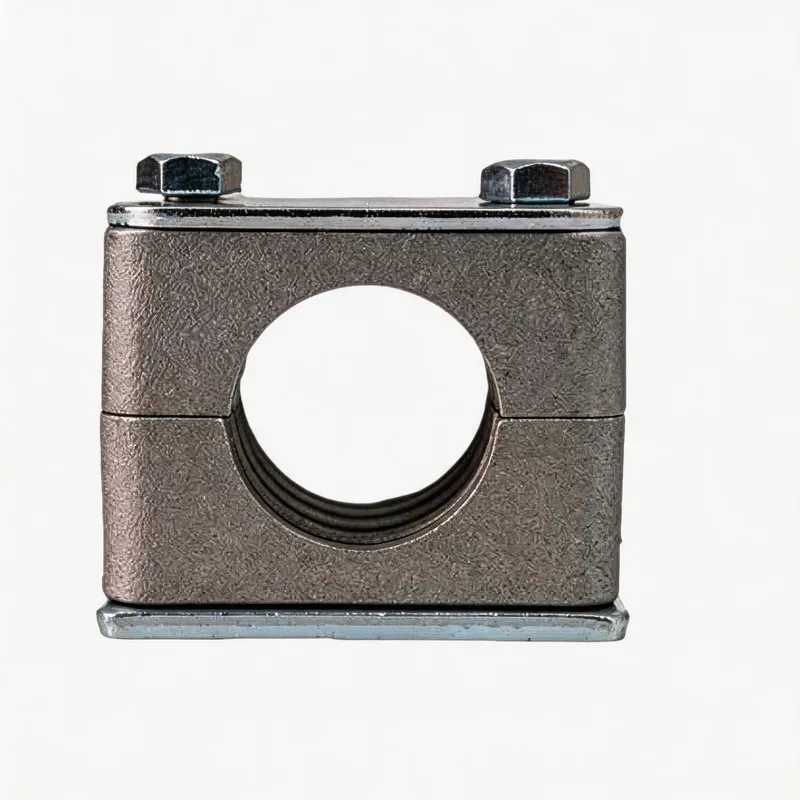
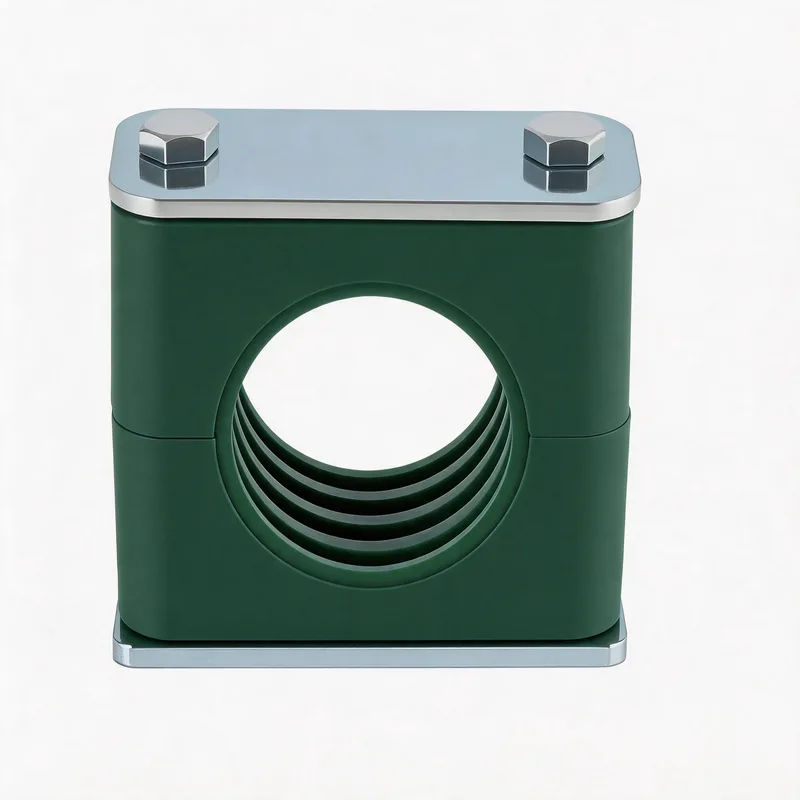
Typical use cases
- Calculate or measure the clamp-body temperature
- Check long-term creep, not only short-term softening
- Review fire, radiation and hot-cleaning exposure separately
- Include bolts, plates, coatings and mounting structure
PP, PA and aluminum selection matrix
| Material | Typical reason to review | Key limitation to verify |
|---|---|---|
| PP | General service, chemical resistance and economy | Grade-specific heat aging, stiffness and creep |
| PA | Higher toughness or temperature capability in suitable grades | Moisture, chemicals, conditioning and long-term load |
| Aluminum | Heat, fire behavior and mechanical load retention | Hard contact, galvanic corrosion and pipe protection |
| Special polymer or insert | Combined temperature, chemical or damping requirement | Validated compatibility and supplier data |
Generic material names do not define a universal maximum service temperature.
Determine the actual thermal case
Record fluid, pipe-wall, ambient and radiant temperatures, distance from heaters, insulation, airflow, duty cycle, startup and cleaning conditions. A short hot transient and continuous loaded exposure create different material demands.
Check load retention over time
A polymer can remain below its melting point yet lose stiffness or creep under bolt and pipe load. Review long-term data for the exact grade, temperature and stress, plus retightening and inspection rules approved by the manufacturer or project.
Do not treat aluminum as a drop-in upgrade
Aluminum avoids polymer softening but changes contact hardness, damping, electrical isolation and corrosion behavior. Check tube coating, local stress, dissimilar metals, vibration and whether an insert is required.
RFQ data for high-temperature clamps
Send pipe OD, wall and material, fluid and temperatures, ambient and radiant heat, insulation, exposure duration and cycle, pressure, vibration, support load and function, fire requirement, environment, mounting method, quantity and required material certificates.
Frequently asked questions
Is fluid temperature the same as clamp temperature?
Not necessarily. Pipe wall, insulation, airflow, radiation, duty cycle and distance from the heat source determine the clamp temperature. Measure or calculate the actual interface condition.
Is PA always better than PP at high temperature?
No. Grade, moisture conditioning, chemical exposure, load and duration matter. Compare approved manufacturer data for the exact material, not generic polymer names.
When should an aluminum clamp body be considered?
Review aluminum when polymer creep, softening, fire behavior or load retention is unacceptable. Also check hard contact, pipe coating, galvanic corrosion, vibration and thermal expansion.
Related WeiQue series


Recommended reading
References
These pages summarize public standard metadata and industry application information. They do not reproduce the paid DIN standard text.