
Oil, gas and petrochemical plants use DIN 3015 pipe clamps primarily for instrument tubing, hydraulic control lines, lubrication circuits, sample lines and small-bore utility piping that runs alongside or between process equipment. The main process piping is typically supported by structural pipe shoes and spring hangers designed to project-specific stress analysis, but the secondary and tertiary piping — the kilometres of 6 mm to 42 mm tubing that connects instruments, actuators, control valves and auxiliary equipment — relies on standardised pipe clamp systems.
These installations are demanding: outdoor exposure to UV, rain, temperature cycling and sometimes coastal salt air; proximity to hydrocarbon fluids and chemical vapours; fire risk that can expose supports to radiant heat; hazardous area classifications that restrict installation practices; and project specifications that require documented material traceability, coating compliance and inspection records.
This guide covers pipe clamp selection for the secondary and instrument piping scope in oil, gas and petrochemical facilities, with emphasis on the practical decisions that engineers and procurement teams face when specifying clamp hardware for these environments.
Related product photos
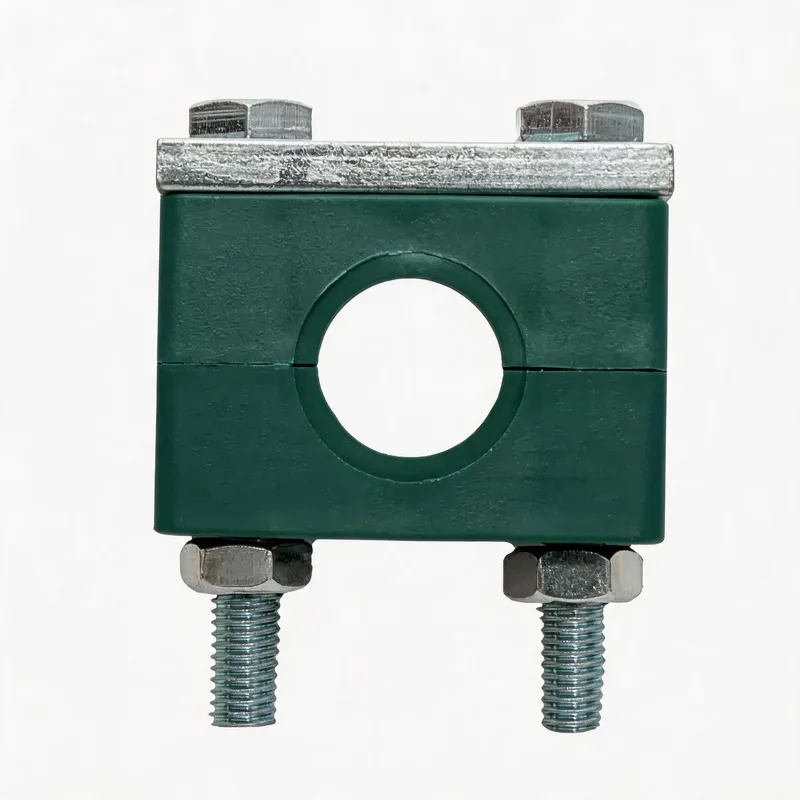
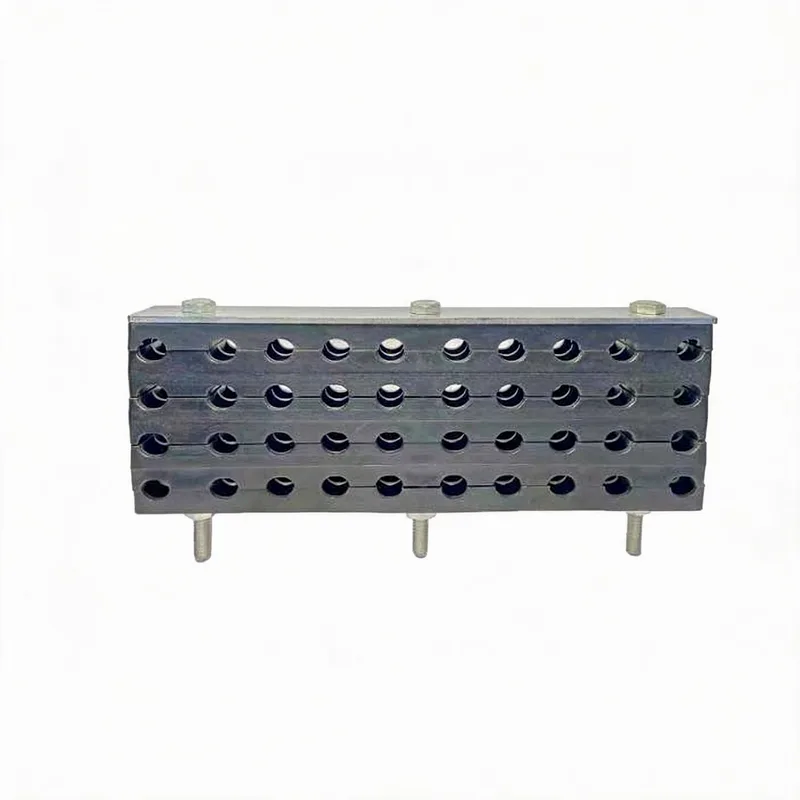
Typical use cases
- Specify corrosion protection grade based on the actual outdoor environment, not generic "industrial"
- Use rail-mounted clamps for instrument tubing where field routing adjustments are expected
- Confirm clamp body material compatibility with any chemical vapour or splash exposure
- Include material certificates and coating specifications in the procurement package
- Review fire exposure risk and consider metal clamp bodies near fire-rated zones
Pipe clamp selection by plant area
| Plant area | Typical lines | Recommended clamp type | Material / finish |
|---|---|---|---|
| Pipe rack — instrument tubing | 6–12 mm SS instrument tubing | G10/G12 rail-nut for adjustable routing | 316L clamp + 316L hardware |
| Pipe rack — hydraulic / lube | 10–42 mm hydraulic and lube lines | G4/G5 long welded base | HDG or 316L per project spec |
| Equipment skid | HPU, compressor, pump package lines | G13/G14 body-only on skid brackets | Per skid vendor spec |
| Tank farm / loading area | Sample, drain, gauge, utility | G2/G3 welded base with cover plate | HDG minimum, 316L for coastal |
| Control room / substation | Instrument air, HVAC, cable support | G1/G2 standard series | Zinc plated or A2 stainless |
Specific material and finish requirements vary by project specification, owner standards and local environmental conditions. Always defer to the project piping material specification (PMS) or piping class when available.
Outdoor exposure and corrosion class
Most refinery and petrochemical pipe clamp installations are outdoors — on pipe racks, equipment platforms, vessel skirts and tank farm structures. Outdoor exposure means rain, UV, temperature cycling (which drives condensation), airborne dust and, in coastal locations, salt deposition. Standard zinc-plated fasteners (8–12 µm) may show white rust within months in a tropical or coastal refinery environment. The minimum outdoor specification for most oil and gas projects is hot-dip galvanized hardware (45–85 µm) for carbon steel parts, or 316L stainless for corrosive or coastal locations. Some owner specifications require Dacromet or geomet coatings for fasteners to avoid hydrogen embrittlement risk on high-strength bolts. When reviewing the project specification, look for the corrosion category (often referencing ISO 12944 or ISO 9223) and match the pipe clamp hardware grade to that category across all metallic parts — bolts, cover plates, base plates and rail nuts.
Instrument tubing support
Instrument tubing — typically 6 mm, 8 mm, 10 mm or 12 mm stainless steel — runs from field instruments (pressure transmitters, flow meters, level gauges, analysers) back to junction boxes, marshalling cabinets or directly to control valves. These runs can be long, routed in bundles on cable tray tops or on dedicated instrument tubing racks. Proper clamping prevents sagging, vibration-induced fatigue at fittings and mechanical damage from adjacent construction activity. Use DIN 3015 standard series clamps sized to the tubing OD — not the nominal pipe size, which does not apply to instrument tubing. Rail-mounted clamps (G10/G12) are preferred for instrument tubing racks because the rail allows position adjustment during commissioning when instrument locations may shift. Stacking clamps (G18) are useful where multiple tubes share a single support point, but confirm that each tube can be individually removed for maintenance without disturbing the others.
Fire exposure and polymer clamp body limits
PP and PA clamp bodies soften and lose structural integrity when exposed to fire or sustained radiant heat. In a refinery or gas plant, certain areas are classified with fire ratings (e.g., jet fire, pool fire) that define the heat flux and duration the structure and its supports must survive. Pipe clamps in these areas may need to be metal — carbon steel, aluminium or stainless steel — rather than polymer, so that they maintain mechanical function during a fire event long enough for emergency shutdown systems to operate. Review the project fire protection philosophy and the fire area classification drawings to identify zones where polymer clamp bodies should be replaced with metal alternatives. Outside of fire-rated zones, PP and PA bodies remain the practical standard because of their corrosion resistance, light weight, vibration damping and lower cost.
Hazardous area considerations
Oil and gas facilities have hazardous area classifications (IEC 60079 zones or NEC/CEC divisions) that restrict the types of equipment and installation practices allowed in areas where flammable gas or vapour may be present. Pipe clamps themselves are not electrical equipment and are not subject to Ex certification, but installation practices in hazardous areas are controlled: hot work (welding) requires permits and gas testing, power tool use may be restricted, and any modification to structural supports may need engineering approval. This affects clamp installation in two ways. First, welded base plates and brackets should be installed during fabrication or construction phases before the area is declared live, because hot work in a live hazardous area is operationally expensive and schedule-disruptive. Second, rail-mounted systems that allow position adjustment without welding are valuable in hazardous areas because they avoid the need for hot work permits during commissioning and maintenance.
Chemical vapour and splash exposure
In petrochemical plants, pipe clamps may be exposed to chemical vapours, fugitive emissions from flanges and valves, process spills and washdown chemicals. PP clamp bodies have good resistance to most hydrocarbons, weak acids and alkalis, but should be reviewed for concentrated acids, strong oxidisers and aromatic solvents. PA bodies have slightly narrower chemical resistance but better mechanical properties at elevated temperature. For clamp locations near known chemical exposure points (sample stations, drain headers, analyser shelters, chemical injection skids), confirm the specific chemical compatibility of the clamp body material. If the chemical is not in the standard compatibility table, request a compatibility statement from the clamp manufacturer for the exact chemical, concentration and temperature. Do not rely on generic "chemically resistant" claims — resistance varies by chemical, concentration and service temperature.
Project specification and material traceability
Oil and gas projects typically have a piping material specification (PMS) or material requisition that defines acceptable materials, coatings and documentation for all piping components, including supports. Pipe clamp procurement should reference this specification to ensure that the clamp hardware grade matches the project standard. Common requirements include: EN 10204 Type 3.1 material certificates for stainless steel bolts and base plates; coating thickness test reports for hot-dip galvanized or Dacromet-coated parts; lot traceability marking on metallic components; and a declaration of conformity for polymer clamp bodies confirming the material grade (PP-B, PA6, PA66 etc.) and any additives (UV stabiliser, glass fibre reinforcement). Providing these documents at the time of delivery — not weeks later when the quality team requests them — avoids procurement delays and site hold points. When requesting a quotation, state the documentation requirements explicitly so that the supplier includes the documentation cost in the price and production planning.
Pipe rack spacing and thermal movement
Pipe racks in refineries and petrochemical plants carry process lines that operate at elevated temperatures and undergo thermal expansion. Secondary and instrument tubing that runs alongside or is clamped to the same structural members must accommodate this movement. If a small-bore tube is rigidly clamped at each support while the adjacent process pipe expands, the tube can be stressed to the point of fatigue or fitting failure. The solution is to designate anchor (fixed) and guide (sliding) clamp points along the tube run, similar to the approach used for process piping. Fixed clamps restrain the tube at defined locations; guide clamps allow axial movement while preventing lateral displacement. DIN 3015 standard series clamps with a smooth-bore PP insert naturally allow limited axial sliding; heavy series clamps with positive locking can serve as anchor points. The clamp spacing should account for the unsupported span limits of the tube diameter to prevent sagging and vibration.
RFQ data for oil, gas and petrochemical pipe clamps
Send tube material and OD for each circuit, plant type (refinery, gas processing, petrochemical, LNG), indoor or outdoor location, corrosion category per project specification, fire zone classification (if applicable), chemical exposure at clamp location (if any), mounting method (welded base, rail-nut, body-only on vendor bracket), project material specification reference number, coating and surface treatment requirements, material certificate requirements (EN 10204 type), bolt locking method preference, quantity breakdown by zone and clamp size, and delivery schedule aligned to construction phases.
Related WeiQue series


Recommended reading
References
These pages summarize public standard metadata and industry application information. They do not reproduce the paid DIN standard text.