
Chemical processing plants present a unique combination of challenges for pipe clamp selection: the atmosphere around the clamp may contain chemical vapours that attack certain polymers or coatings; the pipe itself may carry fluids that drip or splash onto the clamp body at fittings and sample points; washdown with cleaning chemicals adds another layer of chemical exposure; and small-bore process tubing in polymer, glass-lined or exotic alloy materials requires careful clamp-to-tube contact assessment.
Unlike oil and gas plants where the clamp hardware is mainly exposed to weather and hydrocarbons, chemical plants can expose pipe clamps to acids, alkalis, solvents, oxidisers and chlorinated compounds — sometimes in combination. The standard "PP body with zinc-plated bolts" assembly that works well in a machine shop or hydraulic power unit may fail within months in a chemical environment if the specific chemical exposure is not assessed.
This guide covers clamp body material selection for chemical service, hardware corrosion protection in chemical atmospheres, washdown zone requirements and the practical specification approach for chemical plant projects.
Related product photos
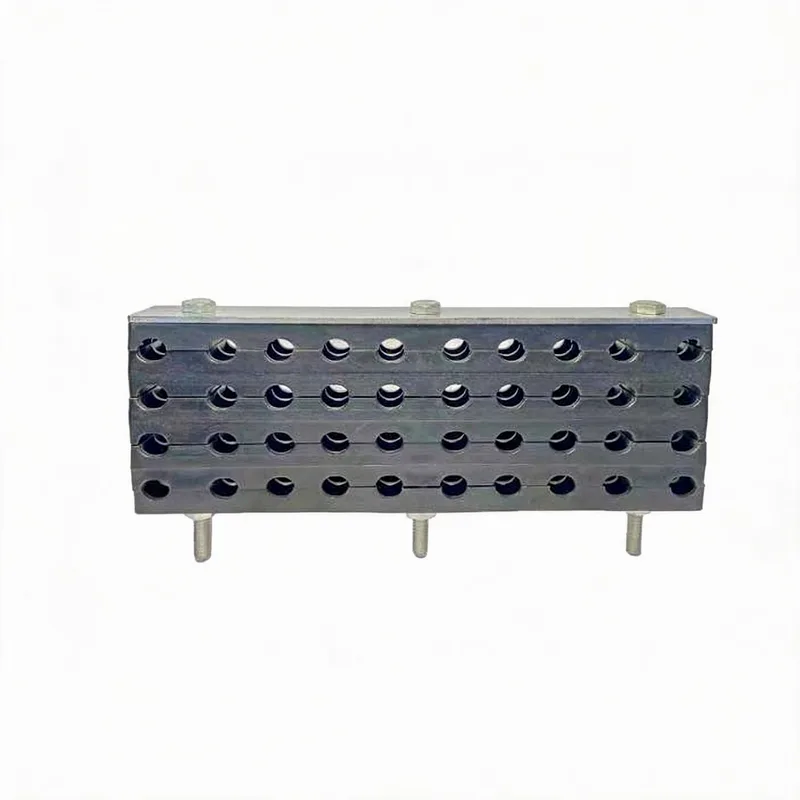
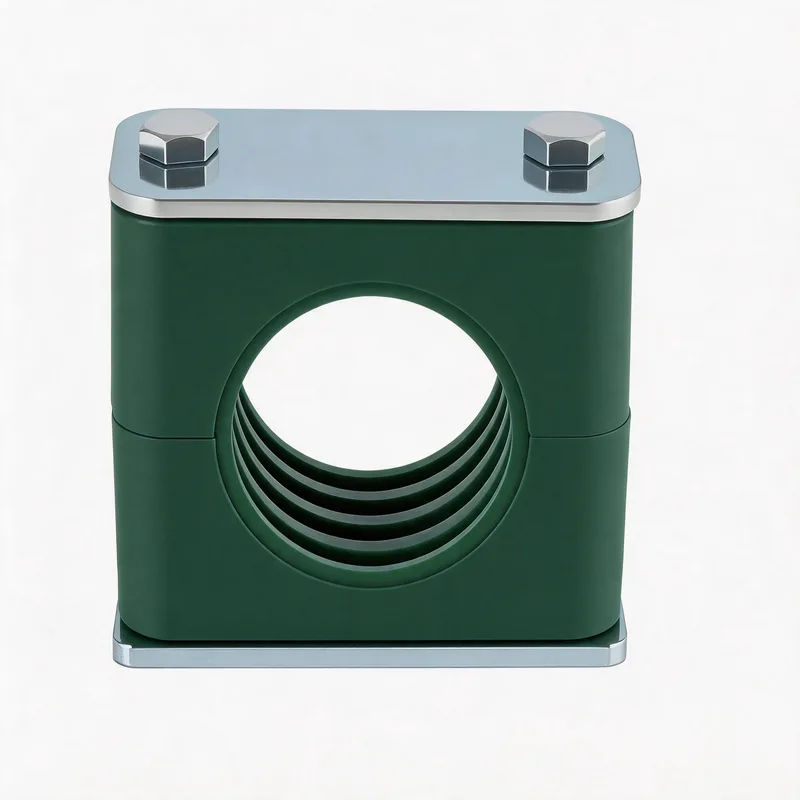
Typical use cases
- Identify the specific chemicals at each clamp location — generic "chemical resistant" is not a specification
- Review PP, PA, PVDF and stainless steel clamp body options against the chemical compatibility table
- Specify stainless hardware in washdown zones to prevent rust contamination
- Check clamp contact material against soft or coated pipe surfaces
Clamp body material for chemical environments
| Body material | Resistant to | Not suitable for | Typical application |
|---|---|---|---|
| PP (polypropylene) | Weak acids, weak alkalis, most salts, many solvents at room temp | Concentrated oxidising acids, aromatic/chlorinated solvents, strong oxidisers | General chemical service up to ~80 °C |
| PA (polyamide) | Hydrocarbons, oils, many organic solvents, weak alkalis | Mineral acids, formic acid, phenol, strong oxidising agents | Higher mechanical load at elevated temperature |
| PVDF (polyvinylidene fluoride) | Most acids incl. HCl, HF, H₂SO₄; most solvents; halogens | Strong alkalis (NaOH >50 %), hot amines, fuming acids | Aggressive acid service, semiconductor, pharma |
| 316L stainless steel | Most chemicals at moderate conc.; excellent mechanical strength | Hydrochloric acid, hot chloride solutions (SCC risk >60 °C) | Heavy loads in chemical environment, washdown, food/pharma |
Chemical resistance depends on concentration, temperature and exposure duration. Always confirm compatibility for the specific chemical, concentration and operating temperature with the manufacturer data sheet or a compatibility test.
Chemical compatibility is specific, not generic
A PP clamp body that is perfectly stable in 10 % sulphuric acid at 20 °C may swell and soften in 10 % sulphuric acid at 60 °C. A PA body that handles mineral oil effortlessly will degrade rapidly in contact with formic acid at any concentration. Chemical resistance is not a binary property — it varies with the specific chemical, its concentration, the temperature, the exposure duration and whether the exposure is continuous immersion, intermittent splash or vapour only. When selecting clamp body material for a chemical plant, the process engineer should provide the chemical name, concentration range and temperature at each clamp location. If the chemical is a mixture, all components should be listed. The clamp supplier can then check the compatibility against tested data rather than applying a generic "chemically resistant" label that is meaningless without context.
PVDF clamp bodies for aggressive acid service
PVDF (polyvinylidene fluoride) clamp bodies offer significantly broader chemical resistance than PP or PA, particularly against mineral acids (hydrochloric, sulphuric, nitric at moderate concentration, hydrofluoric), halogens (chlorine, bromine) and most organic solvents. PVDF is the standard clamp body material in semiconductor fabrication, pharmaceutical clean rooms and chemical plants handling aggressive acids. The trade-off is higher material cost and somewhat lower impact strength compared to PA. PVDF is not suitable for strong alkalis (sodium hydroxide above approximately 50 % concentration), hot amines, or fuming acids. When specifying PVDF clamp bodies, confirm the PVDF grade — not all PVDF formulations have the same chemical resistance, and some are optimised for UV resistance or mechanical properties rather than chemical exposure.
Washdown zones and rust contamination prevention
Chemical plants, food processing facilities and pharmaceutical plants regularly wash down equipment and piping areas with water, steam or chemical cleaning solutions. Any carbon steel component above or near the product zone — including a zinc-plated bolt head, a carbon steel cover plate or an uncoated base plate — is a potential source of rust contamination. Rust particles falling into open process vessels, onto food contact surfaces or into clean-in-place circuits can cause product rejection, batch failure or regulatory non-compliance. For washdown zones, specify all-stainless hardware throughout the clamp assembly: 316L bolts, 316L cover plates, 316L base plates. PP or PA clamp bodies are inherently rust-free and suitable for washdown. Confirm that no carbon steel component is visible or accessible above any open product area. This includes rail nuts, spring washers and any bracket welding that may have been left uncoated.
Clamp contact with soft or coated pipe surfaces
Chemical plants use a wider range of pipe materials than most industrial sectors: PTFE-lined steel, glass-lined steel, PVC, CPVC, PVDF pipe, PP pipe, polyethylene, rubber-lined steel, FRP (fibreglass) and exotic alloys such as Hastelloy and titanium. Many of these surfaces are softer or more damage-sensitive than standard carbon steel or stainless tube. A DIN 3015 clamp with a hard PP or PA insert tightened to standard torque can crack a PVC pipe, mark a PTFE lining, or crush a thin-wall FRP tube. For these materials, review the pipe manufacturer's support recommendations, consider rubber-cushioned clamp inserts (NBR or EPDM), and reduce tightening torque to avoid wall damage. For glass-lined pipe, the support design may need a saddle or wide-contact cradle rather than a two-piece clamp, because point loading can crack the glass lining.
Ventilation and fume hood tubing supports
Chemical fume extraction systems, scrubber connections and laboratory ventilation ducts often use PVC, CPVC or PP ductwork that requires support at regular intervals. These runs may be horizontal along ceilings or walls, and the clamp must support the full pipe weight plus the weight of any condensate or liquid flow inside. Use DIN 3015 standard series sized to the duct OD with PP inserts for chemical compatibility. Stainless rail mounting is preferred for ceiling runs because it allows position adjustment and avoids welding to the building structure. For vertical riser supports, use cover-plate clamps to prevent the duct from sliding down under its own weight. In laboratory environments, confirm that the clamp material does not off-gas or shed particles that could contaminate sensitive processes.
RFQ data for chemical plant pipe clamps
Send pipe material and OD for each circuit, chemical name and concentration at each clamp location, operating and ambient temperature, continuous or intermittent exposure, washdown chemical (if any), pipe surface type (bare metal, PTFE lined, glass lined, polymer, FRP), required clamp body material (PP, PA, PVDF, 316L or to be confirmed), hardware corrosion grade, mounting method, applicable project or owner specification, material certificate requirements, quantity by zone and clamp size.
Related WeiQue series


Recommended reading
References
These pages summarize public standard metadata and industry application information. They do not reproduce the paid DIN standard text.