
A pipe clamp is a system of parts — body halves, cover plate, bolts, nuts, washers, base plate, rail or rail nuts — and every metallic part in that system is a potential corrosion site. Specifying the clamp body correctly while ignoring the bolt finish, or protecting the bolt while leaving the base plate uncoated, simply moves the failure to the weakest link.
This guide covers corrosion mechanisms relevant to pipe clamp assemblies, material-by-material protection options, environment classification, galvanic compatibility, inspection guidance and specification data for RFQs. It is intended as a single reference for engineers and buyers who need to match the full clamp assembly to the service environment rather than selecting each component in isolation.
The goal is not to over-specify: indoor machine-tool installations do not need offshore-grade protection, and offshore installations should not rely on indoor-grade finishes. Matching the protection level to the actual environment avoids both premature failure and unnecessary cost.
Related product photos
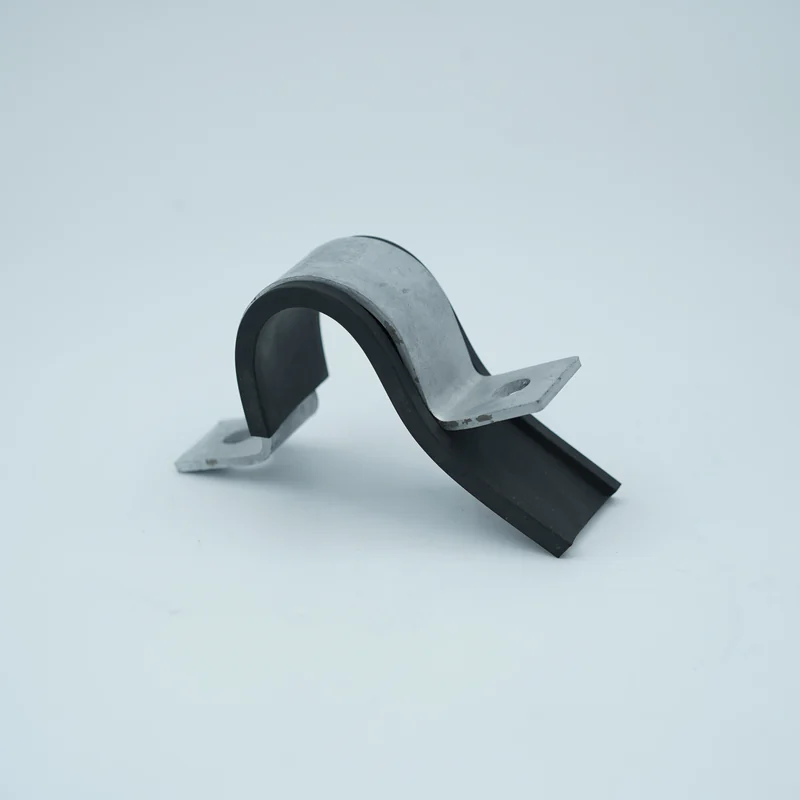
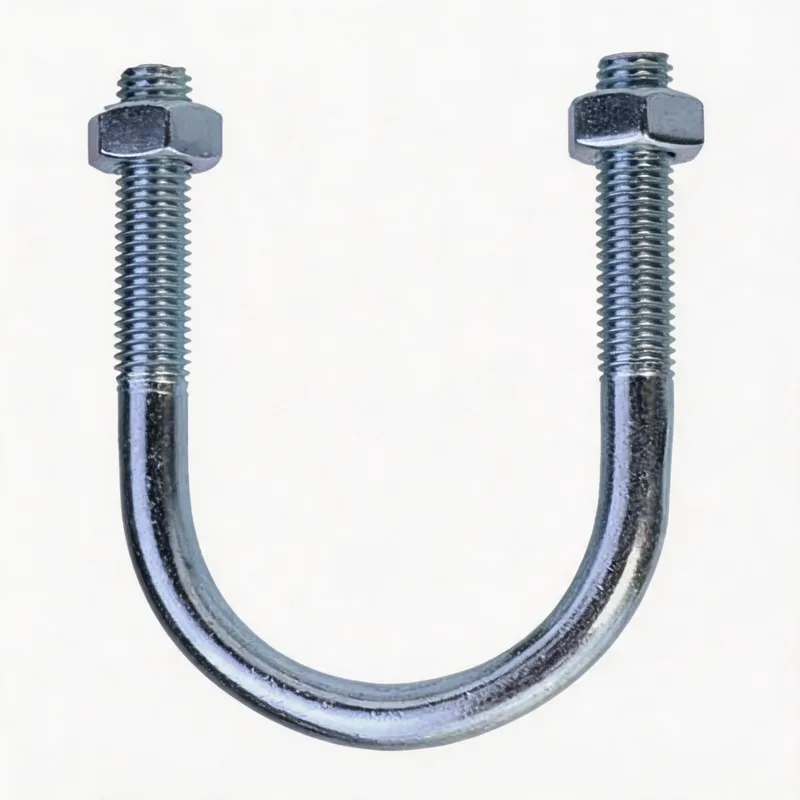
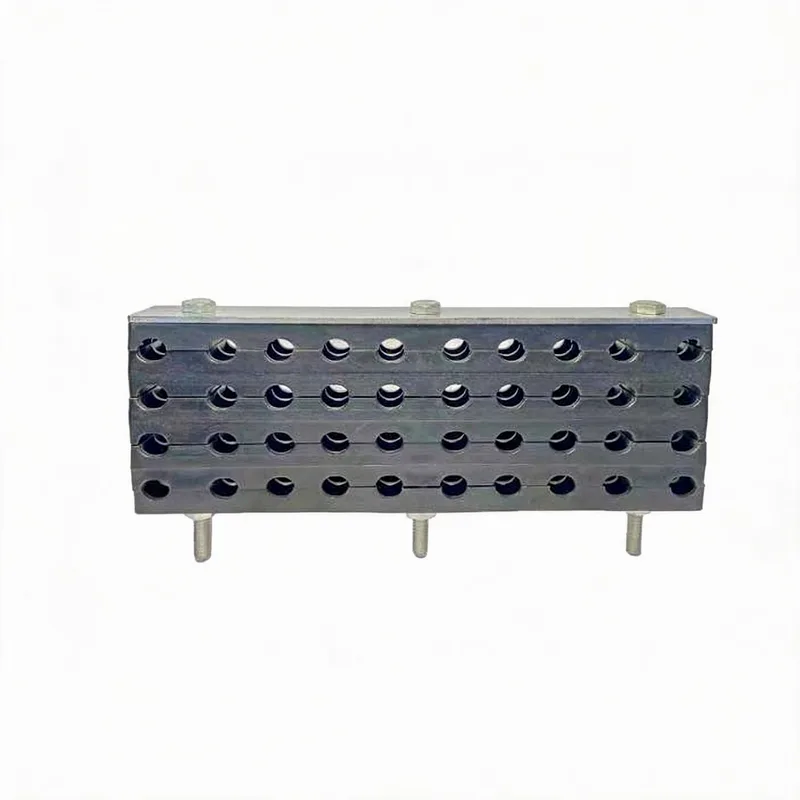
Typical use cases
- Match protection grade across every metallic part in the clamp assembly, not just the body
- Classify the actual service environment before selecting surface treatments and materials
- Avoid galvanic corrosion by checking metal compatibility at every contact point
- Include corrosion protection requirements in the RFQ, not as an afterthought
- Plan inspection intervals based on environment severity and component accessibility
Corrosion protection by environment
| Environment | Fastener recommendation | Base plate / bracket | Typical service life before first inspection |
|---|---|---|---|
| Indoor dry (machine rooms, workshops) | Zinc plated (Fe/Zn 8–12 µm) | Zinc plated or painted steel | 5–10 years |
| Indoor wet (washdown, condensation, food) | A4 stainless (316) or hot-dip galvanized | Stainless or HDG bracket | 2–5 years |
| Outdoor sheltered (under roof, no direct rain) | Hot-dip galvanized or Dacromet | HDG steel | 3–7 years |
| Outdoor exposed (rain, UV, temperature cycling) | Hot-dip galvanized or A2 stainless | HDG or duplex (HDG + paint) | 2–5 years |
| Coastal (salt air, <5 km from sea) | A4 stainless (316) preferred | 316L stainless or HDG + marine paint | 1–3 years |
| Offshore (direct sea spray, immersion zone) | 316L stainless, all components | 316L stainless bracket and base | 1–2 years |
| Chemical (acid, alkali, solvent splash) | 316L or higher alloy, confirm chemical compatibility | Lined or coated steel, or full stainless | Per chemical exposure review |
Service life estimates assume no mechanical damage to the coating. Actual intervals depend on coating thickness, local humidity, chemical exposure and inspection findings.
Why corrosion matters for pipe clamp systems
A corroded pipe clamp bolt loses preload. A corroded base plate loses section and anchorage. A corroded cover plate no longer restrains pipe movement. None of these failures appear suddenly — corrosion progresses over months or years, often hidden inside the assembly where moisture collects in crevices and under bolt heads. By the time red rust is visible on the outside, the actual cross-section loss may already be significant. In high-vibration environments, reduced bolt preload from corrosion allows movement that accelerates fatigue. In vertical pipe runs, a corroded clamp or anchor bracket may no longer carry axial pipe weight. The cost of a single unplanned tower climb, shutdown or pipe failure almost always exceeds the cost difference between a zinc-plated bolt and a stainless one.
Corrosion mechanisms in pipe clamp assemblies
Four corrosion mechanisms are most relevant to pipe clamp installations. General (uniform) corrosion attacks unprotected carbon steel surfaces exposed to humidity and oxygen; this is the familiar red rust that consumes bolt threads, base plate edges and uncoated bracket surfaces. Crevice corrosion concentrates in tight gaps where moisture enters but oxygen exchange is restricted — between clamp halves, under bolt heads, between the base plate and the mounting surface, and inside rail-nut channels. These crevices can corrode faster than exposed surfaces because the local chemistry becomes more aggressive as oxygen is depleted. Galvanic corrosion occurs when two dissimilar metals are in electrical contact in the presence of an electrolyte; the less noble metal corrodes preferentially. This is common when stainless bolts are used with a zinc-plated base plate, or when an aluminum bracket contacts a carbon steel clamp body. Pitting corrosion is localised attack that creates small but deep cavities, particularly in stainless steels exposed to chlorides. It is most relevant in coastal and offshore environments where salt deposits concentrate on surfaces between washdown or rain events.
Clamp body materials and inherent corrosion resistance
PP (polypropylene) and PA (polyamide) clamp bodies used in DIN 3015 standard and heavy series are inherently corrosion-resistant. They do not rust, are unaffected by most hydraulic oils and are resistant to weak acids and alkalis. PP is slightly more chemically resistant than PA but has a lower temperature ceiling. Neither material is affected by salt spray, condensation or UV in the short term, though prolonged outdoor UV exposure can cause surface chalking in PP over several years. This means that in most environments the clamp body itself is not the corrosion risk — the risk is concentrated in the metallic hardware: bolts, nuts, washers, cover plates, base plates, mounting rails and rail nuts. Metal clamp bodies — carbon steel, aluminum alloy and stainless steel — are a different case. Carbon steel bodies require surface treatment (zinc plating, painting or hot-dip galvanizing) proportional to the environment. Aluminum bodies offer good weight-to-strength ratio and natural oxide protection in mild environments, but are vulnerable to galvanic corrosion when in direct contact with carbon steel or stainless steel hardware in wet conditions. Stainless steel (316L) clamp bodies provide the highest corrosion resistance but at higher material cost; they are the default choice for offshore, marine, chemical and food-grade applications.
Fastener surface treatments compared
Zinc plating (electrogalvanizing) deposits a thin zinc layer (typically 5–12 µm) and provides basic corrosion protection suitable for dry indoor environments. It is the default finish for most standard pipe clamp hardware. Salt spray resistance is limited — white rust (zinc corrosion product) may appear within 24–96 hours in a neutral salt spray test, and red rust (base steel attack) within 96–200 hours depending on thickness and passivation. Hot-dip galvanizing applies a much thicker zinc coating (45–85 µm typical for fasteners) by immersion in molten zinc. It provides significantly longer corrosion life in outdoor and moderately corrosive environments. Thread fit may be tighter due to coating thickness; oversized tapped holes or centrifuged bolts are used to maintain assembly. Salt spray resistance to red rust is typically 500–1000+ hours. Dacromet and geomet are non-electrolytic zinc-aluminum flake coatings applied by dip-spin or spray. They provide good corrosion resistance (typically 720+ hours to red rust in salt spray), no hydrogen embrittlement risk for high-strength bolts (class 10.9 and 12.9), and thin, controlled thickness that does not affect thread fit. They are increasingly specified for automotive, wind energy and heavy machinery applications. Stainless steel fasteners (A2/304 or A4/316) eliminate the coating question entirely. They do not rely on a sacrificial layer and maintain corrosion resistance even if scratched. A4/316 is required for chloride environments (coastal, offshore, chemical). The trade-off is higher material cost and galling risk during tightening — anti-seize compound or waxed fasteners should be specified for stainless assemblies.
Base plate and mounting bracket protection
The base plate or mounting bracket is often the largest exposed metal surface in a clamp assembly and the one closest to the structural mounting surface where moisture can be trapped. In indoor applications, zinc-plated or painted carbon steel base plates are adequate. For outdoor use, hot-dip galvanized base plates are the standard choice; the thick zinc layer protects cut edges and weld areas that would be exposed with thinner coatings. For coastal and offshore use, 316L stainless steel base plates are preferred because they eliminate the need for coating maintenance entirely. Welded base plates deserve extra attention: the weld zone and heat-affected zone lose whatever coating existed before welding. If the bracket is welded after galvanizing, the weld area must be cold-galvanized (zinc-rich paint) or the entire bracket re-galvanized. Leaving a bare weld in a corrosive environment creates a local anode that corrodes rapidly. For rail-mounted systems, the rail channel itself and the rail nut are both crevice corrosion sites. Moisture enters the channel, oxygen access is restricted, and the confined geometry makes inspection difficult. Hot-dip galvanized or stainless steel rails are recommended for any environment beyond indoor dry.
Galvanic corrosion at mixed-metal contact points
Galvanic corrosion is accelerated attack on the less noble metal when two dissimilar metals are electrically connected in a wet environment. In pipe clamp assemblies, common galvanic couples include: stainless steel bolts in a zinc-plated base plate (the zinc is sacrificed faster); aluminum brackets with carbon steel clamps (the aluminum corrodes); and carbon steel rail nuts inside a stainless steel rail (the carbon steel nut corrodes). The severity depends on the area ratio — a small anode (e.g., a zinc-plated bolt) in contact with a large cathode (e.g., a stainless base plate) corrodes much faster than the reverse. To manage galvanic risk: use the same metal family for all contact parts where possible; if mixing is unavoidable, isolate dissimilar metals with non-conductive washers, bushings or coating barriers; and specify the less noble metal with a thicker protective coating to slow the sacrificial consumption. In practice, the safest approach for corrosive environments is to specify all metallic parts in the same stainless grade (typically 316L) rather than trying to manage multiple galvanic couples across the assembly.
Cover plate and crevice corrosion considerations
DIN 3015 cover plates sit on top of the clamp body halves and are held by the assembly bolts. The interface between the cover plate and the clamp body creates a crevice on each side. In dry environments this is insignificant, but in condensing, splashing or washdown environments, moisture collects in these crevices and remains trapped. The cover plate is typically carbon steel, and if its zinc plating is thin or damaged, crevice corrosion can undermine the cover plate from the inside while the outer surface still looks intact. For wet environments, consider hot-dip galvanized or stainless cover plates. For food and pharmaceutical washdown areas, stainless cover plates (and stainless bolts) eliminate the risk of rust contamination from hardware above the pipe. When a PP or PA body is used with a metal cover plate, the cover plate is the only part at risk — but its failure means the pipe is no longer fully restrained.
Environment classification for specification
A consistent environment classification simplifies specification and avoids the common mistake of mixing protection levels across the assembly. For pipe clamp corrosion protection, a practical classification is: C1 — indoor dry, controlled temperature, no condensation (e.g., clean machine rooms, electrical cabinets). C2 — indoor with occasional condensation, mild humidity or infrequent splash (e.g., general workshops, pump rooms). C3 — outdoor sheltered or indoor wet with regular condensation, washdown or mild chemical exposure (e.g., covered loading bays, food production areas, water treatment). C4 — outdoor exposed to rain, UV, temperature cycling and moderate pollution (e.g., construction sites, power plants, outdoor pipe racks). C5 — coastal or industrial with salt air, high humidity, chemical fumes or frequent washdown (e.g., coastal wind farms, petrochemical plants, marine engine rooms). CX — offshore, immersion zones, or severe chemical contact (e.g., offshore platforms, splash zones, acid plant pipe runs). When preparing an RFQ, stating the environment classification for each clamp location enables the supplier to quote the correct hardware from the beginning without guessing.
Industry-specific corrosion notes
Marine and offshore: all metallic parts in 316L stainless; confirm no carbon steel rail nuts or zinc-plated washers are mixed in. Wind energy: Dacromet or stainless fasteners for nacelle and tower interior; 316L for offshore wind; confirm bolt locking method survives long inspection intervals. Chemical and petrochemical: identify the specific chemical exposure at each clamp location; generic "chemical resistant" specifications are not sufficient because resistance varies by chemical, concentration and temperature. Food and beverage: stainless hardware throughout washdown zones to prevent rust contamination; confirm no bare carbon steel is visible above open product or process areas. Construction and heavy machinery: hot-dip galvanized hardware is the practical standard for outdoor mobile equipment; confirm that coating thickness does not prevent bolt thread engagement on fine-pitch assemblies. Power generation: review condensation cycling inside turbine buildings and cooling tower proximity; hot-dip galvanized hardware as minimum, stainless in cooling tower and steam-exposed areas.
Inspection planning for corrosion
Corrosion inspection should be planned at commissioning, not after the first failure. The inspection interval depends on environment severity, coating type and component accessibility. In C1/C2 environments with zinc-plated hardware, a visual check every 3–5 years is usually sufficient. In C3/C4 environments with hot-dip galvanized hardware, inspect every 1–3 years, focusing on crevice areas, weld zones and base plate edges. In C5/CX environments, inspect annually or more frequently, depending on the chemical exposure and coating system. Key inspection points: bolt heads and threads for white or red rust; cover plate undersides for crevice corrosion; base plate edges and weld seams for coating breakdown; rail channels for standing water and corrosion product buildup; and any dissimilar-metal contact points for accelerated attack. If a bolt cannot be retorqued to specification because the thread is corroded, replace the bolt rather than attempting to clean and reuse it. Record all findings, replacement actions and retorque values for trending — a location that needs bolt replacement at every inspection cycle may justify an upgrade to a more corrosion-resistant grade.
Coating damage during installation
The corrosion protection of a pipe clamp assembly can be compromised before the system is even put into service. Common installation damage includes: scratching zinc plating when sliding bolts through base plate holes; chipping hot-dip galvanized coating on base plate edges during handling and welding; over-torquing bolts and cracking Dacromet or geomet flake coatings on the thread crests; and field-welding brackets without post-weld coating repair. Each of these exposes bare steel at a point where moisture will collect. Prevention is straightforward: use chamfered bolt holes to reduce scratch contact; handle galvanized parts with care and repair any coating damage with cold galvanizing compound before assembly; follow the torque specification to avoid coating fracture; and always re-coat or cold-galvanize weld zones before final assembly. These steps cost minutes during installation but can add years to the corrosion life of the assembly.
Hydrogen embrittlement risk with high-strength fasteners
High-strength fasteners (property class 10.9 and 12.9) used in DIN 3015-2 heavy series and some stacking assemblies are susceptible to hydrogen embrittlement if exposed to hydrogen during electroplating. Hydrogen embrittlement can cause sudden bolt fracture at loads well below the rated strength, often hours or days after tightening. Zinc electroplating is the most common source of this risk because hydrogen is absorbed during the acid pickling and plating bath. Post-plating baking (typically 190–230 °C for 4–24 hours) can reduce absorbed hydrogen, but the process must be tightly controlled and is not always reliably applied. For class 10.9 and 12.9 bolts in demanding environments, consider specifying non-electrolytic coatings — Dacromet, geomet or mechanical zinc plating — which do not introduce hydrogen. Alternatively, specify stainless steel fasteners where the environment justifies the cost. If zinc electroplating must be used for high-strength fasteners, require a hydrogen embrittlement relief bake certificate from the plater.
Specifying corrosion protection in the RFQ
Include the following corrosion-related data in every pipe clamp RFQ where the environment is anything beyond indoor dry: environment classification (or a plain description of humidity, chemicals, salt, UV, washdown, temperature cycling); fastener surface treatment preference or requirement (zinc plated, HDG, Dacromet, stainless grade); base plate and bracket material and finish; cover plate finish; whether all metallic parts must be the same corrosion grade; any galvanic isolation requirements; applicable corrosion protection standard (ISO 12944, ISO 9223, NORSOK M-501 or project-specific); salt spray test requirement if any (hours to white rust, hours to red rust); and inspection interval assumption. Providing this data up front allows the supplier to quote the correct hardware from the beginning rather than discovering a corrosion mismatch after delivery. It also avoids the cost and delay of replacing zinc-plated bolts with stainless ones in the field because the environment was not stated at the time of order.
Related WeiQue series


Recommended reading
References
These pages summarize public standard metadata and industry application information. They do not reproduce the paid DIN standard text.