
Power generation plants — coal-fired, gas-fired, combined cycle, biomass, hydroelectric and nuclear — use DIN 3015 pipe clamps extensively on auxiliary systems: hydraulic control lines for turbine governors, valves and dampers; lubrication circuits for bearings, gearboxes and generators; cooling water distribution for heat exchangers, condensers and auxiliary equipment; instrument tubing for pressure, temperature and flow measurement throughout the plant; and compressed air distribution for pneumatic actuators and service stations.
The main steam and feedwater piping is designed to project-specific stress analysis with engineered hangers and supports, but the secondary and tertiary piping — the thousands of small-bore connections that keep the plant running — relies on standardised pipe clamp systems. These clamps must survive the full range of power plant conditions: high ambient temperatures near boilers and steam turbines, continuous vibration from rotating machinery, outdoor weather exposure on pipe racks and cooling towers, corrosive flue gas atmospheres, and abrasive dust from coal handling or biomass fuel processing.
This guide covers the practical selection decisions for DIN 3015 pipe clamps across different power plant types and plant zones.
Related product photos
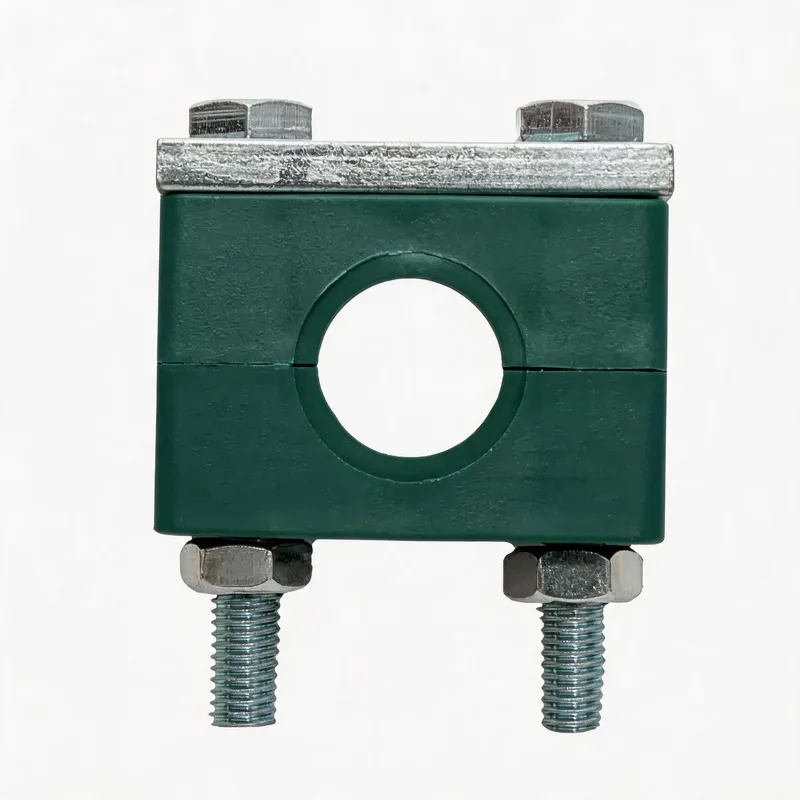
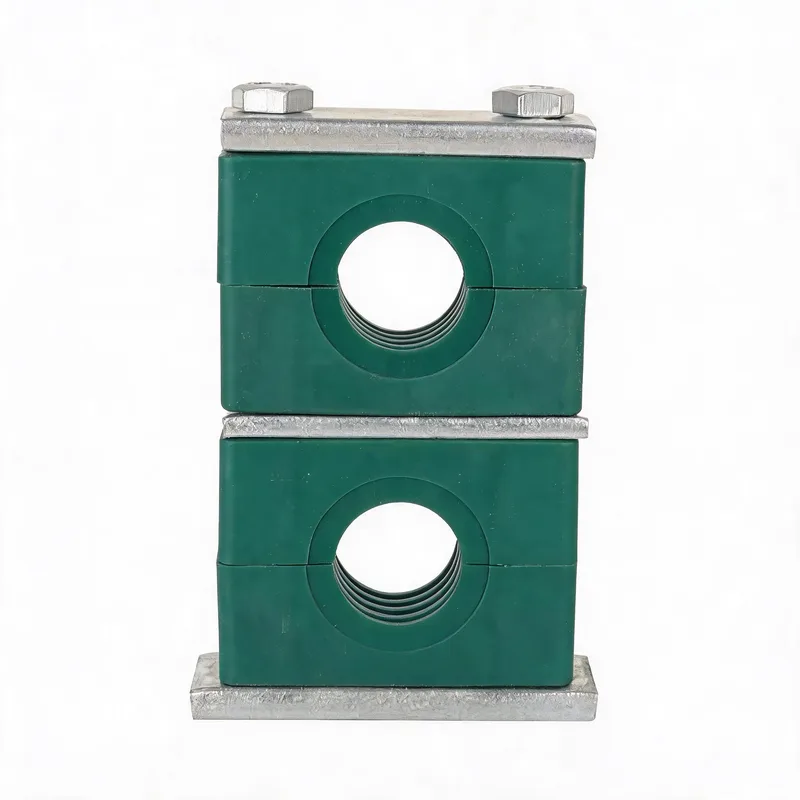
Typical use cases
- Map clamp body temperature near boilers and steam lines — radiant heat, not fluid temperature, drives material selection
- Use shockproof or cushioned clamps near turbines, pumps and fans to absorb vibration
- Specify HDG or Dacromet fasteners for outdoor pipe racks and cooling tower areas
- Confirm material documentation requirements for nuclear auxiliary or classified pressure systems
Pipe clamp selection by power plant zone
| Plant zone | Key challenge | Recommended clamp | Material note |
|---|---|---|---|
| Boiler house / steam area | Radiant heat, thermal cycling, ash/soot | PA or metal body; G4/G5 long welded base | PA body if <150 °C; metal above; HDG hardware |
| Turbine hall | Continuous vibration, oil mist, high cleanliness | G30 shockproof near bearings; G2/G3 standard elsewhere | Standard zinc or Dacromet; lock washers on vibrating lines |
| Cooling water / condenser area | Large OD, heavy pipes, wet environment | Heavy series G5/G6 with cover plate | HDG or 316L in coastal/brackish sites |
| Coal/biomass handling area | Abrasive dust, conveyor vibration, outdoor | Cover-plate clamps to exclude dust; heavy series | HDG minimum; avoid rail systems in dusty zones |
| Outdoor pipe rack / switchyard | Weather, UV, thermal expansion | G4/G5 welded base; guide clamps for expansion | HDG hardware; PA body preferred over PP for UV |
Plant layouts and conditions vary by fuel type, capacity and site. Confirm actual ambient temperatures, vibration levels and chemical exposure with the plant engineering team before finalising clamp specifications.
Boiler house and high-temperature zones
In coal-fired and biomass power plants, the boiler house contains the furnace, superheater, economiser and associated ductwork at temperatures that can exceed 500 °C on the flue gas side. While the main process piping has engineered supports, the auxiliary lines — soot blower steam, boiler blowdown, sampling lines, instrument tubing and hydraulic controls for dampers and burner tilts — all use pipe clamps. The ambient air temperature near the boiler casing can reach 60–100 °C or higher, depending on insulation quality and proximity to hot surfaces. Standard PP clamp bodies (rated ~80 °C continuous) may soften in these locations. Use PA bodies (rated ~120–150 °C) for locations where the clamp body temperature remains below 150 °C, and aluminium or steel bodies for locations closer to the boiler where temperatures exceed polymer limits. Ash and soot accumulate on all horizontal surfaces, so cover-plate clamps are preferred to prevent debris from packing around the pipe seat.
Turbine hall vibration and rotating equipment proximity
The turbine hall houses the steam or gas turbine, generator, exciter, boiler feed pumps, condensate pumps and circulating water pumps — all sources of continuous rotational vibration. Hydraulic control lines for the turbine governor, lubrication supply and return lines, seal oil circuits, and cooling water connections to hydrogen coolers and stator water coolers all run through or near the turbine pedestal area. Use shockproof clamps (G30 series with NBR cushioning) for hydraulic and lubrication lines within 3 metres of rotating equipment to attenuate vibration transmission from the pipe to the support structure. Beyond this zone, standard series clamps with appropriate bolt locking (nylon lock nut or wedge-locking washer) are adequate. Clamp spacing should follow the vibration-adjusted calculation: shorter spans near vibration sources, longer spans in low-vibration areas. For generator hydrogen cooling circuits, confirm that all clamp and fastener materials are compatible with the hydrogen safety requirements — some plant specifications prohibit certain spark-generating materials near hydrogen-containing equipment.
Cooling water and condenser circuits
Cooling water systems in power plants involve large-diameter pipework (often 50 mm and above for the secondary circuits) carrying water from cooling towers, rivers, lakes or seawater intakes to condensers, oil coolers, air coolers and auxiliary heat exchangers. The pipe weight when full of water is substantial, and the clamp system must support this static load plus any dynamic loads from pump start-up surges and thermal cycling. Use heavy series (DIN 3015-2) clamps with long welded-base plates for cooling water headers above 50 mm OD. For coastal and seawater-cooled plants, the corrosion environment is severe: salt spray, brackish water dripping from overhead pipes, and high humidity accelerate corrosion of standard zinc-plated hardware. Specify hot-dip galvanized or 316L stainless hardware for cooling water areas in coastal plants. For inland plants with freshwater cooling, standard HDG hardware is normally adequate.
Coal and biomass dust environments
Coal handling plants, biomass fuel reception and processing areas, and ash handling systems generate abrasive dust that accumulates on pipe clamps, fills crevices and accelerates wear on coatings and moving parts. The dust is often combined with moisture from rain, washdown or fuel moisture content, forming an abrasive slurry that is particularly aggressive to zinc coatings. In these areas, use cover-plate clamps to protect the pipe seat and clamp bore from dust accumulation. Specify hot-dip galvanized fasteners (minimum 45 µm coating thickness per ISO 1461) rather than thin electro-zinc plating, because the thicker coating survives longer under abrasive contact. Avoid rail-mounted clamp systems in heavy dust areas because the rail channel fills with debris and prevents rail nut adjustment. Welded-base mounting on structural steel or dedicated pipe supports is more reliable. For biomass plants, be aware that some biomass fuels (chicken litter, straw, municipal waste) produce acidic flue gas condensates that can attack standard carbon steel — check with the plant engineer whether corrosion-resistant hardware is needed in the fuel handling and flue gas areas.
Nuclear auxiliary systems and documentation
Nuclear power plants have the most stringent documentation requirements for all installed components, including pipe clamps. While the primary reactor coolant system and safety-classified piping use purpose-designed engineered supports, the conventional island (turbine building, cooling water, compressed air, HVAC, instrument air) uses standard DIN 3015 pipe clamps in the same way as a conventional thermal plant. However, the procurement and quality assurance requirements are significantly different: material certificates (EN 10204 3.1 or 3.2) are typically required for all metallic components including bolts, nuts and washers; clamp body material must be documented with batch traceability; surface treatment compliance must be certificated; and dimensional inspection records may be required. When specifying pipe clamps for nuclear projects, include the certificate and traceability requirements in the purchase order from the start — retrofitting documentation after delivery is expensive and time-consuming. Some nuclear operators also require seismic qualification evidence for pipe support components, which may limit the clamp types and mounting methods that can be used.
RFQ data for power plant pipe clamps
Send pipe material and OD for each circuit, plant type (coal, gas, biomass, hydro, nuclear conventional island), plant zone (boiler house, turbine hall, cooling water, coal/biomass handling, pipe rack, control building), estimated clamp body temperature, vibration source proximity, pipe operating temperature and pressure, mounting method, required clamp body material, fastener coating preference, dust exposure level, material certificate requirements (EN 10204 type), seismic qualification if applicable, applicable plant or project specification, quantity by zone and clamp size.
Related WeiQue series


Recommended reading
References
These pages summarize public standard metadata and industry application information. They do not reproduce the paid DIN standard text.