
A common question from engineers and buyers is whether DIN 3015 is still a valid, current standard, or whether it has been withdrawn or superseded. The question matters because many project specifications, drawings and legacy installations still reference DIN 3015 by part number (Part 1 standard series, Part 2 heavy series, Part 3 twin series), and a buyer needs to know whether ordering "DIN 3015" clamps still means something definite. The short answer is that DIN 3015 remains the universally understood industry reference for this family of modular block pipe clamps — the dimensional pattern it established is what manufacturers build to and what the market trades on, regardless of the document's formal standardisation status at any given moment. This article explains the difference between a standard's formal status and its practical role, why the DIN 3015 dimensional pattern persists, and the practical steps to take when a specification cites DIN 3015 so that what you order matches what was intended.
Related product photos
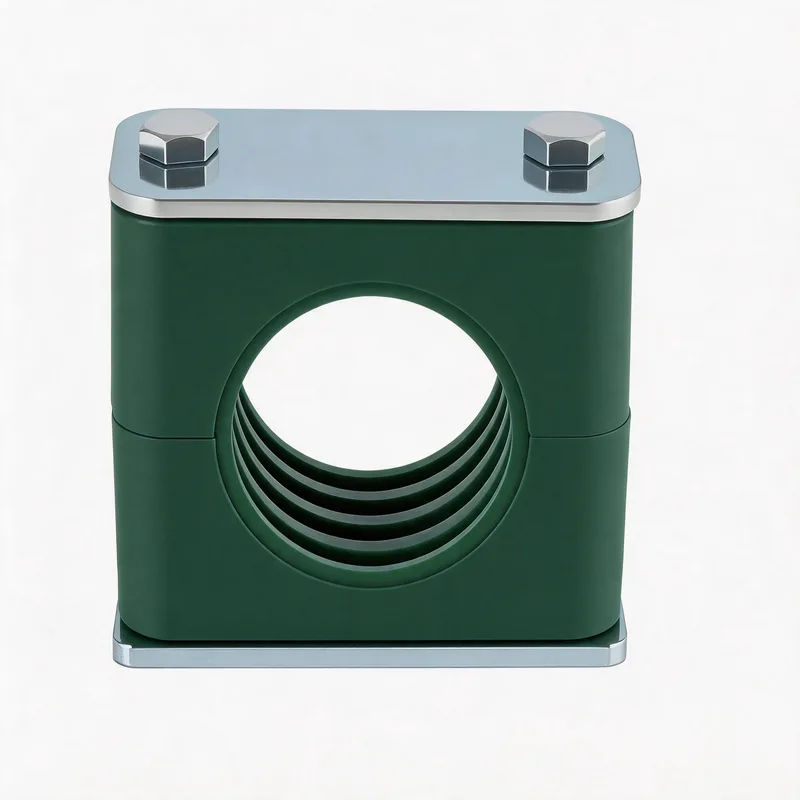
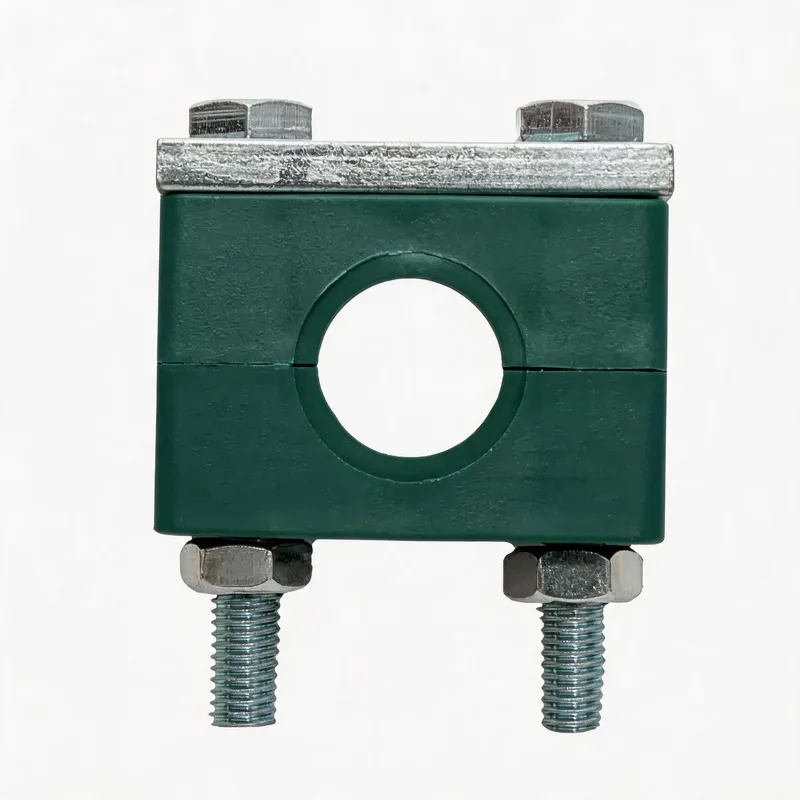
Key points
- DIN 3015 is still the universally used industry reference for modular block pipe clamps — manufacturers build to its dimensional pattern and the market trades on it
- A standard's formal status (active, revised, withdrawn) can change without affecting whether its dimensional pattern remains in everyday commercial use
- When a spec cites DIN 3015, it is referencing the well-known clamp geometry by part and group — order to that pattern with material and load documentation
- Always order by part number, series and actual pipe OD — these define the physical clamp regardless of the document's status
| DIN 3015 Part | Series | What It Defines | Still Specified As |
|---|---|---|---|
| Part 1 | Standard series | Standard-duty modular block clamps by group | “DIN 3015-1” / “DIN 3015 Part 1” |
| Part 2 | Heavy series | Heavy-duty clamps for higher loads and vibration | “DIN 3015-2” / “DIN 3015 Part 2” |
| Part 3 | Twin series | Twin clamps holding two parallel pipes | “DIN 3015-3” / “DIN 3015 Part 3” |
The part-and-series structure is how the market identifies these clamps and how manufacturers organise their catalogues. Whatever the document's formal standardisation status, ordering by part, series and pipe OD unambiguously identifies the physical clamp.
Formal standard status vs practical industry use
It is important to separate two different things: the formal administrative status of a standards document, and the practical role the standard plays in industry. Standards bodies periodically review, revise, renumber or withdraw documents as part of normal housekeeping — a standard may be marked as active, under revision, replaced by a newer number, or formally withdrawn, and this status can change over time. None of that necessarily changes how the market actually designs, manufactures and trades the products the standard described. DIN 3015 is a clear example: the document established a dimensional pattern for modular block pipe clamps that became the de facto global reference for this clamp family. Manufacturers worldwide build clamps to that pattern, organise their catalogues by its part-and-series structure, and customers specify and order using its terminology. This practical role is independent of whatever the document's current administrative status is at the standards body. So when someone asks "is DIN 3015 still current?", the most useful answer addresses the practical question behind it: yes, DIN 3015 clamps are still made, sold and specified, and ordering to the DIN 3015 pattern still gives you a well-defined product.
Why the DIN 3015 dimensional pattern persists
The DIN 3015 dimensional pattern persists for the same reason any successful interface standard persists: a huge installed base and the value of interchangeability. Millions of DIN 3015 clamps are installed in hydraulic systems, machine tools, industrial plants, ships and mobile equipment worldwide. Each of those installations may one day need a replacement clamp, and that replacement must physically match the original — same body dimensions, same bolt size, same group-to-OD relationship. This installed base creates a strong, self-reinforcing reason for manufacturers to keep building to the established pattern: a clamp that follows the DIN 3015 dimensions will fit existing rails, weld plates and pipe layouts, while a clamp with different dimensions would not. New installations also benefit from the pattern because designers can specify a well-understood, multi-source product rather than a proprietary part. This is how interface standards behave generally — once a pattern is widely adopted and embedded in a large installed base, it tends to remain the working reference regardless of the administrative lifecycle of the original document. For DIN 3015 specifically, the part-and-series structure (standard / heavy / twin) and the group-to-OD mapping are stable, well-documented and supported by multiple manufacturers, which keeps the pattern alive and tradeable.
What to do when a specification still cites DIN 3015
If your project specification, drawing or maintenance record cites DIN 3015 — for example "pipe clamps to DIN 3015 Part 2, Group 5" — treat it as a clear, actionable instruction, because it is. The citation tells you three things: the clamp family (DIN 3015 modular block clamp), the series (Part 2 = heavy series), and the size group (Group 5, which corresponds to a defined pipe OD range). To act on it: confirm the actual pipe outside diameter to verify the group, choose the correct series for the load and vibration conditions, and order clamps built to the DIN 3015 dimensional pattern for that part and group. Do not be deterred by uncertainty about the document's formal status — the specification is referencing the well-known physical product, and that product is readily available. If you want extra assurance, ask the supplier to confirm in writing that the clamps follow the DIN 3015 dimensions for the cited part and group, and to provide the dimensional data sheet. The combination of part number, series and verified pipe OD removes any ambiguity about what to supply.
Ordering with confidence: part, series and pipe OD
The reliable way to order DIN 3015 clamps — and to avoid any dependence on the document's administrative status — is to specify the three things that physically define the clamp: the part number (1, 2 or 3, which selects standard, heavy or twin series), the size group or the actual pipe outside diameter (the group is derived from the OD), and the body material and hardware finish for the service environment. With these, a supplier can deliver the exact physical clamp regardless of how the standard is currently catalogued. Order by measured pipe OD rather than by nominal bore (DN/NPS), because the DIN 3015 group is based on the tube outside diameter, not the nominal pipe size — this is a frequent source of error. For replacement clamps on an existing installation, measure an original clamp or the pipe OD to confirm the group, since the original specification may not be to hand. For new installations, select the series from the load and vibration requirements and the group from the pipe OD. In all cases the part-series-OD triplet is a complete, unambiguous order that does not rely on interpreting the standard's status — it relies on the physical dimensions, which are stable.
Related standards and the broader picture
DIN 3015 does not exist in isolation; it sits among related material, fastener and design standards that together define a complete clamp specification. The clamp body polymer or metal grade, the bolt property class and material (for example carbon steel class 8.8 or stainless A2-70 / A4-80), the coating specification, and the piping design code that sets support spacing all come from their own standards and remain fully current. When you specify a DIN 3015 clamp, you are really specifying the dimensional pattern from DIN 3015 plus the material, fastener and coating requirements from those other standards. This layered approach is why the DIN 3015 dimensional reference remains practical and useful: it handles the geometry, while current material and design standards handle strength, corrosion and load. For buyers working across regions, it is also worth knowing how DIN 3015 relates to the American, Japanese and Chinese pipe support standards, since those are structured differently and are not direct equivalents. The practical takeaway is that DIN 3015 remains the working reference for the clamp geometry, used alongside current material, fastener and design codes — and ordering by part, series and pipe OD, with the appropriate material and load documentation, gives a complete and reliable specification.
Related WeiQue series


Recommended reading
References
These pages summarize public standard metadata and industry application information. They do not reproduce the paid DIN standard text.