
Pipe support requirements are written into project specifications using whichever standard is customary in the country or industry of the project. A German or European project usually references DIN 3015; a North American project references MSS SP-58 and the ASME B31 piping codes; a Japanese project references JIS; a Chinese project references GB/T. Buyers exporting or importing clamps frequently ask "what is the equivalent of DIN 3015 in our standard?" The honest answer is that there is no exact one-to-one equivalent, because these standards are structured differently: DIN 3015 is a dimensional product standard for a specific family of modular block clamps, while MSS SP-58 is a materials-and-design standard covering many types of pipe support hardware, and the ASME/JIS/GB documents are mostly design codes rather than dimensional clamp standards. This article explains what each standard actually covers, why they cannot be directly cross-referenced, and how to demonstrate that a DIN 3015 clamp satisfies the intent of a non-DIN specification.
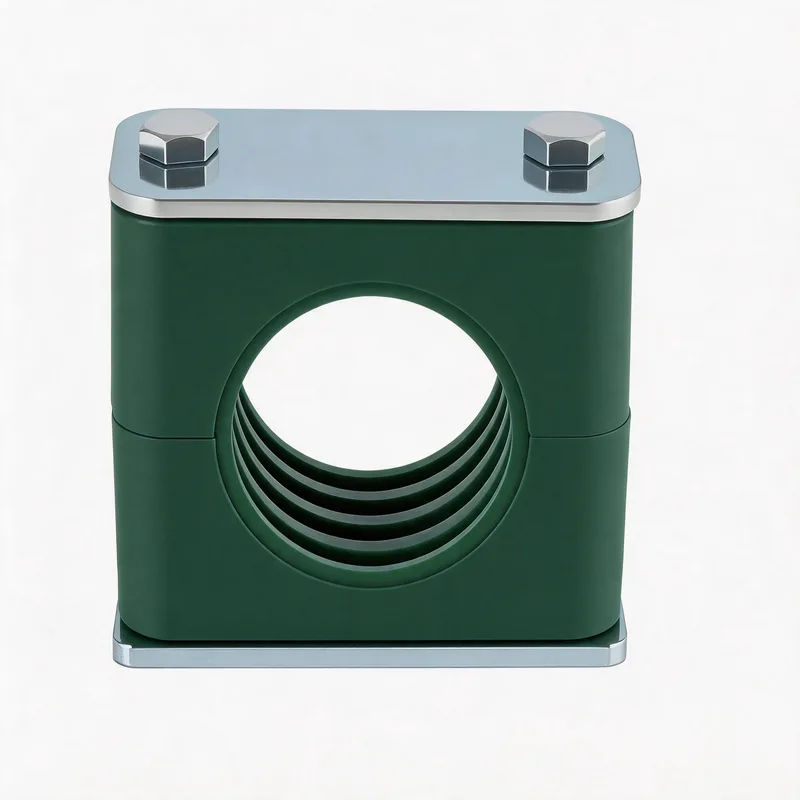
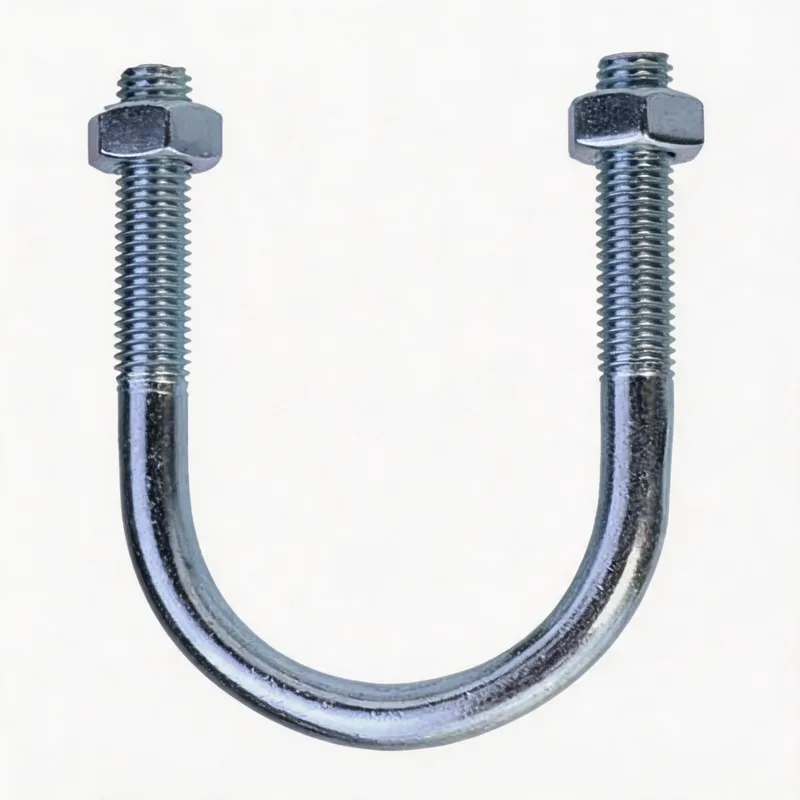
Related product photos
Key points
- DIN 3015 is a dimensional product standard for modular block clamps — it defines exact clamp geometry by group/series, which most other standards do not
- MSS SP-58 covers materials, design and manufacture of many pipe support types but does not specify the block-clamp dimensions that DIN 3015 does
- ASME B31 codes, JIS and GB/T are mostly design/spacing codes — they tell you how to support a pipe, not the dimensions of a specific clamp product
- To satisfy a non-DIN spec, supply DIN 3015 clamps with material certs and load data showing they meet the spec’s material, load and spacing requirements
| Standard | Region | What It Defines | Relationship to DIN 3015 |
|---|---|---|---|
| DIN 3015 (Parts 1–3) | Germany / Europe | Dimensions of modular block pipe clamps — standard, heavy and twin series by group | The reference standard for this clamp family |
| MSS SP-58 | USA / North America | Materials, design and manufacture of pipe hangers and supports (many types) | Broader scope; no direct block-clamp dimension equivalent |
| ASME B31.1 / B31.3 | USA / international | Piping design codes — include support spacing and load rules | Sets support requirements; a DIN 3015 clamp can be used to meet them |
| JIS B / JIS A | Japan | Piping and support fittings; some clamp/U-bolt dimensions | Partial overlap on simple clamps; not modular block clamps |
| GB/T (e.g. pipe support series) | China | National pipe support standards; some mirror DIN/ISO content | Often DIN-aligned; check the specific GB/T number cited |
This table is a high-level orientation, not a certification of equivalence. Always read the specific standard edition and clause cited in your project specification — standards are revised, and a clause reference may point to a particular requirement (material, load, spacing) rather than the whole document.
Why there is no exact "equivalent" to DIN 3015
The reason buyers struggle to find an equivalent standard is that DIN 3015 belongs to a different category than most pipe support standards. DIN 3015 is a dimensional product standard: it defines the exact physical geometry of a specific family of modular block pipe clamps — the clamp body height, width, bore range for each group number, the bolt size, and the way standard, heavy (Part 2) and twin (Part 3) series are constructed. This lets clamps from different manufacturers be physically interchangeable. Most other national standards are not built this way. MSS SP-58, for example, is a materials, design and manufacture standard that classifies dozens of types of pipe hangers and supports by function and gives material and load requirements, but it does not publish the dimensional tables for a modular block clamp family the way DIN 3015 does. ASME B31.1 and B31.3 are piping design codes that tell the engineer how far apart to space supports and what loads to design for, but they do not specify a clamp product at all. So when a specification says "MSS SP-58" it is usually invoking material and quality requirements, and when it says "ASME B31.3" it is invoking design and spacing rules — neither is asking for a specific clamp dimension that DIN 3015 could be swapped for. The practical consequence: you cannot answer "what MSS number equals DIN 3015 Part 1 Group 3?" because the two standards are not measuring the same thing.
MSS SP-58 and the North American approach
In North American practice, pipe support hardware is governed primarily by MSS SP-58 (Pipe Hangers and Supports — Materials, Design, Manufacture, Selection, Application, and Installation), published by the Manufacturers Standardization Society. MSS SP-58 catalogues pipe support components by type number (for example, various clamp, hanger, roller and bracket types) and specifies the materials they may be made from, the design load basis, manufacturing quality and coating options. It is referenced by the ASME B31 piping codes as the source for support hardware requirements. The key difference from DIN 3015 is that MSS SP-58 is functional and material-based rather than dimensional: it will tell you that a particular support type must be made of a certain material and carry a certain load with a certain safety factor, but it leaves the exact dimensions to the manufacturer. A DIN 3015 modular clamp can be supplied into an MSS SP-58 project provided it meets the relevant material, load and application requirements — the clamp simply needs to be documented as satisfying those clauses. In practice this means providing the clamp material certificate, the load rating, and confirmation that the clamp is suitable for the service (temperature, corrosion, vibration). The DIN 3015 dimensional pedigree is an advantage here because it gives a well-defined, repeatable product, but the project will care about the MSS material and load criteria, not the DIN group number.
ASME B31 codes: design rules, not clamp dimensions
The ASME B31 series (B31.1 Power Piping, B31.3 Process Piping, B31.4 and B31.8 Pipelines, and others) are design codes for piping systems. They cover, among many other things, the spacing of pipe supports, the loads that supports must carry, and the materials permitted for piping and components. When a project specification cites ASME B31.3, the support-related requirement is typically about how far apart supports may be placed for a given pipe size and the loads to design for, not about which clamp product to use. A DIN 3015 clamp satisfies an ASME B31 requirement by being placed at the spacing the code requires and by being rated for the load the code calculates. The clamp manufacturer provides the load rating; the piping engineer applies the code spacing and load rules; together they demonstrate compliance. The recommended support spacing tables found in ASME B31.1 (and in MSS and other references) are a useful cross-check: they give maximum span by pipe size for water-filled steel pipe, and a DIN 3015 clamp installation should respect these spans unless a detailed pipe-stress analysis justifies otherwise. So the relationship is complementary, not competitive: ASME B31 sets the design envelope, DIN 3015 provides a clamp that fits within it.
JIS and GB/T: regional standards and DIN alignment
Japanese Industrial Standards (JIS) and Chinese national standards (GB/T) each have their own pipe and support documents. JIS covers piping components and some support fittings, including certain clamp and U-bolt dimensions, but it does not have a direct counterpart to the DIN 3015 modular block clamp family; where JIS specifies simple clamps or U-bolts, there is partial overlap in function but not in the modular construction that DIN 3015 defines. Chinese GB/T standards for pipe supports are in some cases aligned with or derived from DIN and ISO content, so a GB/T-referenced project may be closer to DIN 3015 than an MSS-referenced one — but this must be verified against the specific GB/T number cited, because the GB/T catalogue is large and not uniformly DIN-based. The practical guidance is the same in all cases: identify the exact standard number and edition in the specification, read what that clause actually requires (is it a material requirement? a load requirement? a dimensional requirement?), and then demonstrate that the DIN 3015 clamp meets that specific requirement. Do not assume that because two standards both cover "pipe clamps" they are interchangeable; confirm at the clause level.
How to satisfy a non-DIN specification with DIN 3015 clamps
When a project specifies a non-DIN standard but you want to supply (or are offered) DIN 3015 clamps, the path to compliance is documentation, not re-labelling. First, read the cited standard and clause to determine what it actually requires — typically a combination of material, load capacity, corrosion protection and support spacing. Second, gather the DIN 3015 clamp data that addresses each requirement: the material certificate (EN 10204 2.1 or 3.1) showing the body and hardware materials; the published load rating showing the clamp meets or exceeds the required load with the required safety factor; the coating specification showing the corrosion protection; and the installation data showing the clamp can be placed at the required spacing. Third, present this as a compliance statement that maps each clause of the specification to the corresponding DIN 3015 evidence. In most cases a well-documented DIN 3015 clamp will satisfy an MSS SP-58 or ASME B31 support requirement because those standards care about material and load, which DIN 3015 clamps readily meet. Where the specification has a genuinely mandatory dimensional or type requirement that DIN 3015 cannot meet (rare for general piping), raise it as a technical query with the project engineer rather than substituting silently. The key principle is transparency: demonstrate equivalence clause by clause, with evidence, rather than claiming a blanket "DIN 3015 equals standard X."
RFQ and documentation checklist for cross-standard projects
When requesting DIN 3015 clamps for a project that references a non-DIN standard, provide the following so the supplier can prepare the right documentation: the exact standard, edition and clause cited in the specification (e.g. "MSS SP-58-2018, Type X" or "ASME B31.3 support spacing"); the pipe outside diameter, wall thickness and material for each line; the design and operating temperature and pressure; the medium and its density (for load calculation); the required support spacing if specified by the project, or a request for recommended spacing; the corrosion environment and required coating or material grade; the required material certificate level (EN 10204 2.1 or 3.1); and any mandatory dimensional or type constraints from the specification. With this information the supplier can confirm which DIN 3015 series and group meets the requirement, provide the load and material data mapped to the cited standard, and flag any clause that DIN 3015 cannot satisfy before the order is placed rather than after delivery.
Related WeiQue series


Recommended reading
References
These pages summarize public standard metadata and industry application information. They do not reproduce the paid DIN standard text.