
Every DIN 3015 pipe clamp assembly requires a through-bolt (or two) to close the two clamp halves around the pipe. The bolt thread diameter is not arbitrary — it is determined by the clamp group number, which in turn is determined by the pipe OD. Ordering the wrong bolt size means the bolt either does not fit through the clamp holes or is too small to develop the required clamping force. This article maps bolt thread sizes to clamp groups across all three DIN 3015 series, explains how to calculate the correct bolt length, and lists the most common ordering mistakes that cause delays on site.
Related product photos
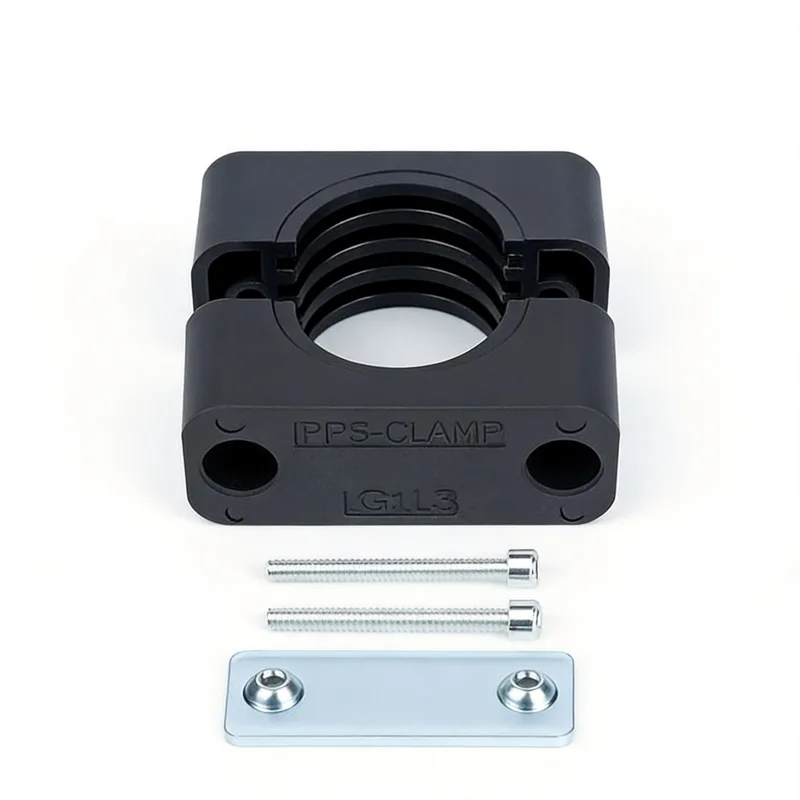
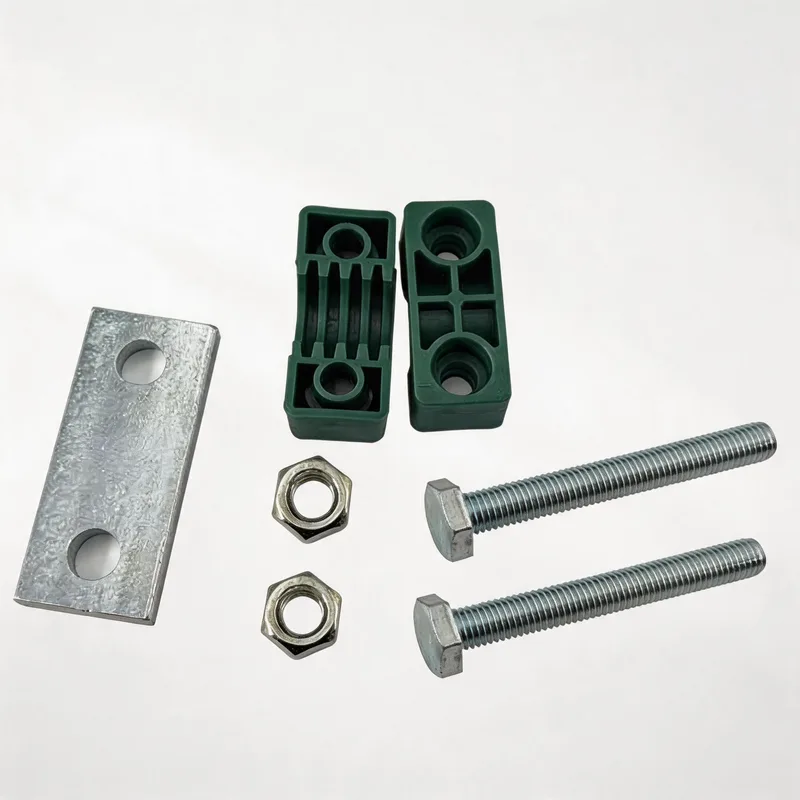
Key points
- DIN 3015 Part 1 standard series uses M6 for the smallest groups up to M10 for the largest — never M12 or above
- DIN 3015 Part 2 heavy series starts at M8 and goes up to M16 for the largest pipe sizes
- Bolt length must account for both clamp halves, the cover plate (if used), washer thickness and minimum two threads beyond the nut
- The most common ordering mistake is specifying Part 1 bolts for Part 2 clamps — same pipe OD but different bolt diameter and length
| Bolt Size | Part 1 Groups | Part 2 Groups | Approx. Pipe OD Range |
|---|---|---|---|
| M6 | Group 1–2 | — | 6–22 mm |
| M8 | Group 3–5 | Group 1–3 | 22–42 mm (P1) / 6–34 mm (P2) |
| M10 | Group 6–8 | Group 4–6 | 42–60 mm (P1) / 34–60 mm (P2) |
| M12 | — | Group 7–10 | 60–120 mm (P2 only) |
| M16 | — | Group 11–14 | 120–508 mm (P2 only) |
Group numbers and OD ranges are approximate and vary by manufacturer. Always confirm the bolt hole diameter from the specific clamp drawing before ordering. Part 3 twin series uses the same bolt sizes as Part 1 but requires longer bolts to span both pipe bores.
How clamp group number determines bolt size
DIN 3015 organises pipe clamps into numbered groups, where each group covers a range of pipe outside diameters. The clamp body dimensions — height, width, wall thickness and bolt hole diameter — scale with the group number. As the clamp body grows to accommodate larger pipes, the bolt hole diameter increases to match, and a larger bolt is required to fill that hole and provide adequate clamping force. You cannot use a smaller bolt in a larger hole: an M8 bolt in an M10 hole would leave 2 mm of radial play, allowing the clamp halves to shift laterally on the pipe. You also cannot force a larger bolt into a smaller hole without drilling, which weakens the clamp body. The correct approach is to identify the clamp group for your pipe OD from the manufacturer catalog, then read the bolt size specified for that group. This is a one-to-one mapping — each group has exactly one correct bolt diameter.
Part 1 vs Part 2: different bolt sizes for the same pipe OD
A critical point that causes frequent ordering errors: for the same pipe outside diameter, DIN 3015 Part 1 (standard series) and Part 2 (heavy series) often use different bolt sizes. For example, a 42 mm OD pipe might fall into Part 1 Group 5 (M8 bolt) but Part 2 Group 5 (M10 bolt). The Part 2 clamp body is taller, wider and thicker to handle higher loads, so it has a larger bolt hole. If you order Part 1 bolts for a Part 2 installation — a common mistake when the purchasing department does not distinguish between series — the bolts will be too small in diameter and too short in length. The assembly will either not fit at all or will be dangerously under-clamped. Always specify the DIN 3015 part number (Part 1, Part 2 or Part 3) alongside the group number when ordering replacement bolts. If you are unsure which series is installed, measure the clamp body height: Part 2 bodies are visibly taller and heavier than Part 1 for the same pipe size.
Calculating the correct bolt length
The bolt length for a DIN 3015 clamp assembly is the sum of: the height of the lower clamp half (from the base to the bolt hole centre), the height of the upper clamp half (from the bolt hole centre to the top), any cover plate or rail nut thickness if the clamp is rail-mounted, the washer thickness (typically 1.5–3 mm depending on bolt size), the nut height, and a minimum of 2 full threads protruding beyond the nut for safety. In practice, most manufacturers publish the recommended bolt length for each group number, and using the catalog value is the simplest approach. Where the clamp is mounted on a non-standard base (a thick weld plate, a channel section, or stacked clamps), add the base plate thickness to the standard bolt length. A bolt that is too short will not engage enough threads in the nut — the minimum engagement length is one bolt diameter (e.g. 10 mm for M10). A bolt that is excessively long wastes material, may foul adjacent components, and makes assembly slower. Order bolts in 5 mm length increments (standard metric bolt lengths: 20, 25, 30, 35, 40, 45, 50, 55, 60 mm etc.) and select the first standard length that provides at least 2 threads beyond the nut.
Part 3 twin series: longer bolts for double clamps
DIN 3015 Part 3 twin pipe clamps hold two parallel pipes in a single clamp body. The bolt thread diameter is the same as the equivalent Part 1 group (the individual pipe bore in the twin clamp matches a Part 1 group), but the bolt length is significantly longer because it must span the full width of the twin body — roughly twice the single-pipe clamp width plus the central web between the two bores. A common mistake is ordering Part 1 bolts (correct diameter but single-clamp length) for Part 3 twin clamps. The bolt passes through the first bore but is too short to reach the nut on the other side. When ordering Part 3 hardware, always specify "twin series" or "Part 3" to ensure the supplier provides the correct length. If standard-length bolts are unavailable, threaded rod (studding) cut to length with separate nuts and washers on both ends is an acceptable field solution, provided the rod material and grade match the specification.
Thread type: metric coarse is the default
DIN 3015 pipe clamp bolts use metric coarse thread (ISO 261 / ISO 965) as the default. M8 × 1.25, M10 × 1.5, M12 × 1.75 — the pitch is defined by the nominal diameter and does not need to be specified separately for standard orders. Metric fine thread (e.g. M10 × 1.0, M12 × 1.25) is sometimes requested for vibration-sensitive applications because the shallower thread angle provides slightly better self-locking, but it introduces supply chain complications: fine-pitch nuts must be matched to fine-pitch bolts, standard replacement nuts will not engage correctly, and cross-threading is more likely during field assembly. For vibration resistance, use coarse-thread bolts with a proper locking method (threadlocker, Nord-Lock washers, or serrated-flange bolts) rather than switching to fine thread. The exception is legacy equipment from manufacturers who historically used fine thread — if replacing bolts on existing clamps, measure the thread pitch with a thread gauge before ordering to confirm whether coarse or fine is installed.
Common ordering mistakes and how to avoid them
The five most common bolt-ordering mistakes for DIN 3015 clamps: (1) Specifying Part 1 bolts for Part 2 clamps — same pipe OD but wrong diameter and length. Always state the DIN 3015 part number. (2) Ordering bolts by pipe nominal bore (DN or NPS) instead of pipe outside diameter — DN 25 and 25 mm OD are very different sizes. Always order by measured OD. (3) Forgetting to add weld-plate or rail-nut thickness to the bolt length when the clamp is not mounted directly on a flat surface. (4) Ordering property class 10.9 or 12.9 bolts when 8.8 is specified — higher is not always better, because higher-class bolts are more sensitive to hydrogen embrittlement and require tighter torque control. (5) Mixing bolt materials in the same project — some clamps get stainless bolts, others get zinc-plated, because different people ordered at different times. Standardise the bolt material and finish for the entire project in the specification.
Related WeiQue series


Recommended reading
References
These pages summarize public standard metadata and industry application information. They do not reproduce the paid DIN standard text.