
A pipe clamp bolt that loses preload in service allows the pipe to shift, vibrate against the support, wear through the clamp body and eventually drop. In high-vibration environments — hydraulic power units, rolling mills, marine engine rooms, compressor packages — bolt loosening is one of the most common causes of pipe clamp failure, yet it is entirely preventable with the correct locking method.
There is no single "best" locking method. The right choice depends on the vibration severity, the required preload retention, whether the joint must be disassembled for maintenance, the operating temperature, the chemical environment and the cost. A spring washer that costs a few cents may be adequate for a low-vibration indoor hydraulic line, while a Nord-Lock wedge-locking washer or a chemical threadlocker may be necessary for a pipe clamp on a vibratory screen or a marine diesel engine.
This guide compares the most common bolt locking methods used in pipe clamp and general industrial fastener applications, with practical guidance on where each method works best and where it should not be used.
Related product photos
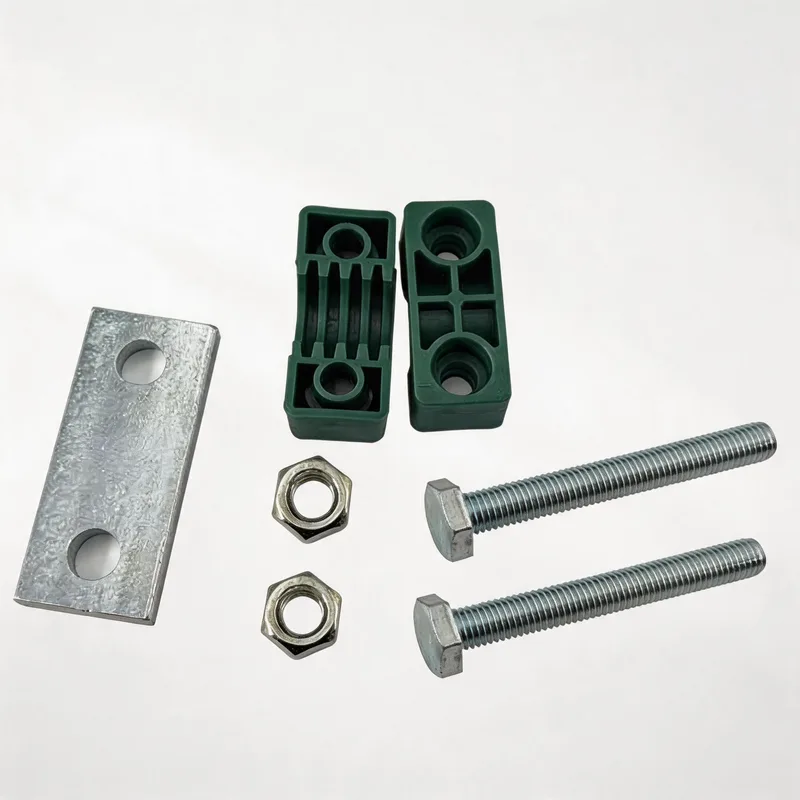
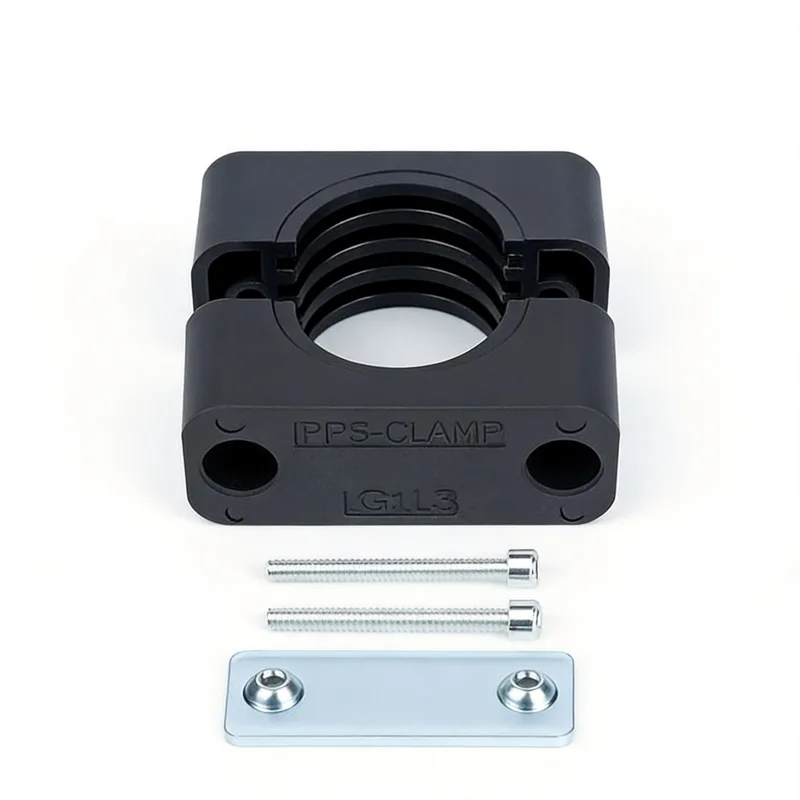
Typical use cases
- Spring washers provide minimal locking — consider upgrading for vibration-critical joints
- Nord-Lock wedge-locking washers maintain preload under severe transverse vibration
- Chemical threadlockers prevent rotation but require temperature and chemical compatibility checks
- Match the locking method to the joint's vibration level, maintenance cycle and temperature
Bolt locking methods at a glance
| Method | Vibration resistance | Reusable | Best for |
|---|---|---|---|
| Spring washer (DIN 127) | Low — flattens at low preload, minimal resistance to Junker vibration | Yes | Low-vibration indoor, cost-sensitive applications |
| Nord-Lock wedge-locking washer | Very high — wedge angle exceeds thread pitch, maintains preload under severe vibration | Yes (typically 3–5 uses) | Engine rooms, rolling mills, compressors, critical hydraulic joints |
| Serrated flange bolt / nut | Moderate — serrations bite into the bearing surface, resist rotation | Limited (serrations wear) | Single-assembly industrial joints, avoids separate washer |
| Nylon-insert lock nut (DIN 985) | Moderate — prevailing torque resists back-off, diminishes with reuse and heat | Limited (nylon deforms after 2–3 uses; max ~120 °C) | General industrial, moderate vibration, low temperature |
| Loctite / chemical threadlocker | High — fills thread gap, prevents micro-movement | No (medium strength removable with heat; high strength may require bolt destruction) | Permanent or semi-permanent joints, set screws, small bolts |
Vibration resistance ratings are relative. For quantitative preload retention data under specific vibration conditions, refer to the locking device manufacturer's Junker test results (DIN 65151 / NAS 3350).
Why spring washers are not effective against vibration loosening
The split spring washer (DIN 127) is the most widely used "locking" device in industrial fastening, yet multiple independent studies — including the well-known Junker transverse vibration test — have shown that it provides essentially no resistance to vibration-induced loosening. The spring washer flattens completely at a fraction of the bolt's design preload, after which it behaves as a plain flat washer. Its spring force (typically a few hundred newtons) is negligible compared to the bolt preload (typically thousands of newtons). The sharp edges of the split washer can mar the bearing surface, which actually reduces friction and can accelerate loosening. For pipe clamp applications in low-vibration environments (indoor hydraulic systems, office building HVAC, instrument tubing in control rooms), a spring washer is adequate because the vibration is insufficient to cause loosening regardless of the washer type. But for any application where vibration loosening is a real concern, the spring washer should be replaced with a more effective locking method.
Wedge-locking washers: how they work and when to use them
Wedge-locking washers (such as Nord-Lock) consist of a pair of washers with radial cams on the inner face and radial serrations on the outer face. The cams create a wedge angle that is steeper than the thread pitch. When the bolt tries to rotate loose, the cam faces must climb over each other — but because the wedge angle exceeds the thread pitch, this climb actually increases the bolt tension rather than allowing it to decrease. The serrations on the outer faces grip the bearing surfaces and prevent the washer pair from spinning as a unit. This design maintains preload even under severe transverse vibration, and has been independently validated in Junker tests. Wedge-locking washers are reusable (typically 3–5 reuses) and are available in carbon steel with zinc or Dacromet coating, and in stainless steel for marine and chemical environments. They require a flat, hardened bearing surface — they should not be used on soft materials (PP, PA, aluminium without a hardened washer) because the serrations will embed into the surface and lose their grip.
Serrated flange bolts and nuts
Serrated flange bolts and nuts have a built-in flange with radial teeth on the bearing face. These teeth bite into the mating surface and resist rotation. The advantage is simplicity — no separate washer is needed, which reduces part count and eliminates the risk of forgetting the washer during assembly. The serrations provide moderate vibration resistance, better than a spring washer but generally less than a wedge-locking washer under severe transverse vibration. The main limitation is that the serrations wear with each assembly-disassembly cycle. After two or three uses, the teeth may be flattened enough that locking effectiveness is significantly reduced. Serrated flange bolts are a practical choice for production assembly where the joint is assembled once and rarely disturbed — for example, OEM machine tool assembly or permanent bracket mounting. They are less suitable for maintenance-intensive applications where the same bolt is removed and reinstalled repeatedly.
Nylon-insert lock nuts and temperature limits
Nylon-insert lock nuts (DIN 985, also called "nyloc" or "prevailing torque" nuts) have a nylon collar that is deformed by the bolt thread during assembly, creating a friction-based resistance to back-off. They are inexpensive, widely available and provide adequate locking for moderate-vibration applications. The prevailing torque (the torque required to turn the nut against the nylon resistance) is typically 10–30 % of the tightening torque, which is enough to prevent gravity-induced loosening and mild vibration loosening but may not be sufficient under severe Junker-type transverse vibration. The nylon insert has two critical limitations: it degrades above approximately 120 °C (the exact limit depends on the nylon grade), and it loses prevailing torque after 2–3 reuses because the nylon is permanently deformed by the first assembly. For pipe clamps near heat sources (furnaces, steam lines, hot rolling mills), nylon-insert nuts may not be suitable. For maintenance-intensive applications, replace the lock nut with a new one at each reassembly.
Chemical threadlockers: medium vs high strength
Anaerobic threadlockers (such as Loctite 242/243 medium strength or Loctite 262/263 high strength) are liquid adhesives that cure in the absence of air between metal threads. They fill the thread clearance, prevent micro-movement and provide high resistance to vibration loosening. Medium-strength threadlockers (typically blue) allow disassembly with standard hand tools and are the most practical choice for pipe clamp bolts that may need to be removed for maintenance. High-strength threadlockers (typically red) require heat (above 250 °C) or special tools for disassembly and are used for permanent or semi-permanent joints such as set screws, studs or structural bolts that should never come loose. When using threadlockers on pipe clamp bolts, apply the product to clean, oil-free threads. Do not use threadlockers on bolts that are coated with anti-seize compound — the oil in the anti-seize prevents the threadlocker from curing. Confirm temperature compatibility: most standard threadlockers are rated for continuous service up to 150–180 °C.
Safety wire and tab washers for critical joints
Safety wire (lock wire) and tab washers (DIN 93) are positive mechanical locking methods — they physically prevent the bolt or nut from rotating, regardless of vibration severity or preload loss. Safety wire passes through drilled bolt heads and is twisted tight so that any loosening rotation in one bolt pulls the wire tighter through the adjacent bolt. Tab washers have a tab that is bent against the bolt head or nut after tightening. These methods are standard practice in aerospace, motorsport and some marine classification society requirements. For industrial pipe clamp applications, they are rarely specified because they are labour-intensive to install and completely prevent maintenance-free removal. However, for pipe clamps on safety-critical systems (fire suppression piping, emergency hydraulic lines, classified pressure systems) where bolt loosening could cause a catastrophic failure, safety wire or tab washers may be specified by the system designer or the regulatory authority.
Selecting the right method for DIN 3015 pipe clamps
For most standard DIN 3015 pipe clamp installations (indoor hydraulic systems, instrument tubing, utility piping), the standard bolt and nut with a flat washer or spring washer is adequate because the vibration level is low and the clamp preload is modest. When vibration is present but moderate (pump rooms, machine tools, HVAC with rotating equipment nearby), a nylon-insert lock nut or a serrated flange nut provides meaningful improvement at low cost. For high-vibration applications (marine engine rooms, rolling mills, vibratory screens, compressor skids), specify wedge-locking washers or medium-strength chemical threadlocker. For safety-critical joints where loosening could cause injury or environmental release, follow the system specification — this may require safety wire, tab washers, or a specific threadlocker grade and application procedure with documented torque and inspection records.
Related WeiQue series


Recommended reading
References
These pages summarize public standard metadata and industry application information. They do not reproduce the paid DIN standard text.