
Building mechanical services — HVAC, plumbing, fire protection, medical gas, compressed air and process cooling — represent the highest-volume application segment for small-bore pipe clamps. A single commercial office building, hospital or data centre can require thousands of pipe clamps across its mechanical rooms, risers, ceiling voids and plant decks. The pipe sizes are predominantly in the DIN 3015 standard series range (6–57 mm OD), the operating conditions are generally mild compared to heavy industry, and the primary selection drivers are different: noise isolation, aesthetic appearance, fire rating of mounting components, accessibility for maintenance, and compliance with local building codes and mechanical standards.
Unlike oil and gas or marine applications where corrosion and extreme conditions dominate the specification, building services pipe clamp selection is driven by acoustic performance, fire compliance, installation speed and cost efficiency. The wrong clamp choice in a building is unlikely to cause a safety incident, but it can generate occupant complaints from structure-borne noise, fail building inspection, delay occupancy certification, or result in expensive rework when the ceiling is already closed.
This guide covers the practical selection considerations for DIN 3015 pipe clamps in building mechanical services, with emphasis on the issues that matter most to mechanical contractors, consulting engineers and building owners.
Related product photos
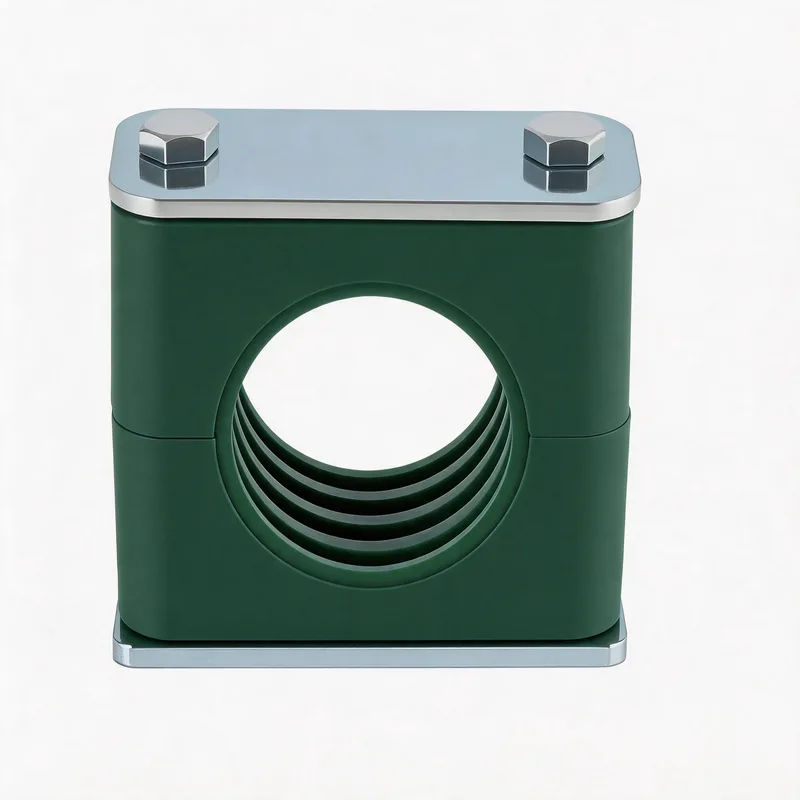
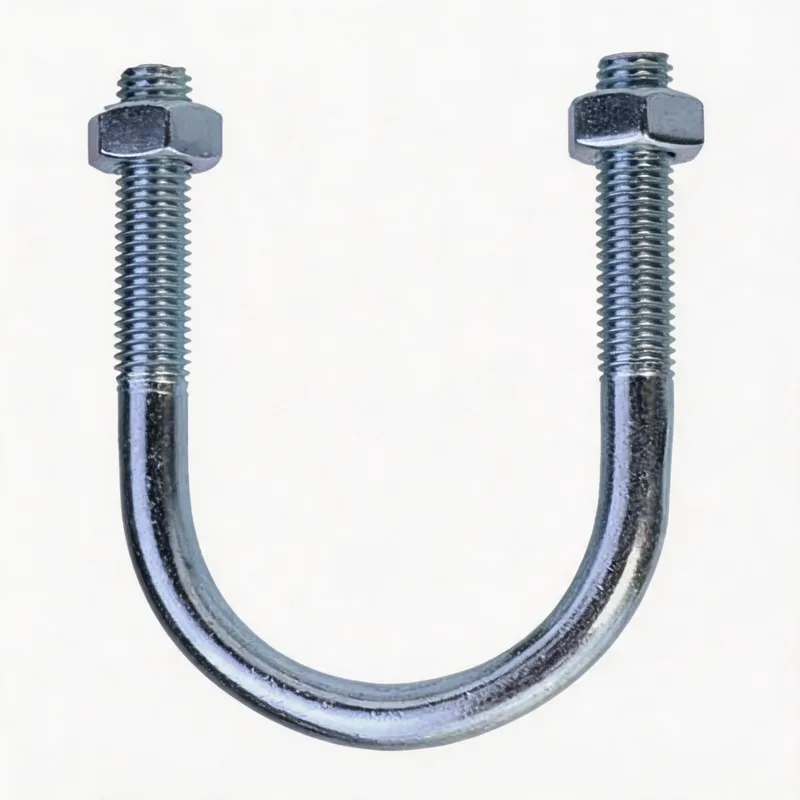
Typical use cases
- Use rubber-cushioned (NBR or EPDM) inserts for chilled water and heating lines to prevent structure-borne noise
- Check fire rating requirements for pipe supports passing through fire-rated walls and floors
- Select rail-mounted clamps for ceiling-void routing where position adjustment is needed during fit-out
- Confirm copper tube compatibility — avoid direct contact between copper and zinc-plated or aluminium components
Clamp selection by building service type
| Service | Typical pipe | Key consideration | Recommended clamp |
|---|---|---|---|
| Chilled water / heating | Steel or copper, 15–54 mm | Noise isolation, condensation on chilled lines | Cushioned insert (NBR/EPDM) to break sound bridge |
| Domestic hot/cold water | Copper, stainless, PPR, 15–42 mm | Galvanic isolation for copper; soft pipe protection | PP body avoids galvanic contact; reduced torque for PPR |
| Fire sprinkler risers | Steel, 25–54 mm | Fire rating, seismic bracing, code compliance | Cover-plate clamp on welded bracket; fire-rated assembly |
| Medical gas / lab air | Copper or stainless, 10–28 mm | Cleanliness, no contamination, labelling | Stainless or clean PP body; no zinc near product gas |
| Building compressed air | Steel or aluminium, 15–42 mm | Vibration near compressor, condensate | G30 cushioned near compressor; standard elsewhere |
Local building codes, fire regulations and acoustic standards vary by jurisdiction. Always confirm compliance with the applicable national or regional standard before finalising the pipe clamp specification.
Acoustic isolation and structure-borne noise
In occupied buildings — offices, hospitals, hotels, residential apartments — structure-borne noise from mechanical services is one of the most common post-occupancy complaints. A chilled water pipe carrying fluid at 2–3 m/s transmits flow noise and pump vibration through the pipe wall. If the pipe clamp has a hard PP or PA insert in direct contact with the pipe, and the clamp is bolted to a steel bracket welded to the building structure, the vibration travels through the clamp body, through the bracket, into the structural steel or concrete slab, and radiates as audible noise into the occupied space below. The solution is to break the sound bridge with a rubber-cushioned clamp insert (NBR or EPDM). The rubber insert absorbs vibration energy and prevents direct metal-to-metal or metal-to-polymer-to-metal transmission paths. For sensitive buildings (recording studios, hospital patient rooms, luxury hotels), specify clamps with a minimum rubber hardness of 43–55 Shore A and confirm that the rubber fully wraps the pipe contact zone — a partial rubber lip is less effective than a full-circumference cushion.
Fire-rated pipe supports and penetration sealing
Building fire codes require that pipe supports passing through fire-rated walls and floors maintain the fire rating of the barrier. A pipe clamp bolted to a steel bracket that passes through a 2-hour fire-rated wall must be part of a tested and approved fire-stop assembly — the bracket, the penetration seal, the clamp and the pipe insulation (if any) must be considered together. PP and PA clamp bodies will melt and deform in a fire, potentially allowing the pipe to drop and break the fire seal. For fire-rated penetrations, use metal clamp bodies (steel or stainless) or ensure that the fire-stop system is designed to accommodate the loss of the polymer clamp body. The fire-stop contractor and the mechanical contractor must coordinate: the fire-stop system must be compatible with the pipe material, insulation type, annular gap size and the clamp/bracket configuration. Review the fire-stop manufacturer's tested configurations (listed in fire test reports) to confirm that the proposed pipe support arrangement is covered.
Ceiling-void installation and rail-mounted systems
Most building mechanical services run in the ceiling void — the space between the structural slab above and the suspended ceiling below. This space is shared with electrical conduit, cable trays, ductwork, sprinkler pipework, lighting and data cabling, and access is limited once the ceiling is closed. Rail-mounted pipe clamp systems (DIN 3015 clamps on mounting rail with rail nuts) are the preferred solution for ceiling-void installation because they allow position adjustment along the rail during fit-out coordination without drilling new holes or welding new brackets. This flexibility is critical because the mechanical services routing often changes during construction as clashes with other trades are resolved in the field. Mounting rails can be suspended from the slab with threaded rod and channel nuts, or fixed to the underside of steel beams with beam clamps. For seismic zones, confirm that the rail suspension system meets the seismic bracing requirements of the applicable building code — simple threaded rod suspension without lateral bracing may not be adequate.
Copper tube and galvanic compatibility
Building services make extensive use of copper tube for domestic water, medical gas, refrigerant and sometimes heating circuits. Copper is noble in the galvanic series — when it contacts a less noble metal (zinc, aluminium, carbon steel) in the presence of moisture, the less noble metal corrodes preferentially. A zinc-plated bolt head pressing against a copper tube in a humid ceiling void will develop galvanic corrosion at the contact point, causing white zinc corrosion products and eventually bolt head wastage. PP and PA clamp bodies naturally isolate the copper from the metal hardware, providing a galvanic barrier. If all-metal clamp assemblies are used on copper tube (for example in high-temperature or fire-rated locations where polymer bodies cannot be used), install a rubber or PTFE isolating sleeve between the tube and the metal clamp body to prevent galvanic contact. For aluminium tube used in some compressed air and refrigerant systems, the same galvanic isolation applies — aluminium is anodic to both copper and steel.
RFQ data for building services pipe clamps
Send pipe material and OD for each service (chilled water, heating, domestic water, sprinkler, medical gas, compressed air), building zone (mechanical room, ceiling void, riser, plant deck, external), noise isolation requirement (yes/no and target noise rating if known), fire-rating requirement at penetrations, seismic zone classification if applicable, mounting method (rail-nut, welded base, beam clamp), required clamp body material, preferred hardware finish, applicable building code and mechanical specification, quantity by service and clamp size.
Related WeiQue series


Recommended reading
References
These pages summarize public standard metadata and industry application information. They do not reproduce the paid DIN standard text.